
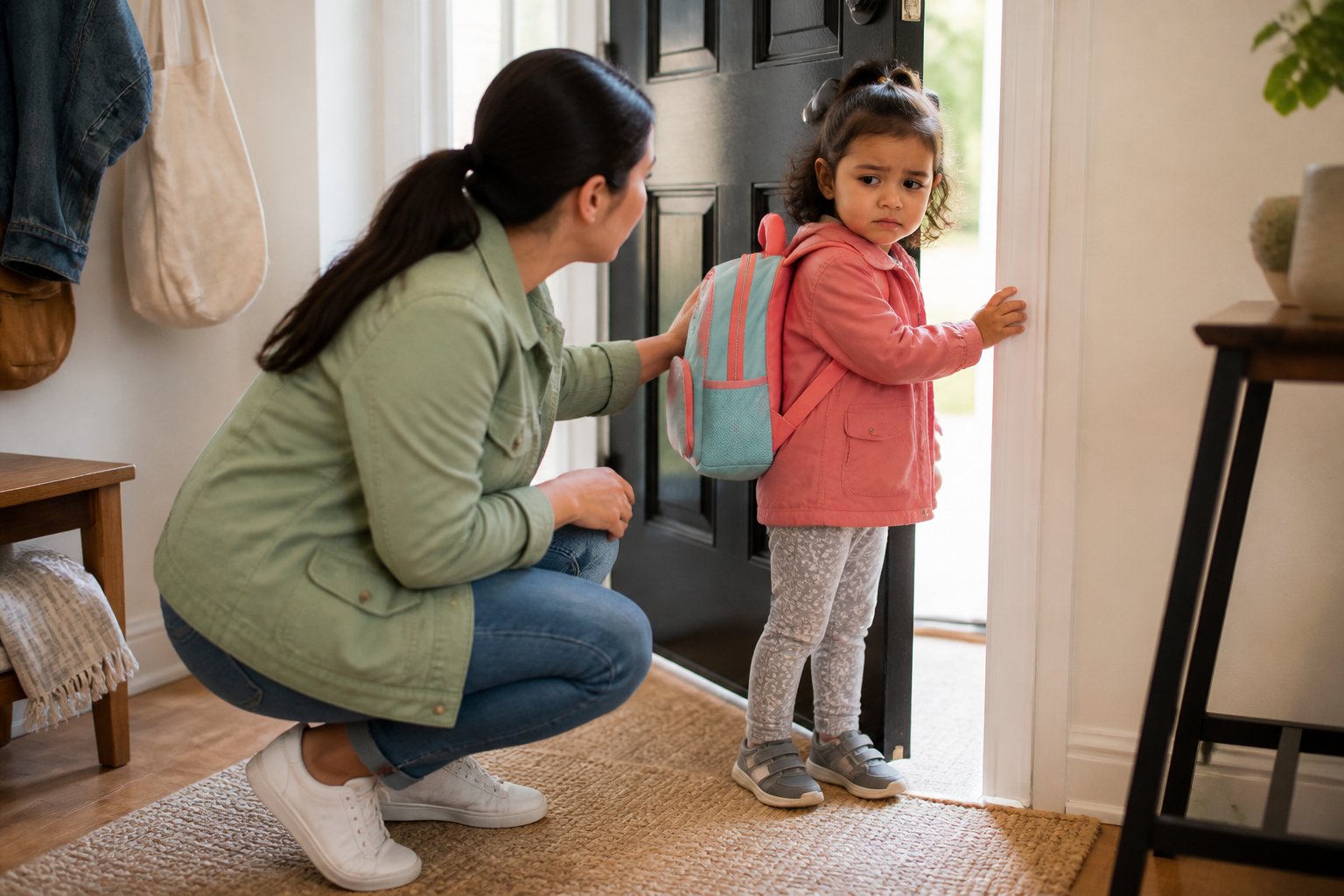
Your toddler’s sudden tears at drop-off or morning refusals to get dressed can leave you feeling stressed and confused. Many parents face this challenge, especially during transitions like starting a new school year or moving to a different classroom.
School avoidance in toddlers is different from older kids skipping class—it’s usually driven by big feelings like separation anxiety, fear of new situations, or trouble adjusting to routines rather than a desire to stay home and play.
The good news: a handful of small, consistent changes to your morning routine make a real difference, fast. Here’s exactly what to try.

Key Takeaways
- A predictable, short goodbye routine is the single biggest fix for hard mornings
- Small choices and comfort items give your toddler a sense of control without opening up the “do we have to go?” debate
- Most school resistance eases up within a few weeks as your child adjusts — consistency is what gets you there faster
Try This Tomorrow Morning
- Same goodbye, every time. A hug, a high-five, and one phrase — “See you after snack time!” — repeated exactly, every single day.
- Add 10 minutes you don’t think you need. Rushed mornings turn small protests into full meltdowns.
- Offer two choices, never zero. “Blue shirt or red shirt?” hands back some control without opening the door to “do we have to go?”
- Prep everything the night before. Backpack packed, outfit picked, shoes by the door — one less thing to negotiate at 7am.
- Name the feeling, then keep moving. “I know you’re sad. We’re getting your shoes on now.” Acknowledge it without stopping to debate it.
- Keep the goodbye short. Lingering makes separation harder, not easier — say bye and go.
- Send a comfort object. A small toy or photo tucked in the backpack or cubby can make a real difference.
- Use a visible timer for transitions. “Two more minutes, then shoes” is easier for a toddler to process than a warning with no clock attached.
1Why Mornings Get Hard (Briefly)
Most toddlers experience some hesitation about school during their first few weeks or after breaks. Not wanting to go to school is completely normal for young children as they develop natural separation anxiety.
Your toddler may feel genuine fear about being away from you, especially early on, and new routines can be overwhelming for kids who thrive on predictability — new faces, new rules, a new schedule, all at once. This usually fades within two to three weeks as your child settles into the rhythm, and it often overlaps with the same separation struggles behind why toddlers resist playing alone.
Brief protests are normal. If resistance is getting more intense instead of less after a month, or your child mentions something specific that’s bothering them at school, that’s worth paying closer attention to — more on that below.
2Respond Calmly During Difficult Mornings
When your toddler refuses school, staying calm helps prevent meltdowns from getting worse and teaches them how to handle big emotions. Your steady response during tantrums sets the tone for how quickly the situation resolves and whether drop-off becomes easier over time.
Validate Feelings Without Negotiating Attendance
Acknowledge your child’s emotions while staying firm about going to school. Say things like “I see you’re upset about leaving” or “You wish you could stay home with me today.”
This recognition helps with separation anxiety without suggesting that attendance is optional. Don’t ask questions like “Do you want to go to school?” when attendance isn’t negotiable.
Instead, use statements that show understanding:
When your toddler shows aggression or has a tantrum, name the feeling without giving in. You might say “You’re really angry right now” while continuing to get them ready.
Avoid Power Struggles, Threats, and Long Debates
Speaking in a calm tone and being clear about expectations prevents arguments from taking over your morning. Don’t threaten consequences like “If you don’t get dressed, you’ll lose screen time” during heated moments.
Keep instructions simple and direct — the same one-step-at-a-time approach that helps with toddlers who struggle to follow directions works well here too. Say “Put on your shoes now” instead of explaining why they need to hurry.
Long explanations during meltdowns make things worse because toddlers can’t process complex reasoning when upset. If your child refuses to cooperate, help them complete the task without arguing — guide their arms into sleeves or carry them to the car if needed.
Use a Predictable Drop-Off Routine
Create the same goodbye sequence every single day to reduce school anxiety. This might include a hug, a high-five, and saying “See you after snack time.”
Keep drop-off brief even when your child cries — lingering makes separation anxiety worse because it signals that leaving is uncertain. Tell them exactly when you’ll return using concrete markers they understand, like “I’ll pick you up after outdoor play.”
Don’t sneak out without saying goodbye, as this breaks trust. If your child has intense meltdowns, work with teachers to find a smooth handoff method where staff can redirect them to an activity right away.

3Team Up With the School
Working directly with your toddler’s school creates a united approach to easier mornings. Teachers see things at drop-off that you don’t, and small adjustments on their end can make a big difference.
Talk With the Teacher
Contact your child’s teacher as soon as you notice a pattern developing. Share specific behaviors you’re seeing at home, like morning tantrums, and ask what they’re observing during the day.
Many schools have a go-to approach for easing kids through a rough patch — ask what’s worked for other families.
Create Small, Practical Supports
A few adjustments that often help:
- Modified drop-off: Let your child enter through a quieter door or arrive slightly early.
- Safe person: Assign a specific staff member your child can go to when feeling worried.
- Comfort items: Allow a small toy or photo from home during the transition period.
- Check-in times: Schedule brief moments when your child can connect with a trusted adult.
If your toddler is starting back after time away, ease in gradually — a shorter day or two before jumping back to a full schedule can take the edge off.
4Build Confidence and Coping Skills at Home
Building your child’s emotional skills before school starts can reduce anxiety and make separations easier. Simple practice routines and worry management techniques give toddlers tools to handle their feelings when away from you.
Practice Separations and School Routines
Start with short separations at home to help your child get comfortable being away from you. Leave your toddler with a trusted caregiver for 15 to 30 minutes while you run an errand, and gradually increase the time as they get more comfortable.
Walk through each step of the school routine at home — putting on shoes, packing a backpack, saying goodbye — and explain what will happen using simple language.
Teach Simple Ways to Manage Worry
Deep breathing is simple enough for young children to learn. Practice taking “bubble breaths” together by breathing in through the nose and out through the mouth slowly — make it fun by pretending to blow bubbles or smell flowers.
Let your child pick a small toy, photo, or special object to keep in their cubby or backpack. Use puppets or stuffed animals to talk through feelings — your toddler might express worries to a puppet that they won’t tell you directly.
Keep Home Days Supportive but Low-Key
Avoid over-scheduling or making big changes at home during the adjustment period. Stick to regular bedtimes and meal times, and keep weekends calm with familiar activities rather than adding new commitments.
Give your child space to bring school up naturally rather than asking constant questions about their day.
5When to Loop In Your Pediatrician
Most morning battles ease up within a few weeks as your child adjusts. Consistency with the tips above is usually what gets you there.
Useful details to jot down beforehand:
- What day and time symptoms or meltdowns happen
- Whether physical complaints ease up on weekends or school breaks
- Anything specific your child says about school, friends, or teachers
- How long it takes your child to settle once they’re actually at school
?Frequently Asked Questions
Young children often go through phases of resisting school, and parents naturally have questions about what’s normal and what actually helps.
Why has my 3-year-old suddenly started refusing to go to preschool or daycare?
Sudden refusal often happens after a holiday break, illness, or major change at home. Your toddler may be experiencing temporary separation anxiety or adjusting to a recent disruption in their routine.
Changes like a new sibling can make the school transition harder. Even positive changes can throw off a young child’s sense of security.
Your child might also have had a small negative experience at school you’re not aware of — something as simple as not getting a turn with a favorite toy.
Is it normal for a toddler to cry or resist going to school?
Crying and resistance are completely normal for most preschoolers, especially when they first start attending. Young children commonly develop uneasiness about leaving a parent or caregiver.
Preschool and kindergarten-age children typically show their distress through clinging, crying, and tantrums. These behaviors usually connect to separation anxiety rather than a serious problem.
Up to 28 percent of students struggle with school avoidance at some point during their school years. Your child is not unusual for having these feelings.
What should I do when my child refuses to go to preschool in the morning?
Stay calm and acknowledge your child’s feelings without giving in to the refusal. Make it clear that going to school is not optional, even though you understand they’re upset.
Create consistent morning routines and give yourself extra time so you’re not rushed. A predictable routine helps reduce anxiety and gives your child time to adjust to the idea of going.
Try saying something like “I know there’s something about school that worries you. When you’re able to speak calmly, then we can talk about what that is.”
Avoid arguing in the moment when emotions are high. Focus on getting your child to school, then plan to have a conversation later when everyone is calm.
How can I tell whether my toddler’s school refusal is caused by separation anxiety?
Separation anxiety typically shows up as clinging behavior, crying when you try to leave, and requests to stay with you. Your toddler may seem fine once you’re gone but struggle intensely at drop-off time.
The anxiety often gets worse on Monday mornings or after breaks from school. Young children with separation anxiety usually calm down within 15 to 30 minutes after the parent leaves.
If your child talks specifically about missing you or worrying about you while they’re away, separation anxiety is likely the main issue.
Could a problem at daycare or preschool be making my child not want to attend?
Sometimes. Trouble making friends, feeling left out, or finding the noise and stimulation overwhelming can all make a toddler reluctant to go.
Talk to your child’s teachers about what they observe during the day — ask specific questions about your child’s interactions with peers and how they respond to different activities.
When should I mention this to my pediatrician?
If the resistance lasts more than a few weeks or seems to be getting worse instead of better, it’s a good topic for your next pediatrician visit.
Bring a few notes on when it happens and what your child says — that pattern helps your pediatrician figure out what’s going on faster than a one-off description of a bad morning.





Leave a Reply