
Simple, realistic fixes when the three-day method is not working for your toddler, without shame, pressure, or assuming you have failed.
If the 3-day potty training method isn’t working, take a deep breath.
Many parents start the three-day potty training method expecting that by the end of a long weekend, diapers will be a thing of the past. So when your toddler is still having accidents, refusing to sit on the potty, or acting like they haven’t learned anything at all, it’s easy to wonder whether you’ve done something wrong.
The good news is that this is incredibly common. Most potty training setbacks aren’t caused by bad parenting or a child being “too stubborn.” More often, they happen because something is getting in the way of learning, like readiness, constipation, anxiety, unrealistic expectations, or simply trying to move faster than your toddler is able to.
In this guide, we’ll walk through the 11 most common reasons the three-day method stops working, how to tell whether your child is truly ready, and the simple changes that can get potty training back on track without power struggles or pressure.
Quick Answer
If 3 day potty training is not working, it usually comes down to timing, stress, fear, constipation, or a mismatch between the method and your child’s current readiness. Many toddlers need more than three days to connect body signals with reaching and using the potty.
Accidents, resistance, or a rough third day do not prove your child cannot learn. Look for the cause, reduce pressure, and consider a short reset if the process is becoming increasingly upsetting.
Is This Normal?
Yes. Three-day potty training is better understood as an intensive introduction than a guarantee of complete independence by the end of a long weekend.
A toddler can understand what the potty is for and still be unable to notice the signal early enough, stop playing, pull down clothes, sit, relax, and release. Those are several separate skills.
If your child is resisting every sit, having full accidents immediately after getting off the potty, or becoming more distressed as the days continue, the problem may be timing rather than effort. This is especially common during daycare changes, travel, illness, disrupted sleep, or the arrival of a new sibling.
Why the 3 Day Potty Training Method Does Not Work for Every Child
The method sounds simple, which is why so many parents try it first. For some kids, it clicks quickly. For others, the process takes longer because their bodies, emotions, communication, and routines are still catching up.
That does not mean you picked the wrong place to start. Toilet learning follows a child’s timeline, and some children need a slower approach.
What the Method Usually Involves
| Part of the method | What it usually looks like |
|---|---|
| Setup | A potty chair or seat stays nearby and easy to reach. |
| Parent role | You stay close, prompt regularly, and respond quickly to cues. |
| Child practice | More time out of diapers helps the child notice when pee begins. |
| Learning tools | Simple language, repetition, books, and low-pressure potty training games support the routine. |
The method can stall because it asks a child to coordinate many new skills in a very short time. If the body-signal connection is not there yet, three intense days may feel like pressure instead of practice.
What Realistic Progress Looks Like
- Your child begins noticing pee while it is happening.
- They tell you immediately after an accident.
- They willingly sit even if nothing comes out.
- Dry periods gradually become longer.
- Poop progress and pee progress happen at different speeds.
- They use the potty in familiar settings but not everywhere yet.
If there is no interest, nonstop accidents, or growing upset after several days, it may be time to pause rather than push harder. If your child had been doing well and suddenly stopped, read about potty training regression.
Signs Your Child May Not Be Ready Yet
Potty training readiness is not just about age. It is about whether your child notices body signals, can manage parts of the routine, and feels emotionally safe trying.
Signs Readiness Is Building
- Stays dry for roughly two hours
- Shows interest in the bathroom
- Reports a wet or soiled diaper
- Pauses or hides before a bowel movement
- Can follow a simple direction
- Can help push pants down
Signs to Slow Down
- Refuses nearly every attempt
- Shows no awareness of accidents
- Becomes increasingly anxious or angry
- Cannot relax enough to release
- Starts withholding poop
- Resistance intensifies with prompting
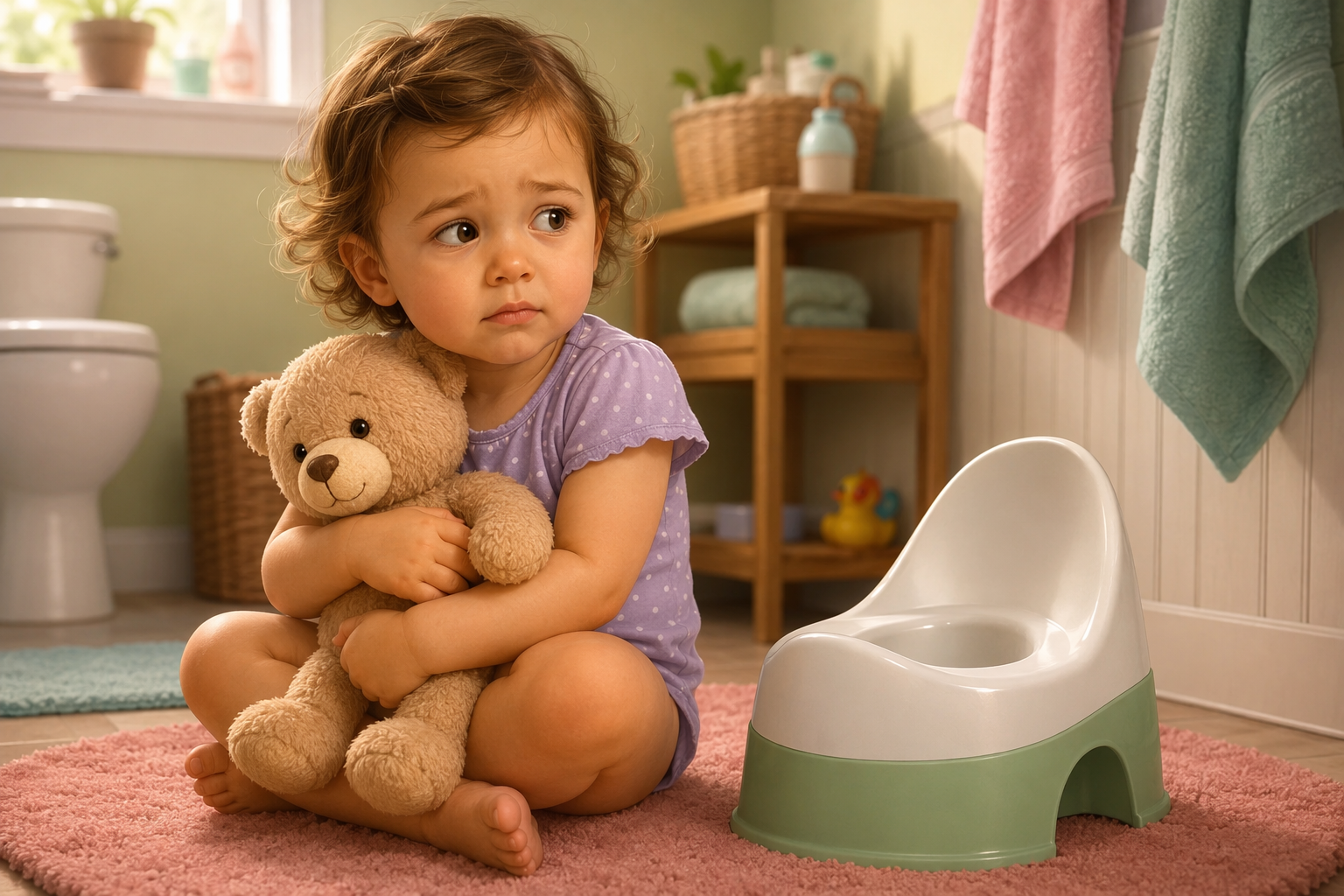
Remember: A child who consistently refuses to sit on the potty is often communicating fear, discomfort, lack of readiness, or a need for more control.

The 11 Most Common Reasons 3 Day Potty Training Stalls
Physical Readiness Is Not Quite There Yet
Your child may understand the potty but still struggle to hold urine long enough to reach it. Short dry periods, little warning, and full accidents immediately after a sit often mean readiness is still developing.
Your Child Cannot Reliably Notice the Body Signal Yet
Recognizing a full bladder is an internal body-awareness skill. Some toddlers do not notice until urine is already coming out. Frequent reminders cannot fully replace this connection.
Constipation or Poop Withholding Is Interfering
A child who expects pain may hold stool, tighten their muscles, refuse to sit, or become afraid of the bathroom. Constipation can also contribute to urinary accidents.
The Potty or Toilet Feels Scary
The flush, the toilet opening, unstable feet, or seeing poop disappear can all feel frightening. Try a secure child-sized seat, a footstool, or a stand-alone potty.
There Is Too Much Prompting
Constantly asking whether your child needs to go can create an automatic “no.” Move toward predictable opportunities after waking, before leaving home, before bath, and before bed.
Rewards Have Started to Feel Like Pressure
Stickers and praise can help, but oversized rewards or intense celebration may make a cautious child feel watched. Keep reinforcement light and matter-of-fact.
Your Child Is Protecting a Sense of Control
Toddlers cannot control many parts of the day, but they can control whether they release pee or poop. The more invested adults become, the more powerful refusal can feel.
A Major Life Change Is Taking Up Their Capacity
A new sibling, move, caregiver, daycare transition, travel, illness, family stress, or poor sleep can temporarily interrupt learning.
The Routine Is Inconsistent Across Caregivers
Mixed expectations between home, daycare, and relatives can make the process harder. Agree on a few shared phrases and the same calm response to accidents.
Clothing Is Slowing Them Down
Overalls, tight leggings, buttons, and complicated layers can turn a successful warning into an accident. Use loose elastic-waist clothing during early learning.
You Are Expecting Night Training at the Same Time
Daytime learning and staying dry during sleep are different skills. A child can be daytime trained and still need a pull-up for naps or nights. See potty training sleep regression.
When Should You Pause?
A break may help if your child is increasingly distressed, refuses every attempt, has no awareness of accidents, is withholding poop, or if the process is becoming a daily battle.
- Stop discussing the potty constantly.
- Return to diapers or training pants without shame.
- Keep the potty visible but optional.
- Try again after stronger readiness cues appear.
How to Respond to Accidents and Resistance
The calmest response is usually the most effective. Accidents are part of learning, not evidence that your child is lazy or incapable.
What to Say After an Accident
“Pee came out. Let’s get dry and try the potty next time.”
“Your body is still learning. I’ll help you clean up.”
“Accidents happen. The potty is here when your body tells you.”
What to Say When Your Toddler Refuses
“You do not have to pee. We are just giving your body a chance.”
“You can use the little potty or the toilet seat.”
“I hear that you do not want to sit. We will try again later.”
What to Try Next
If the intensive approach did not work, your next move does not have to be “try harder.” A slower plan can still lead to successful potty training.
- Wait until readiness is more obvious.
- Reintroduce the potty without forcing sits.
- Practice pants down, sitting, wiping, flushing, and handwashing separately.
- Use a predictable routine around waking, meals, leaving home, bath, and bedtime.
- Use pull-ups for sleep if daytime progress is improving but nights are not.
| Time | Low-pressure opportunity |
|---|---|
| Morning | Offer the potty after removing the overnight diaper or pull-up. |
| After meals | Invite a brief sit, especially if your child tends to poop after eating. |
| Before leaving home | Make the potty one step in the getting-ready routine. |
| After nap | Offer it as part of waking and reconnecting. |
| Before bed | Offer one final chance without turning it into a test. |

When to Call the Pediatrician
Most stalls are developmental, but contact your pediatrician for pain or burning with urination, blood in urine or stool, persistent constipation, stool withholding, fever, extreme thirst, unusual fatigue, unexplained weight loss, or a sudden major regression without an obvious life change.
Frequently Asked Questions
Is it normal to feel discouraged if the method does not work?
Yes. It is hard to put in several intense days and not see quick results. Needing more time does not mean your child cannot learn.
How long should I try before taking a break?
If your child has no interest, constant accidents, or growing distress after several difficult days, it is reasonable to pause for a couple of weeks or longer.
What if day two was worse than day one?
A rough second day is common because the novelty has worn off. Stay calm, simplify the routine, and look for small signs of awareness rather than perfection.
Should I use pull-ups after the three-day method?
Pull-ups can be useful for sleep, childcare, travel, or a planned reset. Using them intentionally does not erase learning.
What if my toddler pees in the potty but refuses to poop?
This is common. Make sure their feet are supported, reduce pressure, and address hard or painful stools with your pediatrician.
Conclusion
If 3 day potty training is not working, it does not mean you failed or that your child cannot learn. Readiness may still be developing, the potty may feel frightening, constipation may be interfering, or the intensity of the method may have started to feel like pressure.
Take a step back, look for the actual barrier, and shift to a calmer plan. Your child’s pace matters more than an arbitrary three-day deadline.




Leave a Reply