
These sensory activities for focus and regulation help toddlers slow down, concentrate, and feel more in control.
In this post:
- activities that support focus
- ideas for regulation and calm play
- simple daily routines
Key Highlights
- A toddler’s attention span is naturally short, typically lasting just a few minutes, which is normal for their age.
- Sensory regulation is key to helping your child manage sensory input and calm down when they feel overwhelmed.
- Engaging in simple sensory activities can help strengthen your toddler’s developing attention spans over time.
- Sensory activities support a child’s ability to participate in everyday tasks by addressing sensory processing challenges.
- These focus-building activities also promote crucial cognitive development and learning.
- Building sustained attention through sensory activities lays the foundation for academic achievement.
- Many sensory play ideas simultaneously help improve your child’s fine motor skills.
- Sustained attention is crucial for classroom learning and is linked to working memory and executive function.
- Creating a calm environment with predictable routines supports your toddler’s ability to concentrate.
Introduction
Does it feel like your toddler flits from one toy to the next in the blink of an eye? You’re not alone. Short attention spans are a hallmark of toddlerhood. Their developing brains and sensory systems are constantly taking in the world around them, making it hard to focus on one thing. The good news is that you can gently help your child build concentration through play. This guide will walk you through simple sensory activities that support your child’s development and bring a sense of calm to playtime.
There’s a ton to explore on Feral Toddler
Click below to find the hub you need, whether you’re dealing with toddler play, sleep, meals, or tantrums.
Understanding Toddler Focus and Sensory Regulation
Sensory regulation is your child’s ability to manage all the sensory input they receive, from the sounds in the room to the feel of their clothes. When a toddler is overwhelmed, their ability to focus shrinks. By addressing your child’s sensory needs, you help them feel more organized and calm. Sensory regulation also supports children in paying attention during everyday activities.

This process is a fundamental part of child development. Using sensory strategies can absolutely improve your toddler’s attention span. When you provide the right kind of sensory experiences, you give their brain the tools it needs to filter distractions and concentrate on the task at hand. Self regulation is a skill developed through sensory activities and is essential for managing emotions and focus.
Sensory integration challenges can negatively impact learning, including attention and focus.
Why do toddlers struggle with attention and focus?
It’s important to have realistic expectations for your toddler’s attention span. A two-year-old can typically focus for about four to six minutes, while a three-year-old might last six to eight minutes. Their brains, especially the frontal lobe that controls attention, are still under construction. Flitting from one activity to another is completely normal and part of how they explore their world. When toddlers are unable to focus for extended periods, they may miss important details during activities or instructions.

A short attention span is also influenced by other factors. Your child will naturally focus longer on something they find interesting. However, things like hunger, tiredness, or stress can make it nearly impossible for them to concentrate. A chaotic environment with lots of distractions, like a loud TV, also makes it much harder for a little one to pay attention.
So, if your child leaves a puzzle unfinished, they aren’t being defiant. They are simply acting their age. Understanding that a toddler’s attention span fluctuates based on their mood, environment, and physical needs is the first step in helping them build focus.
The science behind sensory regulation for young children
So, how does sensory regulation actually work? Think of your child’s brain as a traffic controller for their sensory systems. Information from sight, sound, touch, taste, and movement is constantly flowing in. Sensory regulation helps the brain organize this traffic, preventing jams that lead to feeling overwhelmed or restless. Sensory regulation also supports working memory, which is essential for holding and manipulating information during tasks.

Engaging in sensory activities helps strengthen these neural pathways. For example, heavy work activities like pushing a toy box or jumping on a trampoline provide input that improves body awareness. These activities stimulate the proprioceptive systems, which help the body understand its position in space. Proprioceptive input refers to sensations from muscles and joints that help the body understand where it is in space. This helps your child feel more grounded and in control, which frees up mental resources for focus. Attention is like a muscle; the more you gently exercise it with the right activities, the stronger it becomes.
This process is vital for hitting developmental milestones. If you ever have concerns about your child’s attention or development, your pediatrician is a great resource. They can provide guidance and ensure your child is on the right track.
How Sensory Activities Support Toddler Concentration
Sensory activities are powerful tools for capturing your child’s attention. Instead of just telling them to focus, these activities invite them to engage their senses, making learning natural and fun. Sensory activities are specifically designed to improve focus by engaging multiple senses, which helps support attention and regulation. When a child is truly engaged, they are more likely to stick with an activity for a longer period.
These focus activities work by meeting your child where they are. They provide the right kind of stimulation to either calm an overstimulated child or alert an under-stimulated one. This helps create an ideal state for building attention skills and concentration.
Sensory activities like jumping jacks or obstacle courses can also serve as dynamic breaks to release excess energy before focused tasks.
Can sensory play really improve attention span?
Yes, sensory play can absolutely improve a child’s attention span. When an activity engages multiple senses, it becomes much more interesting and memorable for young children. Think about the difference between looking at a picture of sand and actually running your hands through it. The rich sensory experiences hold their focus for a longer amount of time.
This works because the activities are inherently motivating. A child who is interested in a task will naturally pay attention to it for longer. Sensory play is all about exploration and discovery, which is exactly what toddlers love to do. It taps into their natural curiosity and keeps them engaged without feeling like a chore. Sustained attention during sensory play helps children process important details, which supports learning and helps prevent missing key information that can affect academic performance.
Practicing joint attention during sensory play is also incredibly beneficial. This happens when you and your child focus on the same activity together, like building a block tower or watching bubbles float by. This shared experience not only strengthens your bond but also models how to sustain focus.
Tactile play, such as using sensory bins and scented playdough, supports emotional regulation and reduces stress in children.
Key benefits of toddler focus activities
Beyond improving attention, toddler focus activities offer a wide range of benefits that support overall development. These playful exercises are building blocks for future learning and help your child build confidence in their abilities.
When you engage your toddler in these activities, you are doing more than just keeping them busy. You are nurturing crucial skills that will serve them well in preschool and beyond. A simple memory game or puzzle does wonders for cognitive development and teaches them how to work toward a goal.
Here are some key benefits:
- Improved Concentration Skills: Regular practice helps children learn to tune out distractions.
- Enhanced Motor Skills and Fine Motor Development: Activities like threading beads or playing with dough build fine motor control and promote fine motor development through tactile sensory play.
- Boosted Cognitive Development: Puzzles and sorting games support problem-solving and memory.
- Increased Ability to Complete Tasks: Finishing a simple activity gives them a sense of accomplishment.
Additionally, sensory integration therapy can help children build confidence and independence.
Simple Sensory Regulation Ideas for Calmer Playtime
Creating a calmer playtime starts with managing sensory input. Instead of a room full of noisy, flashing toys, you can introduce simple sensory regulation strategies to help your toddler feel more grounded and focused during their free time. Creating a nurturing environment supports sensory regulation by providing a supportive and caring setting where children feel safe to explore and develop.
The goal is to provide activities that soothe, rather than overstimulate, the nervous system. This might mean incorporating quiet moments into your day or offering specific tactile experiences that help your child reset. These simple shifts can transform a chaotic playtime into a peaceful and engaging one. Consistent routines can also help children stay regulated during the summer.
Quiet sensory activities for overstimulated toddlers
When your toddler is showing signs of restlessness or is overwhelmed, introducing quiet activities can work wonders. These activities are designed to reduce sensory input and help your child’s nervous system settle down, making it easier for them to concentrate.
Think of these as a reset button. A few minutes of a calming activity can help your child transition from a high-energy state to a more focused one. Something as simple as a gentle back massage or looking at a picture book together can provide the soothing input they need.
Here are a few quiet activities to try:
- Mindful Breathing: Practice slow, deep belly breaths together. You can even place a stuffed animal on their tummy to watch it rise and fall.
- Looking at Books: Quietly flipping through a familiar book provides predictable and calming visual input.
- Play-Doh or Clay: The simple act of squishing and rolling dough is very soothing and great for focus.
- Listening to Calming Music: Put on some soft, instrumental music in the background during play.
- Noise Canceling Headphones: Use noise canceling headphones to help create a calm environment and reduce overwhelming sounds.
Weighted tools such as blankets and lap pads provide calming deep-pressure input and help reduce anxiety.
Tips for choosing age-appropriate sensory learning play
Choosing the right activity is key to holding your toddler’s attention. The most effective approach is to follow your child’s interests. If they love cars, incorporate cars into a sorting game. If they are fascinated by water, set up a supervised water play station. When an activity aligns with their passions, they will stay engaged for much longer.
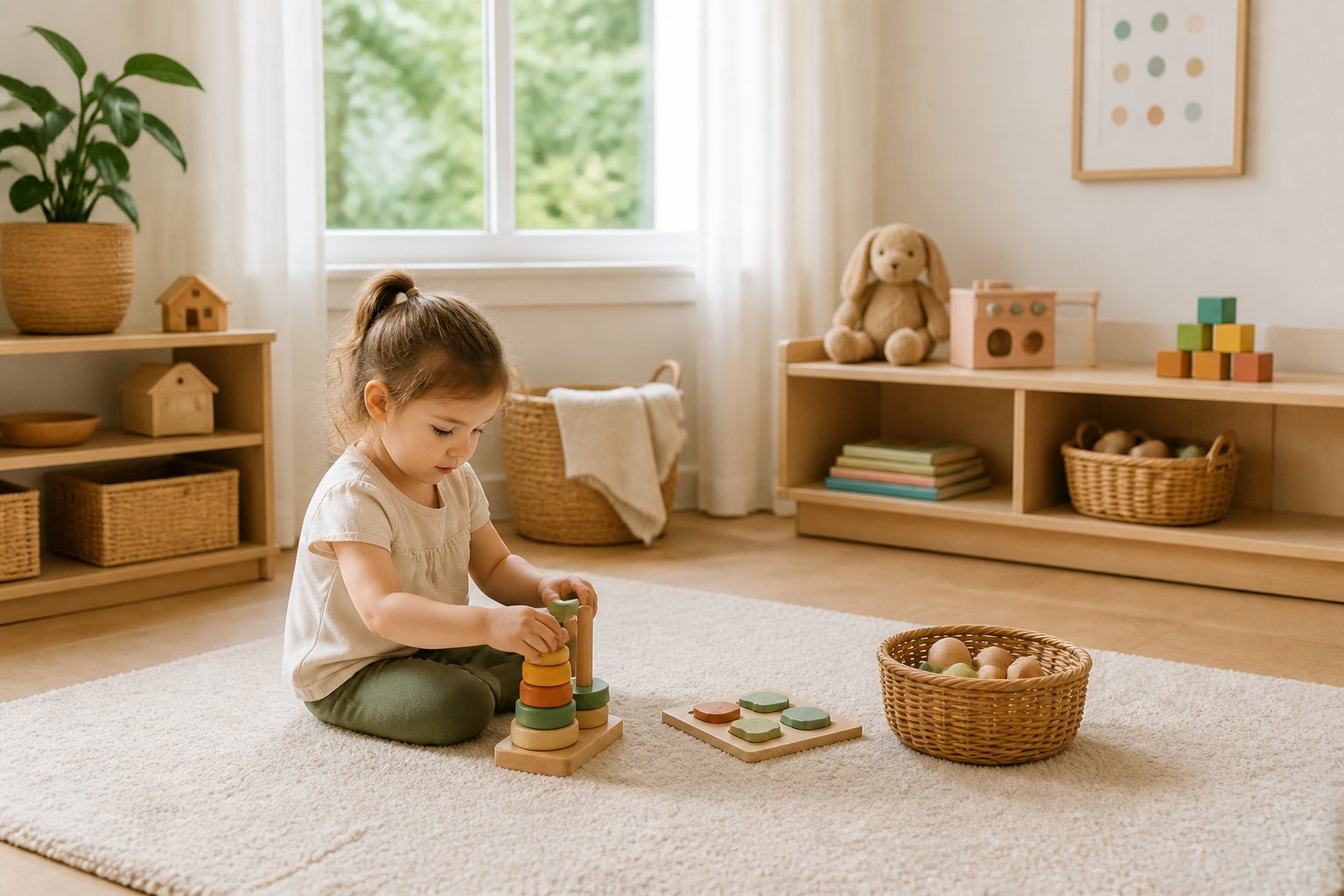
Make sure the activities are age-appropriate. A game that is too difficult will lead to frustration, while one that is too simple will cause boredom. For toddlers, focus on activities that build fine motor skills without being overly complex. For example, stacking large blocks is more suitable than threading small beads. Sensory bins are also an engaging and age-appropriate option, allowing children to explore different textures and themes through hands-on play.
Safety should always be your top priority. Be mindful of small objects that could be choking hazards, especially for children under three. Always supervise sensory play, particularly activities involving water, sand, or other loose parts.
Gardening offers deep sensory input through smell, touch, and movement.
Deep Pressure and Proprioceptive Activities for Toddlers
What are deep pressure and proprioceptive activities?
Deep pressure and proprioceptive activities are powerful tools for supporting your toddler’s sensory development and ability to focus. Deep pressure involves applying gentle, firm pressure to the body—think of it as a comforting hug for the nervous system. This type of sensory input can be incredibly calming, helping children with sensory processing challenges feel more secure and organized.
Proprioceptive activities, on the other hand, are all about helping your child’s body understand where it is in space. These activities use the body’s muscles and joints—through pushing, pulling, lifting, or carrying—to send important messages to the brain. When toddlers engage in proprioceptive activities, they build body awareness, improve fine motor skills, and support overall sensory processing.
For many children, especially those who struggle with sensory regulation or emotional regulation, these activities can make a big difference in daily life. Occupational therapists often recommend deep pressure and proprioceptive activities to help children manage sensory input, develop motor skills, and stay focused for longer periods.
Simple ways to incorporate these calming techniques at home
Bringing deep pressure and proprioceptive activities into your toddler’s routine doesn’t have to be complicated. Here are some easy, sensory-friendly activities you can try at home to provide calming input and promote better focus:
- Provide deep pressure: Offer big, gentle hugs, squeezes, or even gentle joint compressions. Rolling your child up in a soft blanket like a “burrito” or using a therapy ball to gently roll over their back can also provide deep pressure that helps with sensory regulation.
- Proprioceptive play: Encourage your toddler to push a toy shopping cart, carry a small backpack with a soft toy inside, or help move laundry baskets. These everyday activities give the body the heavy work it craves for sensory integration.
- Tactile exploration: Set up a sensory bin filled with dry rice, beans, or sand. Hide small toys for your child to dig out, combining tactile exploration with proprioceptive input as they scoop, pour, and search.
- Obstacle courses: Use cushions, chairs, and blankets to create a simple obstacle course. Crawling, climbing, and jumping help with motor planning, balance, and proprioceptive awareness.
- Therapy ball fun: Let your child sit and bounce on a therapy ball, or gently roll the ball over their legs and back. This provides both deep pressure and proprioceptive input, supporting sensory development and focus.
- Rhythm games and movement: Play music and encourage clapping, marching, or dancing. These activities combine auditory processing, proprioceptive input, and motor skills, making them both fun and regulating.
- Resistance bands: Supervised play with resistance bands or light weights can help strengthen muscles and provide the deep input many children need to stay focused.
- Listening and animal walks: Go on a listening walk to tune into different sounds, or try animal walks (like bear crawls or crab walks) to engage the proprioceptive and vestibular systems while also providing visual stimulation.
- Explore different textures: Let your child play with shaving cream, dry rice, or sand, or take a nature walk to discover new textures and smells. These multisensory experiences support sensory processing and help children learn to stay focused.
By weaving these sensory-based activities into your daily routine, you can help your toddler manage sensory sensitivities, improve their attention span, and build important motor and cognitive skills. If you have questions about which activities are best for your child’s individual needs, an experienced occupational therapist can offer personalized guidance and support.
Fun Indoor Toddler Focus Activities
When you’re stuck inside, it can be a challenge to keep a toddler engaged. However, indoor play offers a fantastic opportunity to work on attention skills in a controlled environment. You can set up simple games and activities that build focus while burning off some energy. Movement activities, such as using stability balls or dynamic exercises, can be easily adapted for indoor play to support focus and regulation.
From a simple memory game to activities that work on gross motor skills, there are many ways to promote concentration indoors. These activities don’t require fancy equipment—just a little creativity and a willingness to play along with your child.
Creating outdoor obstacle courses builds gross motor skills, coordination, and sequencing.
Best games to keep two-year-olds engaged
Keeping a two-year-old engaged requires games that are active, interactive, and simple to understand. At this age, they are learning to follow one- and two-step directions, and games are a fun way to practice this skill. These games are also great for preschoolers who are continuing to build their attention skills.
The best games often involve movement and imitation, as toddlers love to copy what you do. These interactive games also teach important social skills like taking turns and listening. Games like Simon Says promote active listening skills, helping children enhance their attention, auditory processing, and responsiveness during play. Even bathtime can become a focus activity with floating toys and pouring cups.
Here are some of the best games for a two-year-old:
- Simon Says: This classic game requires listening and paying close attention to the directions.
- Red Light, Green Light: A fun way to practice impulse control and listening for cues.
- I-Spy: Use simple clues like colors (“I spy something blue”) to help them focus their visual attention.
- Freeze Dance: Play music and have your toddler dance, then pause the music and have them “freeze” in place.
Fidget tools, such as stress balls and fidget cubes, can also help maintain attention during seated tasks.
Routines that create a calm and focused environment
Toddlers thrive on predictability. A consistent daily routine helps them feel secure because they know what to expect next. This sense of safety reduces stress and anxiety, freeing up their mental energy to focus on play and learning. You don’t need a rigid schedule, but a predictable flow to the day can make a big difference.
A predictable routine can be as simple as having meals, naps, and playtime around the same time each day. Transitions are often a major source of stress for toddlers, so having a routine for them helps. For example, a cleanup song before storytime signals that one activity is ending and another is about to begin.
For some children, a visual schedule can be very helpful. You can draw simple pictures on a whiteboard representing different parts of the day, like a sandwich for lunch or a book for storytime. This gives them a concrete way to understand their daily schedule and feel more in control.
Attention-Building Strategies Used by Occupational Therapists
Occupational therapists are experienced therapists who specialize in sensory integration and are experts in helping children develop the skills needed for daily life, and attention is a big one. They often use carefully selected sensory activities as part of focus training. These aren’t just random games; they are purposeful, attention-building exercises tailored to a child’s needs.
These professionals understand that skills like focus are built from the ground up. They might use activities that strengthen gross motor skills, like an obstacle course, to help a child’s body feel more organized before asking them to sit for a puzzle.
Occupational therapy for sensory integration uses controlled sensory experiences to help the brain adapt to sensory signals.
How therapists use sensory activities in focus training
Therapists are skilled at observing a child to figure out what kind of sensory input they need to feel regulated and ready to learn. They then design fun, play-based sensory activities that provide this specific input. The goal is to get the child’s nervous system into that “just right” state for focus.
For example, a therapist might have a child swing in a therapy swing to provide calming vestibular input or jump on a small trampoline to provide organizing proprioceptive input. Therapy ball exercises are also used to provide both proprioceptive and vestibular input, helping to improve attention, balance, and gross motor skills. Therapists often incorporate movement into activities to enhance focus and attention, using whole-body learning approaches. Swinging stimulates the inner ear and is one of the most powerful sensory integration activities for the vestibular system. The vestibular system processes movement and gravity, and slow, rhythmic movement is typically calming. These activities help the brain filter out irrelevant information, making it easier to build attention skills.
By using play, therapists make focus training enjoyable and motivating. They know that a regulated child is a child who is available for learning. The attention skills built through these targeted sensory activities lay a crucial foundation for all future learning and academic success.
Classroom sensory regulation ideas for better concentration
In a busy classroom, sensory regulation is essential for helping toddlers and preschoolers stay on task. Teachers can incorporate simple strategies throughout the day to improve concentration skills for the whole group. Movement breaks throughout the school day help children stay focused and attentive. Sensory strategies also support participation in group activities by gradually building tolerance and comfort through structured sensory play and exposure. These strategies can be integrated throughout the entire school day to create a learning environment that supports every child’s sensory needs.
Many of these strategies are simple to implement and can make a huge difference in a child’s ability to participate and learn. The American Academy of Pediatrics emphasizes the importance of play, and these sensory strategies turn the classroom into a more playful and effective learning space. Before implementing new tools, always review your school’s safety guidelines and the product’s terms of service.
Here are some sensory regulation ideas for the classroom:
| Sensory Need | Classroom Activity |
|---|---|
| Movement | Offer “brain breaks” with jumping jacks or stretching. |
| Tactile | Provide a small bin with sand or play-doh for quiet time. |
| Auditory | Use noise-reducing headphones during independent work. |
| Visual | Create a “calm-down corner” with soft pillows and dim lighting. |
| Oral-Motor | Offer crunchy snacks like carrot sticks or pretzels at snack time. |
| Breathing | Practice deep breathing exercises; these stimulate the vagus nerve, lowering heart rate and cortisol levels in children. |
Calming techniques, including deep breathing and the use of weighted items, help manage overwhelm and enhance concentration.
Conclusion
In conclusion, sensory activities play a vital role in helping toddlers focus and engage during playtime. By understanding the science behind sensory regulation, parents and caregivers can create an environment that fosters calmness and concentration. Simple activities tailored to a toddler’s developmental stage not only improve attention spans but also provide a foundation for emotional growth and well-being. Implementing these strategies will help your little one feel more secure and focused, ultimately leading to more enriching play experiences. If you’re looking for personalized guidance on sensory activities that suit your toddler’s needs, don’t hesitate to reach out for a free consultation.
Frequently Asked Questions
How can I help my toddler concentrate longer during play?
To improve your toddler’s naturally short attention spans, start by reducing distractions during playtime. Follow a simple daily schedule so they know what to expect. Break down activities into smaller steps to help them complete tasks, and celebrate their effort, even if they only focus for a few minutes at a time.
Encourage outdoor exploration and provide opportunities for fresh air, as spending time in natural environments can help regulate the nervous system and support better focus and mood.
What are good sensory activities for a toddler with short attention spans?
For a toddler with a short attention span, choose sensory activities that are highly engaging. Try activities that work fine motor skills, like squishing play-doh, or gross motor skills, like jumping on pillows. Proprioceptive heavy work activities such as jumping, crawling, and carrying weighted items can improve focus and emotional regulation. Regular sensory play also promotes emotional awareness and social interaction, especially for children with autism. Children with autism may have heightened responses to sensory input, affecting their daily activities, but sensory activities can help them build essential daily abilities such as getting dressed and feeding themselves. Creating a calm environment and following your child’s lead will help them focus for longer periods.
Are there safe sensory activities for indoor play?
Yes, there are many safe activities for indoor play that engage the sensory systems. Building with large, soft blocks, painting with water on construction paper, or playing in a sink filled with bubbles are great options. Always supervise your child and avoid any small objects that could be choking hazards, checking toy terms of use for age recommendations.





Leave a Reply