
Affiliate Disclosure: This post may contain affiliate links. If you purchase through these links, I may earn a small commission at no extra cost to you. I only recommend products I genuinely find helpful for families.
These fine motor activities for preschoolers help build the small hand muscles needed for writing, cutting, and everyday tasks.
In this post:
- easy fine motor activities you can set up at home
- skill-building ideas for ages 3–5
- simple materials and setups
If you’ve ever watched a 3-year-old struggle to zip their jacket or seen a 5-year-old grip a crayon with their whole fist, you’ve witnessed fine motor skills in action—or the challenge of developing them. Fine motor skills involve the coordinated movements of small muscles in the hands, fingers, and wrists working together with the eyes. For preschoolers aged 3 to 5, these skills form the foundation for nearly everything they do: feeding themselves, getting dressed, drawing, and eventually writing their name.
The good news? You don’t need fancy equipment or a therapy degree to help your preschooler develop fine motor skills. This article outlines easy, low-prep fine motor activities that families and preschool teachers can start using today. Most use common household or classroom materials like stickers, clothespins, coins, and play dough, so you can get started immediately.
Whether you’re looking to strengthen little fingers, improve hand eye coordination, or simply keep kids engaged with hands on play, you’ll find practical ideas organized into four main categories: precision activities, strength builders, bilateral coordination tasks, and fun game ideas that disguise practice as play.
There’s a ton to explore on Feral Toddler
Click below to find the hub you need, whether you’re dealing with toddler play, sleep, meals, or tantrums.
What Are Fine Motor Skills and Why Do They Matter in Preschool?
Fine motor skills refer to the coordinated use of small muscles in the hands, fingers, and wrists together with the eyes to perform precise movements. Think of actions like picking up a single Cheerio, turning the pages of a book, or holding a pencil—all require fine motor control that children develop gradually throughout the preschool years.
These skills underpin almost every everyday task preschoolers encounter. Using crayons to draw, opening lunch containers, buttoning a sweater, zipping a backpack, and turning book pages all demand fine motor precision. When children struggle with these tasks, they often become frustrated or dependent on adults for help with activities their peers handle independently.
Fine motor skills also support early academics and self help skills in meaningful ways. Holding a pencil correctly, tracing shapes, and beginning to write letters all require refined hand control. Self-care tasks like toothbrushing, washing hands, and managing clothes during bathroom trips depend on these same small muscle movements. Research shows that fine motor abilities correlate directly with math and reading comprehension success, making these skills essential for school readiness.
In terms of typical development, most 3-year-olds can stack several blocks, turn single pages in a book, and use a spoon with minimal spilling. By age 4, children often cut along straight lines with supervision and draw recognizable shapes. By age 5, many preschoolers control a pencil more precisely, cut on curved lines, and manage most clothing fasteners. Understanding these fine motor milestones helps caregivers set appropriate expectations while identifying areas that might need extra practice.
The best part? You can turn everyday activities and play into opportunities for children to practice fine motor skills naturally and joyfully.
Safety and Setup Tips for Fine Motor Play
Before diving into activities, safety comes first. Adult supervision is essential during fine motor play, especially with small objects like beads, coins, or buttons. These items pose a choking risk for children under 3, and even older preschoolers who still mouth objects should use only larger, safer materials.
Choose age-appropriate items based on your child’s developmental stage. For younger preschoolers (ages 3-4), stick with jumbo beads, large pom-poms, and chunky manipulatives. Reserve smaller materials like Perler-style beads or tiny buttons for older preschoolers (ages 4-5) who no longer put objects in their mouths. When in doubt, use the toilet paper roll test: if an item fits inside, it’s a choking hazard for young children.
Setting up a dedicated space makes fine motor play more successful:
- Designate a “fine motor tray” or shallow plastic container to contain materials
- Use a mat, cookie sheet, or baking tray to define the workspace and catch stray pieces
- Keep a small cup or bowl for used pieces and easy cleanup
- Store small pieces in labeled containers away from younger siblings
Additional safety specifics include cutting grapes and hot dogs lengthwise for any food-based activities, avoiding marbles with children who still mouth objects, and storing magnets and button batteries securely away from kids at all times.
Keep sessions short and positive to start—5 to 10 minutes is plenty for most preschoolers. Watch for signs of fatigue or frustration, and always end on a successful note. The goal is to make fine motor practice enjoyable, not stressful.
Fine Motor Activities for Toddlers and Preschoolers
This section focuses on simple, play-based motor activities that target core preschool skills like pincer grasp, hand strength, and hand eye coordination. Each activity can be adapted for 3-, 4-, and 5-year-olds by adjusting the size of materials, the speed of the task, or the complexity of rules.
Many of these preschool activities can be done in classrooms or at home using items families already own—board books, chalk, cereal, coins, and paper. The key is consistency: research shows that 800 minutes of targeted instruction over 16 weeks can produce substantial progress in fine motor skills, even in children from low socioeconomic backgrounds.

Peeling and Placing Stickers
Set up a simple sticker station using inexpensive dot stickers or character stickers, plain paper, and a marker to draw rows of circles or simple shapes. This activity is a favorite because kids love stickers, making it easy to encourage creativity while building essential skills.
Peeling stickers from a sheet builds the pincer grasp—that important thumb and pointer finger grip—and develops finger isolation. Placing stickers inside drawn shapes supports hand eye coordination and early handwriting control. Children must visually track where they want the sticker and guide their fingers to that exact spot.
Try these variations to keep it fresh:
- Create a “sticker road” by drawing a winding path for children to follow with stickers
- Practice patterns like red-blue-red-blue using colored dot stickers
- Decorate a paper “birthday card” for a family member’s upcoming celebration
- Make sticker charts where children earn stickers for completed tasks
For younger preschoolers, use larger stickers that are easier to peel. For more advanced kids, try smaller dots and challenge them to place stickers precisely along a wavy line or inside tiny shapes.
Stringing Cereal, Pasta, or Beads
Start with firm foods like O-shaped cereal, penne pasta, or larger beads, paired with pipe cleaners for easy threading. For extra stability, stick uncooked spaghetti into a lump of play dough and have children slide cereal onto the standing noodles—this is especially helpful for beginners.
Pushing cereal onto a pipe cleaner develops bilateral coordination, where one hand holds the string steady while the other threads. This mirrors the coordination children need for tasks like cutting with scissors or tying shoes. Visual-motor skills improve as children line up each piece with the opening.
Progression ideas include:
- Move from stiff pipe cleaners to flexible yarn or actual shoelaces
- Create pattern “friendship bracelets” for classmates or family members
- Count pieces as children add them, building counting skills alongside fine motor work
- Use colored pasta (dyed with food coloring) for sorting and pattern activities
Safety reminder: supervise closely and avoid small pieces for children who still put small objects in their mouths. Larger beads and chunky pasta work best for younger preschoolers.
Ripping, Crumpling, and Gluing Paper
Grab old magazines, junk mail, or colored construction paper and let children rip it into strips and small pieces. Then provide a simple template—like a heart, apple, or pumpkin shape—where they glue the torn pieces to create a collage.
Tearing paper strengthens the small muscles needed for writing while naturally practicing the tripod grasp. Children must coordinate both hands: one holds the paper steady while the other tears. Crumpling paper into small balls adds an extra hand strength component before gluing.
Keep this activity engaging throughout the year with seasonal projects:
| Month | Theme | Paper Colors |
|---|---|---|
| September | Apple | Red, green |
| October | Fall leaves | Orange, yellow, brown |
| November | Turkey | Brown, red, orange |
| January | Snowman | White, black, blue |
| February | Heart | Pink, red, purple |
| April | Flowers | Various bright colors |
Display the finished collage at child’s eye level to celebrate their effort and build self esteem in their fine motor work.
Placing Coins and Buttons in Slots
Turn an empty plastic container with a lid (like a yogurt tub or coffee can) into a “bank” by cutting narrow slots in the top. Let children decorate it with stickers or markers before use.
Picking up and inserting coins, poker chips, or large plastic buttons builds the pincer grasp, wrist stability, and visual-motor coordination. Children must orient each item correctly and apply the right amount of pressure—skills that transfer directly to holding a pencil and controlling writing movements.
Add learning elements by having children sort items by color or size into muffin tins before “depositing” them into the bank. You can also use chip clips to pinch items before dropping them, adding an extra strength challenge.
Safety note: use large buttons or poker chips for younger kids. Only introduce real coins with older preschoolers under close supervision, as coins present choking hazards and aren’t always clean.
Clothespin and Clip Challenges
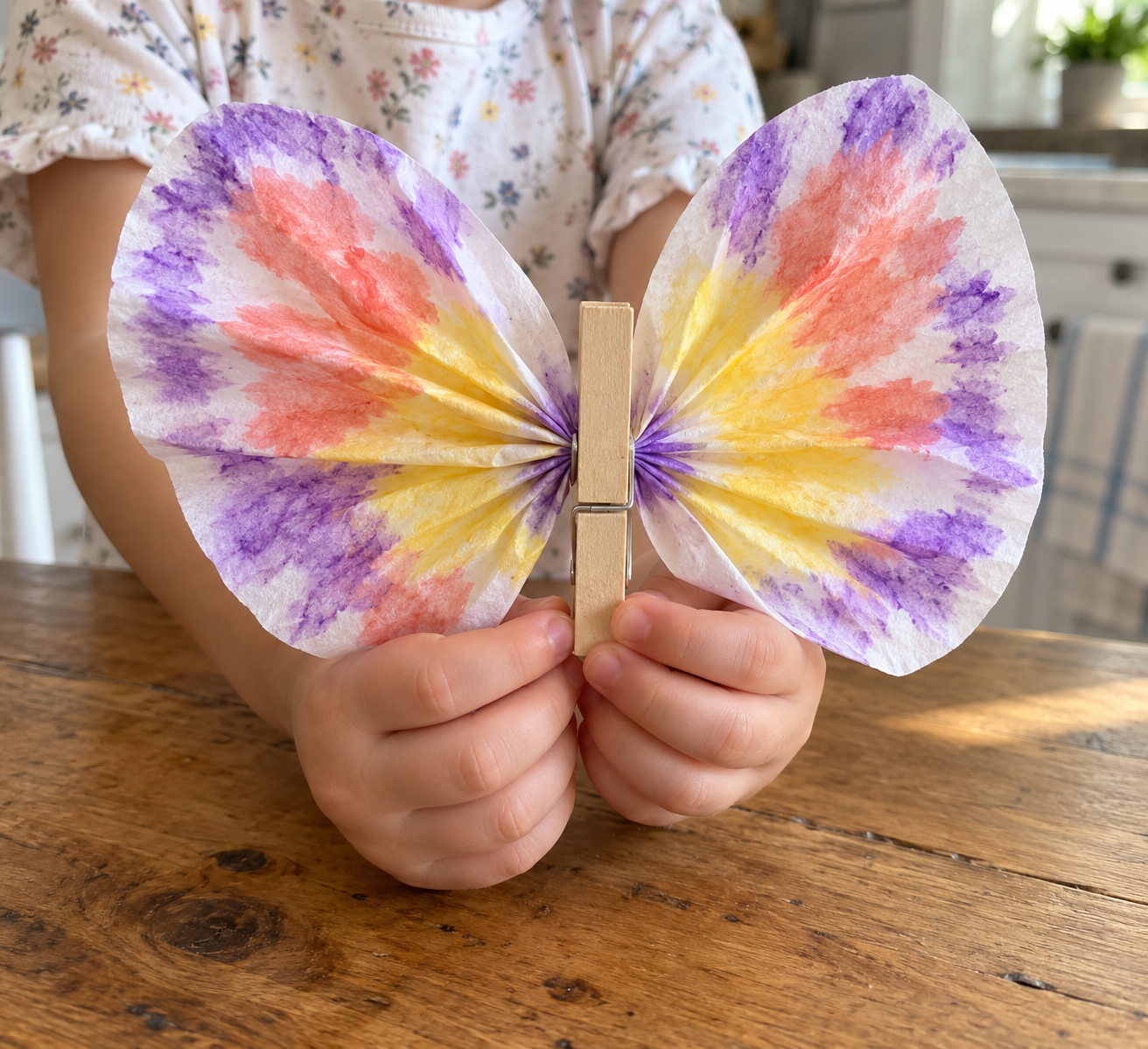
Classic spring-style wooden clothespins and plastic chip clips are powerful hand-strength tools that cost almost nothing. The squeezing motion directly strengthens the same muscles children need for scissor skills and pencil grasp development.
Here are three concrete setups to try:
- Clip clothespins around the edge of a cardboard circle to create a “sun” with rays
- Attach clothespins to an index card with letters written on them, matching to the same letters on a cardboard strip (spell the child’s name for extra engagement)
- Hang pieces of felt or small clothing items on a child-height string and have children clip and unclip them like laundry
Squeezing clips strengthens fingers for scissor use and pencil grip. Removing them practices coordination and graded control—knowing exactly how much force to apply. For extra fun, paint or decorate clothespins and turn clip-matching into a color or letter recognition game.
Sidewalk Chalk and Vertical Drawing
Using chunky sidewalk chalk outdoors on driveways or sidewalks provides excellent fine motor practice with the bonus of fresh air. Indoors, tape large paper to the wall or use an easel for vertical drawing with crayons or markers.
Drawing big lines, circles, and shapes on a vertical surface helps shoulder stability, wrist extension, and hand strength—all foundations for later writing. When children draw on vertical surfaces, their wrist naturally extends into the position needed for proper pencil grasp.
Simple games to try:
- Trace around the child’s hand or whole body
- Draw shapes and have children hop between them
- Create a chalk “road” and let kids drive toy cars along it
- Practice pre-writing strokes: vertical lines, horizontal lines, circles, and crosses
This activity adapts across seasons—use outdoor chalk on dry sunny days and large paper on walls during colder months. It’s a great activity for building strength while encouraging creative expression.
Play Dough and Putty Creations
Play dough is a fine motor powerhouse. Whether you use store-bought dough or make your own play dough using flour, salt, water, and oil, the rolling, pinching, squishing, and cutting involved works nearly every hand muscle.
Hide small objects like larger beads or plastic animals inside the dough and ask children to find and dig them out. This “treasure hunt” intensifies fine motor work while keeping kids engaged. Use cookie cutters and rolling pins to add variety and strengthen hand muscles through pressing and rolling motions.
Themed play ideas include:
- Making pizzas with small “toppings” children pinch and place
- Building “cookies” to serve at a pretend bakery
- Forming letters of the child’s name with dough snakes
- Creating animals or simple sculptures
For children who need extra hand-strengthening, firmer therapy putty offers more resistance. You can also adjust homemade dough consistency—less water creates stiffer dough that requires more effort to manipulate.

Threading and Lacing Cards
Create simple DIY lacing cards from cereal boxes or cardstock by cutting shapes and using a hole puncher to punch holes around the edges. Reinforce the holes with tape if needed for durability.
Threading a shoelace or yarn through holes trains bilateral coordination and planning. One hand feeds the lace through while the other pulls it out the other side—this back-and-forth requires attention and motor planning that builds school readiness.
Seasonal or thematic shapes keep interest high:
- Pumpkins in October
- Mittens in December
- Hearts in February
- Flowers in May
- Stars for birthdays or celebrations
Tip: wrap the end of yarn with tape to create a stiff tip like a shoelace. This makes it much easier for younger preschoolers to push through the holes without frustration.
Bubble Popping and Tweezer Games
Blow bubbles and have children practice popping them using different finger combinations: first one finger, then two fingers together, then specifically their thumb and pointer finger. This simple game builds finger isolation and control in a fun way while encouraging visual tracking as kids follow floating bubbles.
For a tabletop follow-up, provide child-safe tweezers or small tongs and have children move cotton balls or pom-poms between bowls, ice cube trays, or muffin tins. This tweezer work strengthens the same muscles needed for proper pencil grasp while improving fine motor precision.
Both activities work best when kept short and playful—perfect for quick movement breaks during a preschool day or transitions between other activities. The low-pressure nature makes them ideal for children who get frustrated with more demanding tasks.
Fine Motor Precision Activities for Preschool Readiness
As preschoolers approach kindergarten, they need more precise, goal-directed hand movements for writing, cutting, and manipulating small classroom tools. The activities in this section focus on accuracy—staying within lines, hitting small targets, and placing small pieces exactly where they belong—rather than just building strength.
Keep expectations age-appropriate. Three-year-olds are still developing basic control, while 5-year-olds can handle more challenging precision tasks. Focus on effort and improvement rather than perfection, and celebrate when children try hard even if results aren’t perfect.
Mazes, Tracing Paths, and Dot-to-Dot
Simple printed mazes, line paths, and dot-to-dot pages build the control children need for writing. Start with wide, simple routes and gradually introduce narrower or more complex paths as skills improve.
Children can begin by tracing paths with a finger to plan their route, then move to crayons or markers as control improves. This finger-first approach reduces frustration and builds confidence before adding the challenge of holding a writing tool.
Create homemade paths on cardstock featuring:
- Straight horizontal and vertical lines
- Gentle curves
- Zigzag patterns
- Spiral paths working from outside to center
Tape paths to a wall or table for variation. These activities connect directly to pre-writing strokes (vertical lines, horizontal lines, circles, crosses) commonly targeted in pre k classroom curricula.
Bead and Pegboard Designs
Pegboards with large plastic pegs offer excellent precision practice. Children must line up each peg with its hole and apply just enough pressure to insert it—skills that transfer to many school tasks.
Progress from larger pegs to smaller beads or peg-style toys for older preschoolers. Pattern activities add cognitive challenge:
- Copy color sequences from a sample card
- Fill only certain rows to create designs
- Form initial letters of the child’s name
- Create simple pictures like flowers or houses
Choose peg and bead sizes appropriate for age and development. Keep choking hazards away from children who still mouth objects, and supervise pegboard play closely with younger preschoolers.
Cutting on Lines and Snipping Crafts
Introduce child-safe scissors around age 3 with supervision, starting with snipping rather than cutting. Have children make random snips in strips of stiff paper or even cutting practice with play dough “snakes”—this builds scissor skills without the pressure of following lines.
Progression for scissor skills:
| Stage | Activity | Age Range |
|---|---|---|
| Beginning | Random snips in paper strips | 3-3.5 years |
| Developing | Cutting along thick straight lines | 3.5-4 years |
| Intermediate | Cutting simple curves | 4-4.5 years |
| Advanced | Cutting basic shapes | 4.5-5 years |
Craft ideas that motivate cutting practice:
- Cut “fringe” on green paper to make grass for a landscape
- Snip paper strips to create a lion’s mane around a circle face
- Cut along wavy lines to make ocean waves
Posture and safety matter: children should be seated at a child-sized table with thumbs pointing up, one hand holding the paper and turning it as needed. Store scissors safely after use and teach children to walk with closed scissors pointing down.

Precision Gluing and Sticker Targets
Using glue sticks or small squeeze bottles to apply glue inside tiny shapes or along short lines builds the control essential for managing writing tools. Children must regulate pressure and hand movement precisely.
Set up activities where children:
- Apply glue only inside small drawn circles or dots
- Trace glue along a pencil line
- Use glue to attach small collage items (tissue paper squares, sequins, large glitter, pom-poms)
- Place tiny stickers exactly on pencil-drawn targets
Draw light pencil circles or dots on paper as visual targets. Children cover each dot with glue, then place an item using their fingers or tweezers. This combines precision, visual-motor coordination, and finger strength into one engaging activity.
Puzzles and Matching Games
Start with chunky wooden puzzles with knobs that make grasping easier, then progress to interlocking cardboard puzzles of 8-12 puzzle pieces for older preschoolers. Rotating pieces to fit into spaces fosters fine motor precision alongside visual-spatial skills and problem solving.
Ideas for homemade matching games:
- Cut photos of family members or pets into simple puzzle pieces
- Create shape-matching boards where children align cut-out shapes with drawn outlines
- Make letter-matching activities using construction paper
Scaffold success by offering fewer pieces at first and providing visual cues like matching outlines or colors on the puzzle board. As children master simpler puzzles, gradually increase complexity.
Fine Motor Strength Activities Using Everyday Items
Strong hand and finger muscles provide the endurance children need for extended coloring sessions, writing practice, and self-care tasks like squeezing toothpaste and opening snack containers. Without adequate hand strength, children tire quickly and may avoid writing or coloring altogether.
The activities below use common household and classroom tools to build grip strength and endurance in fun, meaningful ways. Rotate a few strength activities each week rather than overwhelming children with everything at once.
Squeezing Sponges, Droppers, and Squirt Bottles
Set up a simple water play station with a basin, sponges, turkey basters, or eyedroppers, plus two bowls for transferring water back and forth. Squeezing and releasing develops grip strength, and eyedroppers specifically train the precise finger pinching needed for fine motor control.
Art variations add creative appeal:
- Drip colored water (use food coloring) onto coffee filters to create tie-dye patterns
- Use eyedroppers to fill small containers or ice cube trays
- Create watercolor effects by dripping colored water onto paper towels
Outdoor squirt bottle play offers mess-friendly options in warmer months. Children can spray chalk drawings to watch colors blend, water plants, or “wash” toy cars. The repetitive squeezing action builds significant hand strength while feeling like pure play.
Hole Punch Art and Ticket Making
Using a single hole puncher on strips of cardstock or old greeting cards requires significant hand strength and coordination. Children must squeeze hard while aligning the punch—challenging work disguised as creative fun.
Activities include:
- “Punch along the road” by following a drawn line
- Punch out circles to collect as confetti
- Create “tickets” for pretend play scenarios
Turn punched circles into tickets for a home or classroom theater, bus, or store. This adds imaginative play value and gives the punching activity a clear purpose. Adults may need to help line up the punch at first, and choosing appropriate paper thickness matters—cardstock works better than flimsy paper.
Dough, Baking, and Kitchen Helpers
Simple, supervised kitchen tasks like kneading bread dough, rolling cookie dough, pressing cookie cutters, and stirring batter work all the small hand muscles naturally. Children find these everyday tasks highly motivating because they’re doing “real” work alongside adults.
Age-appropriate kitchen activities:
| Age | Activity | Skills Practiced |
|---|---|---|
| 3-4 years | Stirring batter, pressing cookie cutters | Hand strength, bilateral coordination |
| 4-5 years | Placing pizza toppings, rolling small dough balls | Pincer grasp, finger isolation |
| 5+ years | Kneading dough, spreading with a butter knife | Full hand strength, pressure control |
Safety points: keep sharp tools and hot surfaces out of reach, provide a sturdy stool, and clear a workspace at child height. The mess is worth the developmental benefits—and the delicious results.
Building and Construction Challenges
Building bricks, snap-together blocks, and interlocking disc toys require pushing and pulling to connect and separate pieces. This resisting and releasing motion strengthens fingers and palms while promoting bilateral coordination—both hands must work together effectively.
Simple building challenges:
- Build a tower as tall as your hand
- Create a bridge strong enough for toy cars to cross
- Copy a model picture or structure made by an adult
- Construct a “house” with windows and a door
Construction play also supports problem solving and perseverance—valuable school-readiness traits. When a tower falls, children learn to try again. When pieces don’t fit, they must figure out why. These cognitive benefits complement the physical strengthening.
Outdoor Fine Motor Strength Play
Natural outdoor tasks provide rich sensory input while building grip strength and finger endurance. Digging in soil with child-sized trowels, scooping sand into buckets, and picking up small stones or acorns all challenge hand muscles in varied ways.
Gardening jobs perfect for preschoolers in spring and summer:
- Placing seeds into holes
- Gently firming soil around seedlings
- Pinching dead leaves off plants
- Pulling small weeds
- Watering with a small watering can
Seasonal adjustments keep outdoor fine motor play relevant year-round. In fall, use toy rakes with lightweight leaves. In winter (depending on climate), try shoveling light snow into small buckets or making snowballs. These activities combine fresh air, physical activity, and developmental benefits.

Fine Motor Games and Themed Activities for Extra Fun
Board games and themed crafts disguise fine motor practice as pure play, keeping older preschoolers especially engaged. When children don’t realize they’re “practicing,” they often persist longer and try harder.
Add these games to weekly routines, family nights, or classroom centers. Most can be purchased inexpensively or created as DIY alternatives using household materials.
Card and Board Games for Hand Skills
Preschool-friendly card games where kids hold and sort a small number of cards build finger dexterity and in-hand manipulation skills. Simplified versions of Go Fish or color-matching games work well, with children holding 3-5 cards at a time.
Skills developed through card play:
- Holding multiple cards in one hand
- Shuffling (even imperfect shuffling helps)
- Dealing cards one at a time
- Picking up single cards from a spread
Grid-drop games similar to Connect 4™ are excellent for hand eye coordination. Children must grasp discs and release them precisely into vertical slots. The satisfying “click” when discs drop provides immediate feedback.
DIY alternatives include using a muffin tin and colored counters for matching games, or creating a homemade cardboard slot game for dropping tokens. These homemade versions often work just as well as store-bought options.
Classic Fine Motor Game Challenges
Games requiring steady hands and precise movements teach children to slow down and control their grasp. Block-stacking games where children carefully remove and place pieces without toppling the tower demand concentration alongside fine motor control.
These games reinforce:
- Slow, controlled grasp and release
- Graded pressure (knowing how hard to push or pull)
- Patience and focus
- Recovery from minor setbacks
Try a tweezers-based game where children use plastic tweezers to rescue small objects from a tray “without waking the sleeping dragon” (without touching the sides). Adults can adjust difficulty by changing object size, adding a timer, or requiring use of only certain fingers.
Seasonal and Holiday Fine Motor Crafts
Rotating crafts through the year keeps fine motor practice fresh and gives children something to look forward to. Planning monthly projects tied to holidays, seasons, or children’s birthdays maintains engagement while building skills consistently.
Sample yearly rotation:
| Month | Craft | Fine Motor Skills |
|---|---|---|
| September | Back-to-school collage | Cutting, gluing |
| October | Torn-paper pumpkins | Tearing, crumpling |
| November | Turkey handprints | Tracing, painting |
| December | Paper chain garlands | Cutting, gluing loops |
| January | Snowflake cutting | Scissor precision |
| February | Heart lacing cards | Threading |
| March | Shamrock stamping | Grip, pressure control |
| April | Egg decorating | Fine brush control |
| May | Flower collages | Multiple skills combined |
Each project should integrate several fine motor skills—cutting, gluing, placing stickers, threading—for maximum benefit. These themed activities support both fine motor and cognitive skills like color sorting and counting.
How to Build Fine Motor Activities into Daily Routines
Repetition in short, frequent bursts proves more effective than occasional long sessions. Research on improving fine motor skills consistently shows that regular practice—even just 5-10 minutes daily—produces better results than sporadic hour-long sessions.
Look for natural moments to insert fine motor practice throughout the day:
- Morning dressing: practicing zippers, snaps, and buttoning clothes
- Breakfast: peeling bananas, opening containers, spreading with a butter knife
- Snack prep: opening packaging, pouring from small containers
- Cleanup time: pinching toys to sort them, stacking blocks
- Outdoor play: picking flowers, collecting rocks, digging
A sample weekday routine might include 5-10 minutes of a dedicated fine motor task after breakfast, during quiet time, or before bedtime reading. This consistency builds habits without feeling overwhelming for children or caregivers.
Teachers can use arrival time, center time, or transition periods for quick fine motor stations or “busy bins” containing rotating activities. Having materials readily accessible means children can practice during natural downtimes rather than requiring special preparation.
Most importantly, notice and praise effort, problem solving, and persistence rather than perfect results. Comments like “You kept trying even when that was tricky” build motivation better than “Perfect job!” Children who feel successful keep practicing—and practice is what developing fine motor skills requires.
When to Seek Extra Support for Fine Motor Development
Children develop at different rates, and some variation is completely normal. However, persistent difficulty with tasks like holding utensils, manipulating toys, or using crayons may warrant a closer look from a professional. Early support can make the transition to kindergarten much smoother.
Signs that might prompt consultation with a pediatrician or pediatric occupational therapist include:
- Avoiding all coloring, drawing, or writing activities
- Getting extremely frustrated with simple puzzles appropriate for their age
- Struggling to use scissors at age 5 despite practice
- Unable to hold a crayon or marker with fingers (using whole-fist grip past age 4)
- Significant difficulty with self-care like dressing or using utensils
- Avoiding play activities that other same-age children enjoy
Fine motor challenges are common and treatable. Studies show that meaningful occupational therapy enhances developmental and functional skills at the preschool level through age-appropriate activities. Many child care centers and schools have resources to help families connect with appropriate services.
If you have concerns, document what you notice—dates, specific activities, and particular struggles—to share with professionals. This information helps therapists understand patterns and design effective interventions. Early identification and support give children the best chance to develop the skills they need for school success.
Conclusion: Making Fine Motor Practice Playful and Consistent
Everyday play—stickers, play dough, water, blocks, and games—can significantly boost preschoolers’ fine motor development when incorporated consistently. The activities in this article require minimal preparation, use common materials, and turn skill-building into genuine fun.
Keep activities joyful and low-pressure. Weave them into real routines at home and school rather than treating fine motor practice as separate “work time.” Children learn best through play, and the most effective fine motor activities feel like play activities rather than exercises.
Choose 2-3 activities from this article to try this week, then rotate in new ones monthly throughout the school year. This variety keeps children engaged while ensuring they develop strength, precision, and coordination across many different tasks.
Watch for small improvements in how your preschooler grips a crayon, manages buttons, or completes puzzles. Celebrate these victories—they represent real progress in developing the skills children need for writing, self-care, and classroom independence. Every sticker placed, every bead threaded, and every clothespin squeezed brings your preschooler one step closer to kindergarten readiness.
Helpful Learning Resources
If you want to dive deeper into early childhood development and preschool readiness, these evidence-based resources are worth bookmarking:
- Zero to Three early learning resources
- NAEYC guidance on developmentally appropriate practice
- PBS Parents activity ideas
- Reading Rockets early literacy resources
These resources can help you better understand how preschoolers learn and how to support their fine motor skills, math development, early literacy, and science exploration at home.

Leave a Reply