
Affiliate Disclosure: This post may contain affiliate links. If you purchase through these links, I may earn a small commission at no extra cost to you. I only recommend products I genuinely find helpful for families.
These math activities for preschoolers make early learning feel like play instead of work.
In this post:
- hands-on math ideas for young kids
- simple counting and number activities
- low-prep learning setups
Preschool math isn’t about worksheets or memorizing facts. It’s about play, curiosity, and those small moments when your child counts the stairs or sorts their toys by color without even realizing they’re learning. The good news? You already have everything you need to build strong math foundations at home.
This guide gives you practical, hands on activities that turn everyday moments into learning opportunities. Whether you’re a parent looking for quick ideas or a teacher seeking fresh approaches, these activities for preschoolers will help children develop essential basic math skills through play.
There’s a ton to explore on Feral Toddler
Click below to find the hub you need, whether you’re dealing with toddler play, sleep, meals, or tantrums.
Quick Start: 10 Easy Math Activities You Can Do Right Now
You don’t need fancy materials or complicated lesson plans to begin teaching preschool math. Most of these activities use items you already have at home, and each one takes just 5-10 minutes. The most important thing is consistency—short, daily play builds stronger foundations than occasional long sessions.
Dice and Block Towers gives your child immediate practice counting and comparing. Roll one or two dice and build block towers to match the number shown. Then compare which tower is taller or shorter. This activity combines counting skills with early measurement concepts, and kids love the physical act of stacking.
Snack Counter turns snack time into math fun. Give your child 10 pieces of cereal or raisins and ask them to count them. Then have them eat a set number and figure out how many items are left. This simple subtraction introduction uses real objects they care about.
Shoe Line-Up works perfectly during morning routines. Line up family shoes from smallest to largest and talk about size and numerical order. Ask your child which shoe is first, second, or third in line, building both measurement language and ordinal number understanding.
Toy Car Garage creates a number matching game preschoolers adore. Draw or tape numbered parking spots 1-10 on cardboard. Then label small toy cars with corresponding number stickers and ask your child to park each car in its correct number spot.
Laundry Sort makes chores educational. Have your child sort socks by color or size, then count how many matching pairs you’ve made together. This builds classification skills while teaching that math appears everywhere in daily life.
Stuffed Animal Graph introduces basic data concepts. Line up 5-8 stuffed animals by type or color and count how many are in each group. Ask questions like “Do we have more bears or bunnies?” to practice comparing quantities.
Balloon Bounce Count adds movement to math. Blow up one balloon and count together how many times you can keep it in the air in a row. This simple game builds one-to-one correspondence as kids say each number with each tap.
Bath Time Cup Fill explores capacity and counting. Label two cups (one marked 1, one marked 5) and count how many small items or pours it takes to fill each. Children begin understanding that bigger containers hold more.
Sticker Number Paths creates a hands-on number line. Draw a simple path of 10 boxes and label them 1-10. Your child places one sticker in each box while counting along the path, reinforcing sequence and number recognition.
Pattern Bracelet builds pattern awareness through crafting. Use pom poms, beads, or even pasta in two or three different colors to make a simple repeating pattern bracelet. Red-blue-red-blue patterns are perfect for beginners, and the finished product becomes something they can wear with pride.

Why Hands-On Math Matters in Preschool
Preschool math is fundamentally about exploration, play, and conversation. Children at this young age learn best when they can touch, move, and manipulate real objects rather than looking at pictures or completing worksheets. When a child counts actual blocks instead of dots on paper, they’re building genuine understanding of what numbers mean.
Hands on learning activates multiple senses simultaneously, which helps simple math concepts stick in developing brains. When children move their bodies, touch objects, and hear counting words at the same time, they create stronger neural connections than passive observation allows. This multi-sensory approach supports brain development and creates lasting mathematical understanding that transfers to new situations.
Research consistently shows that early positive math experiences between ages 3-5 connect directly to later confidence and achievement in primary school. Children who develop a strong foundation during preschool years approach math in elementary school with curiosity rather than anxiety. These early experiences shape not just what children know, but how they feel about learning math.
Preschool math extends far beyond counting. It includes comparing sizes, sorting objects, recognizing patterns, identifying different shapes, and understanding spatial relationships in the world around them. Every time a child notices that a square block won’t fit in a round hole or that they need more crackers to match their sibling’s pile, they’re doing mathematical thinking.
Your attitude matters enormously. Parents’ and teachers’ relaxed, curious approach toward math strongly influences how children feel about the subject. When adults model excitement about noticing patterns or counting objects, children absorb that enthusiasm. Conversely, comments like “I was never good at math” can inadvertently communicate that math is something to fear rather than enjoy.
Pre-K Math Basics: What Preschoolers Are Learning
Between ages 3 and 5, children develop foundational math concepts that prepare them for future success in school. Common milestones include counting to 10 (and eventually to 20), naming basic shapes, comparing groups to determine which has more, and recognizing simple patterns. Progress varies significantly by child, and skills develop through repetition in everyday routines rather than formal instruction.
Understanding these core concept areas helps you recognize learning opportunities throughout your day:
Number sense means understanding that numbers represent “how many” of something. When a child knows that the numeral 4 means four actual objects, they’ve grasped this foundational concept that underlies all later mathematics.
Counting and one-to-one correspondence involves touching or moving one object for each number word spoken. Many young learners can recite numbers before they truly understand this matching process, which is why practice counting with real objects matters so much.
Comparing quantities develops when children use words like more, less, and same to describe relationships between groups. This skill builds naturally when you ask questions like “Who has more grapes?” at snack time.
Order and position concepts include first, next, last, before, and after. These words help children understand sequence and prepare them for understanding number lines and mathematical operations.
Shapes and geometry involve recognizing circles, squares, triangles, rectangles, and other different shapes in the environment. This visual recognition forms the building blocks of spatial reasoning.
Measurement at the preschool level means using comparison language like longer, shorter, heavier, and lighter rather than using rulers or exact numbers.
Patterns and sequencing help children predict what comes next in color, sound, and movement sequences. This skill connects directly to critical thinking skills and later algebraic reasoning.
The activities throughout this article will give you concrete ways to practice each of these areas at home or in the classroom.
Counting and Number Recognition Activities for Preschoolers
Counting to 10 (and eventually 20) and learning to recognize numbers when written are core pre k math goals. However, there’s an important distinction between rote counting—simply reciting number words in order—and true counting, which means matching each number word to exactly one object. Both skills matter, and the activities below develop them together.
Number Hunt at Home transforms your living space into a learning environment. Hide number cards showing single digit numbers around one room. Call out a number and invite your child to find the matching card. Once found, they can match it to a simple number line posted on the wall. This activity builds number recognition while adding the excitement of a treasure hunt. Start with numbers 1-5 for younger children and expand to 0-10 as they gain confidence.
Playdough Number Tracing combines fine motor skills development with numeral recognition. Print large numbers 0-10, place them in plastic sleeves or laminate them, and have children roll dough “snakes” to trace each numeral. The physical act of forming numbers helps children remember their shapes, and the tactile experience keeps young learners engaged far longer than paper and pencil activities.
Dice Dot Match builds the connection between different forms of representing numbers. Roll a die and have your child match the dot pattern to cards that show the same amount as numerals, finger representations, or grouped objects. This teaches that the number 4 can look like “4,” four dots, four fingers, or four apples—all representing the same quantity.

Jump on the Number takes learning outside with movement. Write numbers 0-10 in chalk on your driveway or sidewalk. Call out a number and have your child run and jump on it while shouting the number aloud. The combination of hearing, seeing, saying, and moving creates multiple memory pathways. You can extend this by calling out “Find a number bigger than 3” to add comparing practice.
Snack Ten-Frames make an abstract concept concrete and delicious. Draw ten-frame boxes on paper—two rows of five squares each. Children place one snack piece per box as they count to 10, seeing how numbers relate to this organized visual structure. Then they eat the snacks while counting backward, introducing early subtraction concepts. Use small items like cereal pieces, raisins, or crackers. Note: always supervise young children with small food items to prevent choking.
Number Story Cards connect quantities to numerals through visual matching. Show a picture card displaying a set of objects—like 4 apples or 6 butterflies—and ask “How many?” After counting, your child matches the card with the corresponding numeral card. This reinforces that the written number represents the counted quantity.
Calendar Count-Up builds counting into your morning routine naturally. Each day, count the days of the current month so far, touching each number on a wall calendar. This daily practice counting helps children see numbers in sequence and understand that each day adds one more. By month’s end, children have practiced counting repeatedly while also learning about time concepts.
When doing any activity with small objects like beads, magnetic numbers, or food items, ensure appropriate supervision for younger children due to choking risks.
Shapes and Spatial Awareness Through Play
Shape knowledge and spatial language—words like under, over, next to, and behind—support later geometry skills and even reading development. Children who can visualize and describe positions in space develop stronger problem solving abilities as they grow. The activities below combine movement with shape recognition, keeping preschoolers engaged while building spatial awareness.
Shape Hunt Walk turns a neighborhood stroll into a geometry lesson. Before you leave, draw a simple checklist showing shapes to find: circle, square, rectangle, triangle, star. As you walk, look for real-life examples together. Wheels are circles, windows are often rectangles, some road signs are triangles. Check off each shape when spotted and talk about what makes each shape special. Many children become so enthusiastic about shape hunting that they begin pointing out shapes unprompted.
Tape Shapes on the Floor creates an active indoor game perfect for rainy days. Use painter’s tape to create shapes cut into large outlines on your floor—circles, squares, triangles, and rectangles work well. Then give movement commands: “Jump into the circle!” “Walk around the square!” “Hop on one foot inside the triangle!” This full-body engagement helps children internalize shape properties while burning energy.
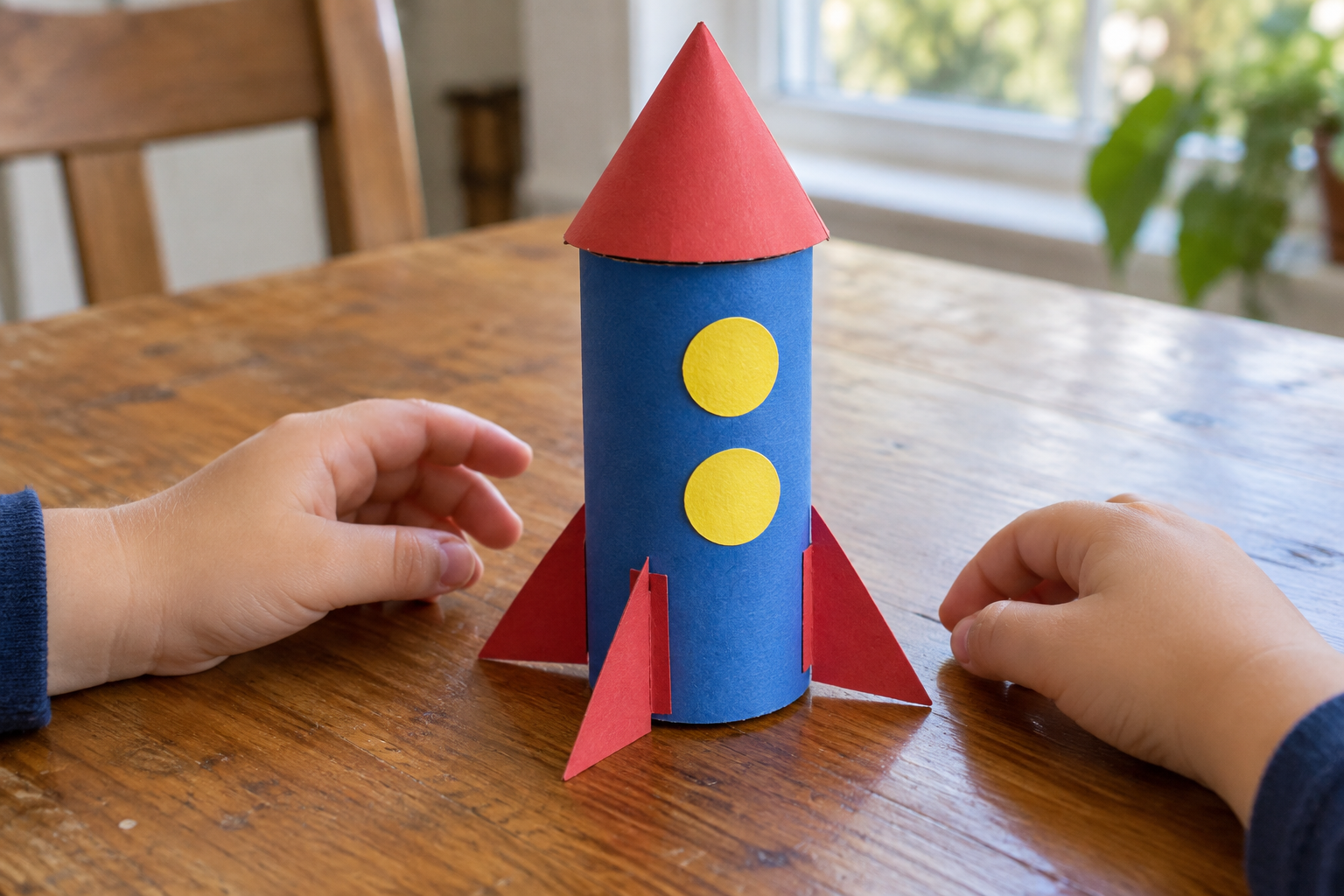
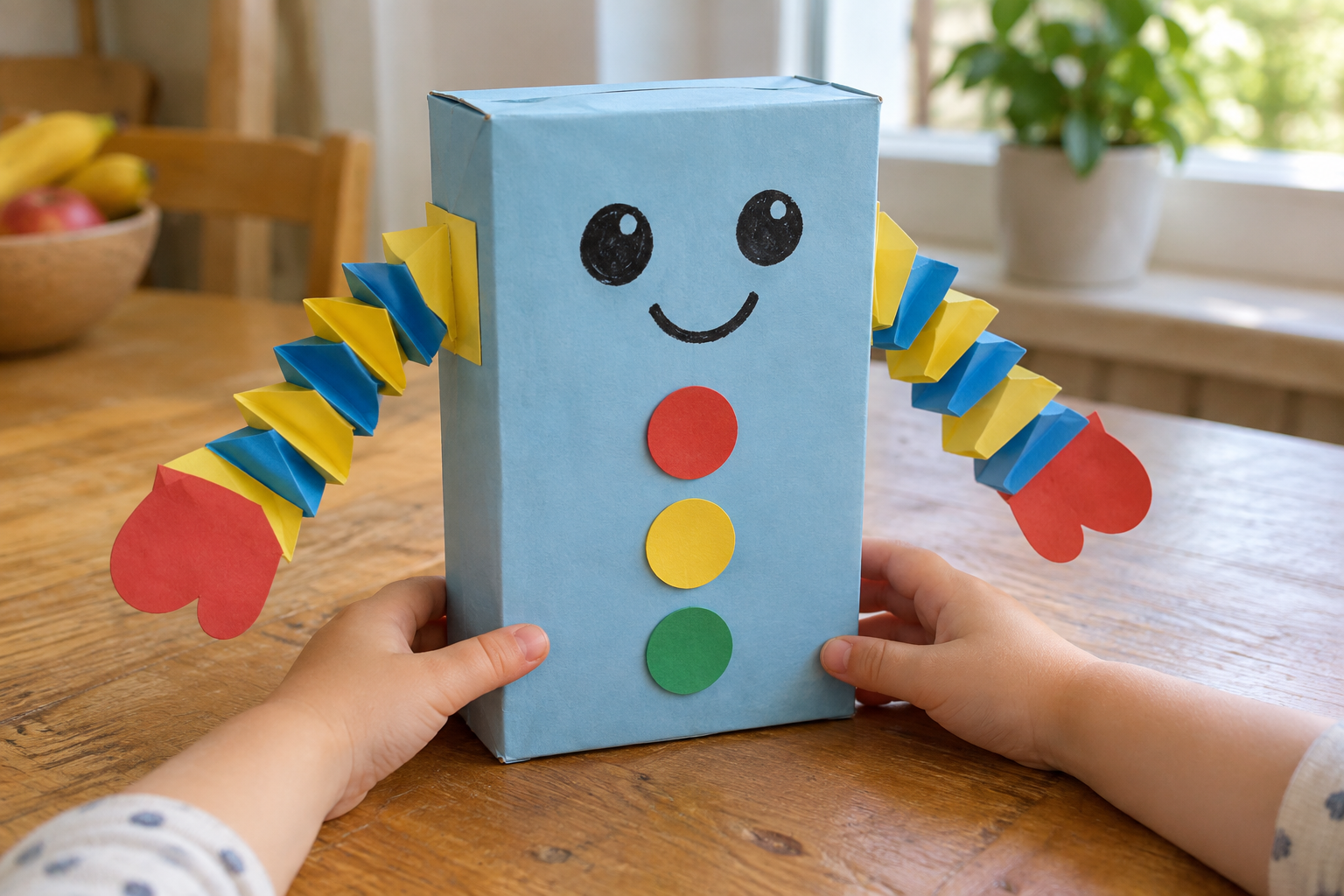
Build a Shape Picture combines art with geometry awareness. Cut out paper shapes in different colors and different sizes. Work together to assemble familiar objects from these shapes—a house from rectangles and triangles, a train from circles and rectangles, a robot from squares. Count how many of each shape you used and discuss which shapes worked best for different parts. This activity shows that shapes combine to create shapes we see everywhere.
Shape Snack Plates makes mealtime mathematically meaningful. Arrange snacks into shape formations on a paper plate—cucumber slices form a circle, square crackers arranged in rows, triangle cheese slices. Name each shape before eating. You can extend this by asking children to create shapes themselves or to find the shape that has three sides.
Block City develops both shape recognition and engineering thinking. Give children wooden blocks of different shapes and challenge them to build a city, tower, or house. As they work, ask questions that develop spatial language: “Which shapes stack best?” “What happens when you put the triangle on top?” Use descriptive words like tall, short, wide, narrow, stable, and wobbly. Children discover through play that squares and rectangles stack easily while circles roll away.
Shape Sorting Baskets creates a classification game. Label baskets, paper bags, or trays with a shape picture. Gather household objects and work together to sort them by which shape they most resemble. A ball goes in the circle basket, a tissue box in the rectangle basket, a party hat in the triangle basket. Accept reasonable answers and discuss why some objects are harder to classify—an egg might look circular from one angle but oval from another.
Throughout all shape activities, weave in spatial vocabulary naturally. Ask your child to “put the red block under the table” or “stand behind the triangle.” These position words build language skills alongside mathematical understanding. When children make mistakes—like calling an oval a circle—gently model the correct name while acknowledging what they noticed: “That does look round! It’s a stretched-out circle called an oval.”

Measurement and Comparing: Bigger, Smaller, Longer, Shorter
Preschool measurement focuses on comparison rather than precise numbers. Children don’t need rulers or exact measurements yet—they need vocabulary and experiences that help them understand relative size, length, height, and capacity. Everyday moments offer constant opportunities to explore different measurements through comparison language.
Cooking, bath time, gardening, and cleaning all provide natural contexts for measurement talk. While baking, compare whether there’s more flour or sugar in the bowl. At bath time, discuss which cup holds more water. In the garden, notice which plant grew taller this week. These conversations cost nothing and require no special materials.
Stuffed Animal Line-Up develops ordering and comparison skills using beloved toys. Gather several stuffed animals or action figures and line them up from shortest to tallest. Then reverse the order from tallest to shortest. Ask questions like “Which one is in the middle?” and “Is the bear taller or shorter than the bunny?” Children enjoy arranging and rearranging, getting multiple practice opportunities through a single activity.
Footstep Measuring introduces non-standard measurement units in a fun way. Trace your child’s foot on paper and cut it out. Use this paper footprint as a measuring unit to determine how many “feet” long the couch is, how wide the doorway is, or how tall their favorite chair is. Record the numbers together. This activity shows that we can measure using many different things—not just rulers.
Water Fill Station explores capacity through hands-on experimentation. Set up three clear containers of different sizes along with one measuring cup or small pitcher. Let your child explore which container holds more or less by pouring water between them. Ask prediction questions before pouring: “Which do you think holds more?” The visual feedback of water levels makes this concept concrete and memorable.
String Around the Table creates a tactile measurement comparison. Cut pieces of string to match the length of various objects—the table edge, a chair leg, your child’s arm, a book. Then lay the strings side by side to compare which are longer or shorter. This activity shows that length can be captured and compared, preparing children for using rulers later.
Book Weighing Game develops understanding of weight through direct comparison. Hold two books of different sizes and ask which feels heavier. Let your child test different pairs of books, toys, or household objects. Use words like heavier, lighter, and about the same. You can extend this with a simple balance scale or even a clothes hanger with paper bags hung on each end—place objects in each paper bag and watch which side goes down.
Tower Challenge combines building fun with height comparison. Build two block towers and compare their heights. Are they the same? Which is taller? Then add or remove blocks to make them match exactly. Count how many blocks are in each tower. This activity connects counting to measurement and introduces the concept of equivalence.
Throughout these activities, use precise comparative language repeatedly: longer than, shorter than, almost the same, heavier, lighter, holds more, holds less. Don’t expect perfect language from children immediately—they’re absorbing these words through exposure and will begin using them naturally over time.
Patterns and Sequencing Activities
Pattern recognition forms one of the most fundamental mathematical skills, underlying everything from basic arithmetic to algebra. When children learn to identify, continue, and create patterns, they develop critical thinking skills that transfer across subjects—including reading, music, and science. Patterns also build turn taking and prediction abilities that support social development.
Simple ABAB patterns—like red-blue-red-blue or clap-stomp-clap-stomp—provide the perfect starting point for preschoolers. As children develop, they can progress to more complex patterns like AAB (red-red-blue), ABB (red-blue-blue), or ABC (red-blue-green). The key is starting simple and celebrating effort rather than perfection.
Clap-Stomp Patterns use sound and movement to make patterns physical. Create a simple pattern like clap-stomp-clap-stomp and invite children to copy and continue it. Once they master two-element patterns, try variations: clap-clap-stomp or clap-stomp-stomp. Ask “What comes next?” before they make each sound. You can extend this by having children create their own patterns for you to copy—kids love turns flipping between leader and follower roles.
Color Block Trains create visual patterns children can build. Use colored circles, blocks, or craft sticks to start a pattern: red block, blue block, red block, blue block. Pause and ask “What comes next?” before letting your child add the next piece. After they extend the pattern successfully, try starting new patterns together. Keep patterns visible so children can look back and check their work.
Snack Patterns make pattern practice delicious. Thread fruit pieces onto skewers in patterns—banana-berry-banana-berry—or arrange them on plates. Have children read the pattern aloud before eating in pattern order. Using two cards or types of food keeps patterns simple; add a third food type as children gain confidence. This activity works with any small food items you have available.
People Patterns bring patterns to life with movement. With a small group, arrange children in a sit-stand-sit-stand pattern. Ask the group to notice the pattern and predict where a new person should stand. Then rearrange to create new patterns. This social activity helps children see that patterns exist in many different forms, not just colors and shapes.
Nature Patterns take pattern work outdoors. On a walk, collect leaves, stones, sticks, and flowers. Create patterns on the ground: leaf-leaf-stone, leaf-leaf-stone or three sticks then one leaf repeated. Nature provides endless material variety, and outdoor creation adds extra fun to the activity. Take photos of your patterns to remember them.
Story Sequencing Cards connect patterns to daily routines. Print or draw 3-4 images showing a familiar sequence: wake up, eat breakfast, brush teeth, go to school. Mix the cards and help children put them in correct order. Ask “What happens first?” and “What comes after breakfast?” This activity builds understanding that events follow patterns and sequences too.
When working on patterns, ask open-ended questions that build reasoning: “How do you know that comes next?” “What would happen if we started with blue instead?” “Can you make your own pattern for me to continue?” These questions develop mathematical thinking beyond simple repetition.
Incorporating Math into Everyday Routines
The best preschool math happens naturally during daily activities rather than during designated “math time.” Every routine offers opportunities to count, compare, sort, and notice patterns. The secret is simply paying attention and talking about the math you see.
Morning Routine Math begins before you even leave the bedroom. Count steps going downstairs together. Count buttons or snaps as you get dressed. Time how many toothbrush strokes happen before rinsing. Ask “How many socks do you need?” and “Can you find the matching pairs?” These quick moments add up to significant math exposure without requiring any extra time in your schedule.
Mealtime Math turns every meal into counting practice. Ask your child to give everyone two crackers each—this builds one-to-one correspondence and early division concepts. Compare portions: “Who has more carrots? How can we make it fair?” Count bites until the food is gone. Ask questions like “We have three apples. What if we eat one?” to introduce subtraction naturally. Use an ice cube tray for sorting small snacks by color or type before eating.
Outdoor and Playground Math combines movement with numbers. Count how many times your child can swing before jumping off. Time how long the slide takes from top to bottom—count together: one, two, three. Collect leaves or rocks and sort them by size, color, or type. Compare heights: “Is this pile face up or face down? Is this tree taller than that one?” Look for shapes in playground equipment and nature.
Shopping Trip Math provides real-world number exposure. Count items as they go into the cart: “We need six bananas. Let’s count together.” Point out price numbers even if children don’t understand money yet—just recognizing that those numbers mean something builds awareness. Compare package sizes: “This cereal box is bigger than that one. Which has more?”
Clean-Up Time Math transforms tidying into a sorting game. Ask children to put all the red toys in one bin and blue toys in another. Count how many items go back on the shelf. Sort blocks by shape or size. Challenge children to find numbered cards and arrange them in numerical order. Ask “Can you find all the pieces that match?” to practice matching pairs.
The key is noticing opportunities and talking about numbers, shapes, and comparisons out loud. You don’t need extra materials or long lessons. Simply narrate what you’re doing: “I’m cutting this sandwich into two triangles” or “Let’s see if we have enough forks for everyone—let’s count.”
Supporting a Positive Math Mindset in Preschoolers
How adults talk about math shapes how children feel about it for years to come. Your words and attitudes during these early years create either enthusiasm or anxiety about mathematical learning. The good news? Building confidence requires simple shifts in how you approach math moments.
Avoid statements like “I’m bad at math” or “Math was always hard for me.” Children absorb these messages and may begin believing math ability is fixed rather than developed through practice. Instead, model curiosity and persistence: “Hmm, that’s tricky. Let’s figure this out together.” Show that even adults think through problems step by step.
Praise effort and strategies rather than just correct answers. Say things like “You kept counting until you got it!” or “I like how you started over when you got confused.” This teaches children that mistakes are part of learning and that persistence matters more than immediate perfection. When they write numbers incorrectly or miscount, treat it as information: “Let’s count again together and check.”
Use everyday mistakes as gentle learning opportunities. If your child counts wrong, simply say “Let’s try that again” while pointing to each object. If they call a rectangle a square, acknowledge what they noticed—“It does have straight sides!”—before modeling the correct name. This approach maintains confidence while building accuracy.
Keep activities playful and brief. End while your child is still interested rather than pushing until frustration sets in. Leaving them wanting more creates positive associations with math. A 5-minute activity they enjoyed will benefit them more than a 20-minute session that ended in tears.
Remember that cognitive development varies significantly among preschoolers. Some children recognize numbers easily while others need more repetition. Some love patterns while others prefer counting. Follow your child’s interests and repeat what engages them. Consistent small moments of math play at this young age create a strong foundation for future success in elementary school and beyond.
The most important thing you can do is make math feel like play, not pressure. Start with one activity from this guide today—maybe dice and blocks after dinner or shape hunting on tomorrow’s walk. Watch your child’s confidence grow as they discover that math is everywhere, math is fun, and math is something they can do.
Helpful Learning Resources
If you want to dive deeper into early childhood development and preschool readiness, these evidence-based resources are worth bookmarking:
- Zero to Three early learning resources
- NAEYC guidance on developmentally appropriate practice
- PBS Parents activity ideas
- Reading Rockets early literacy resources
These resources can help you better understand how preschoolers learn and how to support their fine motor skills, math development, early literacy, and science exploration at home.
Leave a Reply