

Key Highlights
- Hitting behavior is common in young children and often reflects a developmental stage, not a character problem.
- Toddlers often hit when big feelings overwhelm their impulse control and emotional regulation skills.
- Your calm response in the moment helps your child settle faster and feel safe.
- Clear limits, redirection, and positive reinforcement are effective ways to reduce hitting behavior.
- Looking for patterns can show what triggers your child’s hard time with self-control.
- Extra support may help if aggression keeps disrupting play, learning, or relationships.
Introduction
Seeing your toddler hit another child can feel upsetting, embarrassing, and confusing. You may wonder if this hitting behavior means something is wrong. In many young children, though, it is part of a developmental stage where feelings are strong and self-control is still growing. That does not make hitting okay, but it does help explain why it happens. When you understand what is driving the behavior, you can respond in ways that teach better skills and support your child’s growth.
Understanding Toddler Hitting Behaviors
For many families, a toddler’s hitting is part of early child development. At this developmental stage, children are eager to act on the world but still have a hard time managing big feelings. Their child’s behavior often shows what they cannot yet explain in words.
That means hitting can be a signal, not just a problem. A child may be angry, tired, jealous, overwhelmed, or upset by a change. To respond well, it helps to look past the action and understand what your toddler is trying to communicate. That leads into the common “why” behind hitting.
Why do toddlers hit other children?
Toddlers hit because they often feel more than they can manage. Big feelings like anger, excitement, jealousy, or frustration can move faster than their words. When a child wants a toy, feels crowded, or gets upset during a transition, hitting behavior can become their quick reaction.
Just as important, young children have very limited impulse control. Even if your toddler knows a rule, that does not mean they can stop themselves in the moment. At this age, emotion regulation is still developing, so feelings often win over thinking.
Sometimes hitting is not even meant as aggression. A toddler may hit to get noticed, test limits, or try to connect in a rough way. So yes, this can be normal behavior at this age, even though it still needs calm teaching and clear limits.
Is hitting normal toddler behavior or a sign of concern?
In many young children, hitting is a normal part of a developmental stage, especially between about 18 months and 3 years. During this time, children are learning independence, social rules, and self-control all at once. That mix can show up in rough actions.
Still, every child’s behavior is different. Temperament matters. Some children are intense, sensitive, or big reactors, which can make them more likely to hit when overwhelmed. Others warm up slowly and may react strongly when they feel unsure or unsafe.
Most toddlers build better self-control with guidance, consistency, and time. That is where resilience grows. Hitting becomes more concerning when it happens often, seems unprovoked, or starts getting in the way of play, learning, or relationships. In those cases, it makes sense to watch more closely and seek support if needed.
Common Reasons Behind a Child Hitting Peers
Aggressive behavior in toddlers usually has a reason behind it, even when that reason is not obvious at first. In child development, hitting often shows up when emotion regulation skills are not strong enough yet to handle stress, disappointment, or excitement.
A closer look can help you spot patterns. Big feelings, overstimulation, transitions, jealousy, and frustration all play a role. When you know what tends to set your child off, you can respond with more confidence. Two common causes stand out most clearly below.
Emotional triggers and limit testing
A lot of hitting starts with emotional overload. Your toddler may feel distress when saying goodbye, moving between activities, or dealing with a crowded room. Jealousy can also trigger strong reactions, especially if another child gets attention or takes a favorite toy.
Then there is limit testing. Toddlers often want to know if “no hitting” really means no every time. They may repeat the behavior to see what happens next. That does not mean they are manipulative. It means they are learning how rules work.
Temperament shapes this too. Children who react intensely or feel overwhelmed easily may have a harder time calming down. Their emotional regulation skills are still forming, so support from you matters a long way. Staying steady helps your child feel safe enough to regain control.
Communication difficulties and frustration
Sometimes toddlers hit because they cannot say what they need fast enough. Communication is still developing, and language skills may not match the size of their feelings. A child may know what they want but not how to ask for it.
That gap creates frustration. If another child grabs a toy or stands too close, your toddler may react with their body before they can find words. Limited impulse control makes that even harder. In the moment, negative behavior can seem easier than trying to explain.
This is why teaching simple phrases and giving acceptable alternatives can help over time. Your child is not only learning rules. They are learning how to express needs, ask for help, and cope when things do not go their way. That sets up how to respond right away when hitting happens.
Looking at the Whole Pattern
Hitting other children is one behavior—but the reason behind it can be very different from child to child
Some toddlers hit because they become overwhelmed, while others are experimenting with cause and effect, struggling with impulse control, or trying to communicate before they have the words. The most effective response depends on understanding why the behavior is happening rather than simply stopping the hitting in the moment.
Pay attention to what happens immediately before the incident. Was another child too close? Was your toddler excited, frustrated, tired, or protecting a toy? Those patterns often reveal the trigger and point toward the best long-term solution.
These related guides can help you identify the underlying cause:
Immediate Steps to Take When Your Child Hits
Your immediate response matters because it sets the tone for what happens next. When hitting behavior occurs, the goal is not a long lecture. The goal is safety, calm, and a clear limit. A steady reaction helps your child regain control faster.
At the same time, you can show empathy without excusing the action. Later, positive reinforcement can support better choices. In the moment, focus on staying regulated yourself and helping both children feel secure. Here is how to do that without making things worse.
How to respond in the moment without escalating
Start with your own body. Take a deep breath and keep your voice calm. When you stay grounded, your toddler is less likely to spiral further. A strong reaction can add more energy to an already hard moment.
Next, block the hitting and say a short, clear limit. You do not need a long explanation right then. Your child needs help calming down before they can learn. Redirection or distraction may work if your toddler is very upset or overstimulated.
You can try:
- “I won’t let you hit. Hitting hurts.”
- Move your child’s hand gently to their side and create space.
- Redirect to a safe outlet like stomping feet or hitting a pillow.
- Use distraction if needed, such as inviting them to help with a simple task.
After the moment passes, you can return to teaching. First comes safety and settling down.
Supporting both your child and the other child involved
When one child gets hurt, both children need support. Check on the other child first and offer comfort. This shows that hurt matters. Your toddler also learns by watching you respond with empathy and care.
Then turn back to your own child without shame or harshness. They still need guidance, especially if they are flooded with feelings. You can name what happened in simple words: “You were mad. You hit. Hitting hurts.” That kind of modeling builds emotion regulation over time.
Later, when your child is calm, help them reconnect in an age-appropriate way. They may sit nearby, offer a toy, or simply return to play with close supervision. These small repair moments build resilience. They teach your child that mistakes can be corrected and relationships can be rebuilt.
Effective Strategies to Stop Toddler Hitting
Stopping hitting behavior usually takes repetition, not one perfect response. Toddlers learn through consistency, practice, and support across many small moments. The most effective strategies focus on teaching what to do instead of only correcting what not to do.
That means setting clear limits, planning ahead for triggers, and noticing positive behaviors when they happen. Positive reinforcement helps your child understand which actions work better. The next two sections cover practical approaches that many parents find useful and realistic.
Positive discipline and gentle parenting approaches
Positive discipline and gentle parenting can be very effective with a child who hits. These approaches are not permissive. They combine warmth with firm boundaries. Your child needs calm leadership, not fear, to learn self-control.
Physical punishment does not teach the skill you want. Spanking or hitting back can be scary and may lead to more hitting, not less. Instead, use consistency so your child hears and sees the same message each time: hitting is not okay, and there is another way.
Helpful approaches include:
- State the limit clearly and matter-of-factly: “I won’t let you hit.”
- Offer a safe outlet like a pillow, sofa cushion, or stomping feet.
- Praise effort right away when your child uses self-control or words instead.
Over time, this steady approach teaches both safety and better choices.
Teaching alternatives to hitting during play
Toddlers need alternatives they can actually use in the heat of the moment. If you only say “don’t hit,” your child may still not know what to do with anger, excitement, or frustration during play. Show the replacement behavior clearly and often.
Practice outside stressful moments when your child is calm. That might mean role-playing what to do if someone grabs a toy or gets too close. Redirection works best when it is concrete, simple, and repeated many times.
Useful alternatives include:
- Say, “My turn,” or “Help, mommy,” instead of using hands.
- Stomp feet, squeeze a stuffed animal, or hit a pillow.
- Move to a cozy corner or take a break with support.
When your child uses one of these positive behaviors, notice it right away. Positive reinforcement and empathy help the new habit stick.
How to Talk With Your Toddler About Hitting
Talking about hitting works best after your child is calm, not in the peak of a tantrum. At that point, their language skills and communication are more available. Keep your words short, direct, and easy to understand.
You want to connect the feeling, the action, and the limit. Empathy matters, but so does clarity. These conversations help your toddler build emotion regulation and understand what to do next time. Here are two ways to make those talks more useful and less stressful.
Phrasing conversations for understanding and empathy
Use simple phrases your toddler can process. Try: “You were mad. You hit. Hitting hurts.” This gives understanding without sounding harsh. It also keeps the focus on the behavior, not on labeling your child as bad.
Empathy helps lower shame and opens the door to learning. You might say, “You had strong emotions because you wanted the toy.” Then follow with the limit: “I won’t let you hit.” This teaches that feelings are real, but hurting others is not allowed.
Your child also learns from modeling. The way you speak becomes their future communication style. When you stay calm and respectful, you show them how to handle hard moments. Over time, those repeated conversations help your toddler connect feelings, words, and safer actions.
Reinforcing consistent boundaries and expectations
Toddlers do best when the message stays the same. If hitting is ignored one day and strongly addressed the next, your child may feel confused. Consistency makes boundaries easier to understand and follow. It also helps children feel secure.
Your parent’s job is not to negotiate every rule in the moment. It is to hold clear expectations in a calm, dependable way. You can acknowledge feelings while keeping the limit firm. That balance is often what helps behavior shift.
Helpful phrases include:
- “Hitting hurts. I won’t let you hit.”
- “You can be mad, and you can stomp your feet instead.”
- “Next time, come get me for help.”
When you repeat the same boundaries across home, playdates, and outings, your child gets more chances to learn what is expected.
Collaborating With Daycare and Caregivers
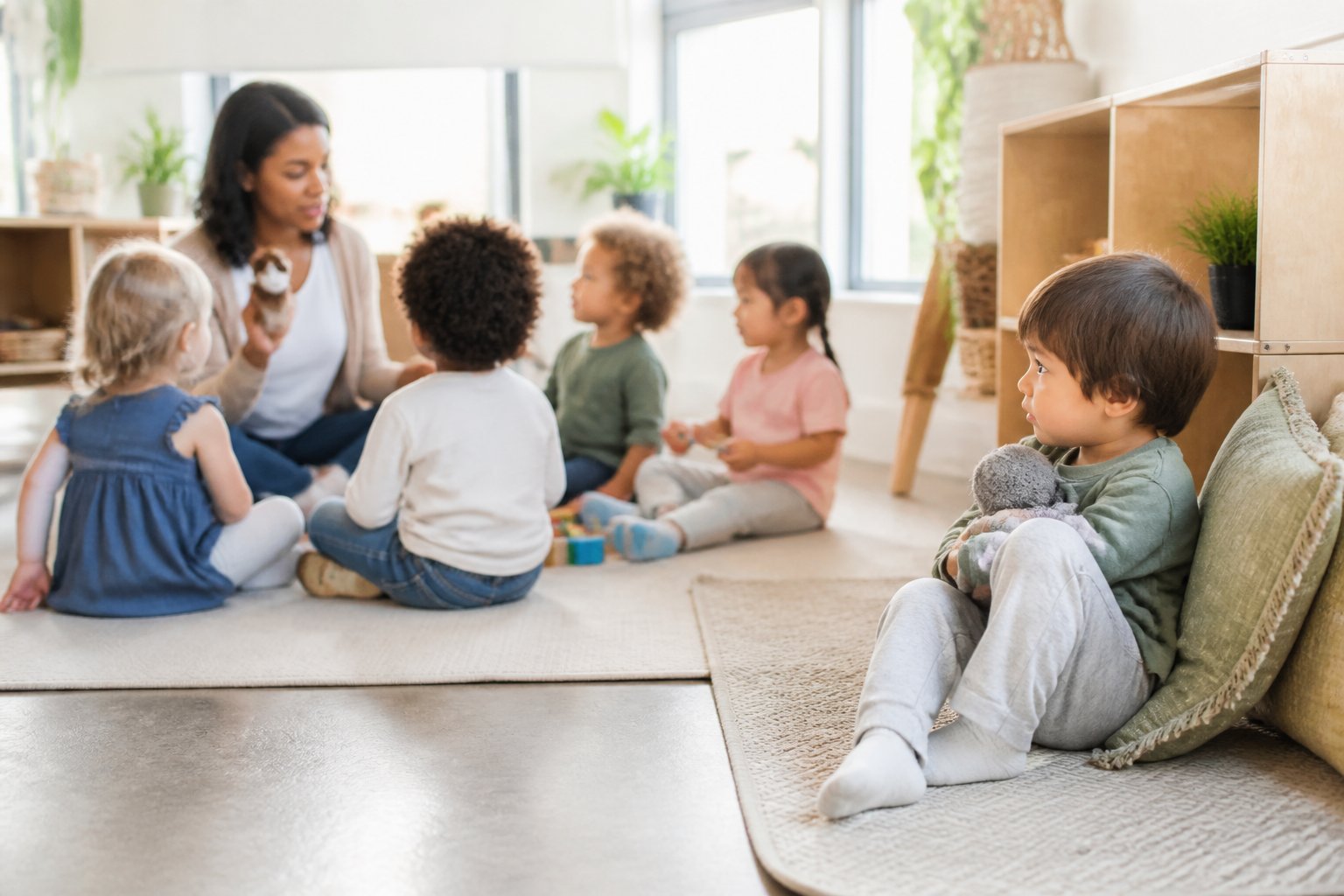
If your child hits at daycare or with other caregivers, teamwork helps. Toddlers learn faster when the adults around them use similar language, routines, and responses. Consistency across settings can reduce confusion and strengthen new habits.
You do not need blame or mixed messages. You need shared support and a simple plan. When caregivers compare notes on triggers, timing, and what helps, patterns become easier to spot. That gives everyone a better chance to prevent problems before they grow.
Partnering with staff to address child hitting peers
A strong partnership with daycare staff starts with open communication. Ask when the hitting happens, who is involved, and what was happening right before it. That information can reveal useful triggers such as transitions, crowded play, or tiredness before nap time.
Next, agree on a shared response. If home says one thing and daycare does another, your child may struggle to understand expectations. Simple, repeatable language works best for both caregivers and children.
Here is an easy way to organize that partnership:
| Area | Shared Plan |
|---|---|
| Trigger patterns | Note if hitting happens during transitions, free play, or before nap time |
| Adult response | Use the same short limit, such as “I won’t let you hit” |
| Regulation support | Offer redirection, a cozy break, or a quieter space |
| Teaching skill | Prompt simple words like “help” or “my turn” |
| Follow-up | Share updates regularly so home and daycare stay aligned |
That kind of consistency can make a real difference.
Guidance for managing hitting during group settings
Group setting challenges can be hard for toddlers because there is more noise, more waiting, and more competition for space and toys. Some children become overwhelmed fast. Others get excited and rough. In either case, adults can reduce stress by staying close and stepping in early.
Redirection and distraction are especially helpful before the hit happens. If staff notice your child getting tense, they can move them to another activity, offer a different toy, or guide them toward a quieter area. Prevention often works better than correction.
Positive reinforcement matters too. When your child plays gently, waits, or asks for help, adults should notice it right away. That support teaches what works. Over time, repeated success in small group moments can build confidence and better self-control.
When to Seek Additional Support for Toddler Aggression
Most toddler aggression improves with time, guidance, and practice. Still, there are times when extra support is the right next step. If hitting keeps interfering with your child’s ability to play with others, learn, or join everyday activities, it is worth paying closer attention. The same is true if you start avoiding playdates or outings because the behavior feels too hard to manage.
Professional help can also make sense when the hitting happens often, lasts over time, or seems unusually intense. Seeking support is not overreacting. It is a practical way to understand what may be driving the behavior and how to strengthen your child’s emotional regulation and resilience.
Signs that professional help may be needed
Some warning signs suggest it may be time to talk with a child development professional. You know your child best, so trust your instincts if the aggression feels persistent, hard to predict, or different from what peers seem to show.
Patterns matter more than one bad day. A toddler may need professional help when the negative behavior happens often, continues over time, or affects relationships and daily life in a big way.
Examples to watch for include:
- Unprovoked hitting or aggression that seems to happen out of the blue
- Behavior that keeps disrupting play, learning, or time with other children
- Strong distress after a major life change or upsetting event
- A fearless, reckless, or very intrusive style that leads to frequent rough behavior
These signs do not mean something is seriously wrong. They do mean more guidance could be helpful.
How early intervention can help your child thrive
Early intervention can help because it focuses on the skills beneath the behavior. Instead of only trying to stop hitting, support can strengthen your child’s development in communication, calming strategies, and social interaction. That often makes everyday life easier for everyone.
It can also help adults respond more effectively. Parents and caregivers may learn how to spot triggers, adjust routines, and use steadier strategies. Small changes in the environment or response can go a long way when a child is easily overwhelmed.
Most of all, early support protects your child’s confidence. It gives them more chances to succeed with friends, at daycare, and at home. That builds resilience. When children get help with emotion regulation early, they are better able to grow into positive patterns over time.
Conclusion
In conclusion, understanding why toddlers hit other children is crucial for parents and caregivers. It’s essential to recognize that hitting can stem from various emotional triggers, communication difficulties, and the natural curiosity of toddlers. By implementing effective strategies such as positive discipline, teaching alternatives to hitting, and fostering open conversations about emotions, we can guide our little ones toward healthier interactions with their peers. Moreover, collaborating with daycare staff ensures a unified approach to addressing these behaviors. If you’re seeking personalized advice for your child’s situation, don’t hesitate to reach out for a free consultation. Together, we can help your child thrive in their social environment.
Frequently Asked Questions
What can I do if my toddler hits friends on playdates?
Step in right away, keep everyone safe, and use redirection without a long lecture. Offer distraction if your child is getting overloaded, and name the feeling with empathy. Later or the next day, practice simple alternatives. This helps build emotion regulation without adding shame.
Are toddlers who hit at daycare more likely to have behavior issues?
Not usually. A child’s behavior at daycare may reflect a hard developmental stage, overstimulation, or temperament rather than lasting problems. Many toddlers struggle more in busy settings. With support, consistency, and time, most children build resilience and improve their self-control.
Can hitting be a phase, or is it always a problem?
Hitting behavior can absolutely be a phase, especially during this developmental stage when big feelings are intense and self-control is still growing. It becomes more concerning if it is frequent or disruptive. Calm limits, teaching, and positive reinforcement usually help children through this hard time.




Leave a Reply