
Quick Answer
Most toddlers repeat words because repetition helps them learn language. A favorite word may feel exciting, funny, powerful, or emotionally important, causing a child to say it again and again while they practice using it.
In many cases, repeating words is a normal part of development and simply reflects a toddler experimenting with language, communication, and memory.
Why Repetition Helps Toddlers Learn
Toddlers learn through repetition in almost every area of development. They ask for the same book, play the same games, and repeat favorite activities because repetition helps build familiarity and confidence.
Language works the same way. Repeating a word gives a child an opportunity to practice pronunciation, strengthen memory, and connect sounds with meaning.
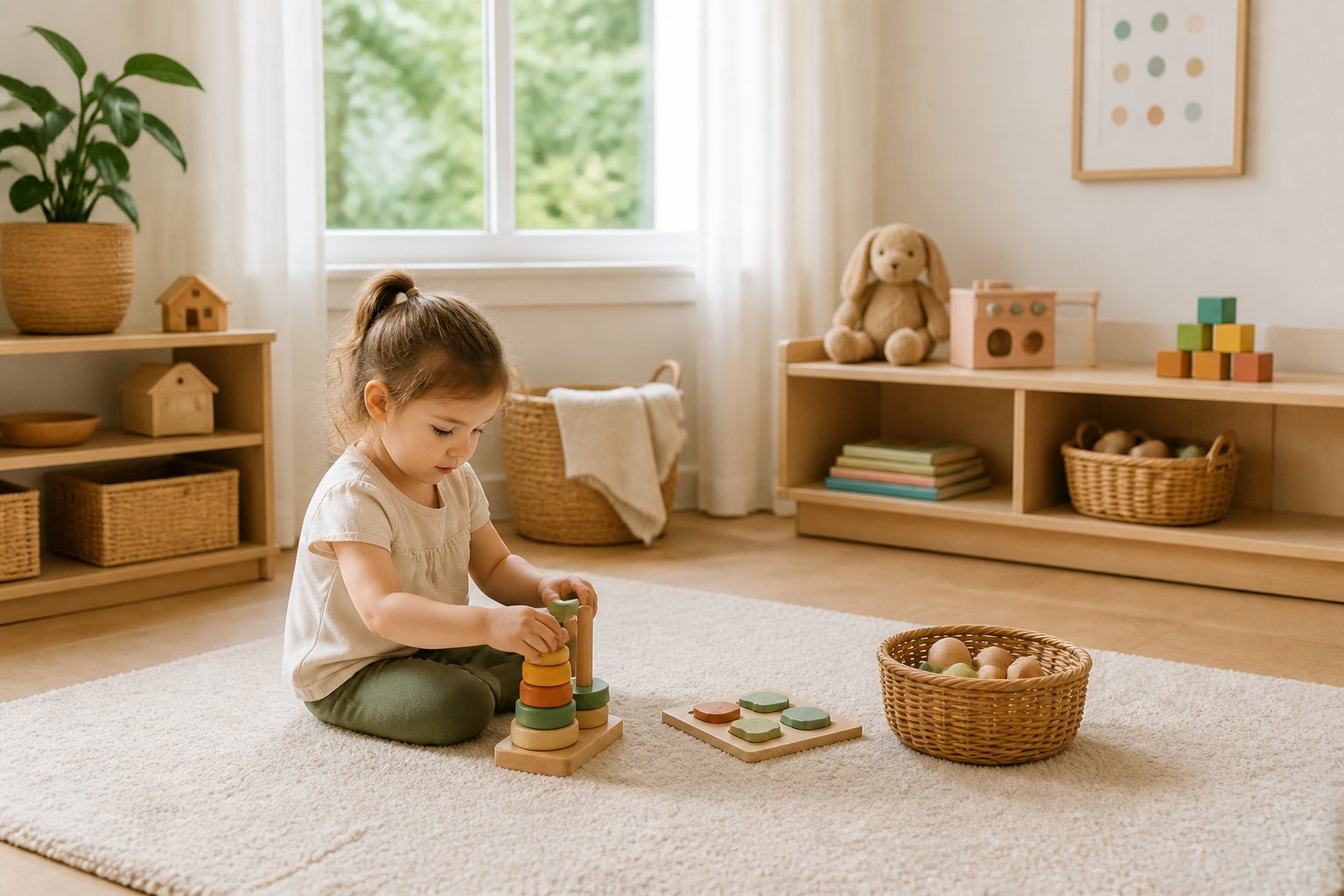
The same pattern-seeking behavior often appears during early math activities, sorting games, and favorite toddler play activities. What looks repetitive to adults is often how toddlers learn best.

When Repetition Becomes More Noticeable
Many parents notice repeated words most often during exciting or emotional situations. A toddler may repeat “park” all morning before a trip, talk nonstop about a birthday party, or repeatedly mention a favorite person they are looking forward to seeing.
Repetition can also increase when children are tired, overwhelmed, or struggling with a busy day. Emotional overload often affects communication just as much as behavior. This is one reason word repetition sometimes appears alongside signs of an overstimulated toddler, frequent after-school meltdowns, or challenges with daily transitions.
Words Are Only One Part Of The Bigger Picture
Most toddlers who repeat words are also building new communication skills every day. Looking at overall language development is usually more helpful than focusing on repetition alone.
A child who is learning new words, following directions, pointing things out, sharing interests, and interacting with family members is typically making progress even if they become temporarily stuck on favorite words or phrases.
Many parents find it helpful to compare repetition alongside broader communication milestones such as how many words an 18-month-old should say and the different ways toddlers use language to connect with the people around them.
Many Toddlers Repeat More Than Words
Word repetition is often just one example of a toddler’s natural love of repetition. Many children go through phases where they watch the same movie scene, request the same bedtime story, eat the same foods, or insist on following familiar routines every day.
Repetition creates predictability, and predictability helps toddlers feel confident while learning something new. The same drive can show up in play when children repeatedly sort objects, line up toys, or return to favorite toddler play activities.
Parents sometimes notice similar pattern-seeking behaviors during activities involving matching, categorizing, counting, and other early math concepts. In many cases, repetition is simply how toddlers build understanding.
Some Words Become Emotional Anchors
Toddlers often repeat words that carry strong emotional meaning. A favorite grandparent, beloved stuffed animal, upcoming vacation, or exciting activity can become the focus of a child’s thoughts long before the event actually happens.
Unlike adults, toddlers have limited ways to process anticipation. Repeating a meaningful word can be one way of keeping an exciting idea “active” while they wait. This is why some children spend hours talking about the park, a birthday party, a playdate, or a favorite person.
The same pattern sometimes appears around bedtime and daily routines. Children who struggle with separation anxiety at bedtime or frequent bedtime resistance may repeatedly ask the same questions or repeat the same words as they work through those emotions.
Big Feelings Often Lead To Repeated Questions
Sometimes toddlers are not looking for information when they repeat a word or question. They’re looking for reassurance. A child who asks “Are we going tomorrow?” twenty times may already know the answer. What they’re really doing is checking that the plan hasn’t changed.
This tendency becomes especially noticeable during major transitions, unfamiliar situations, or periods of uncertainty. Young children thrive on predictability, which is one reason repeated questions often increase during events like starting daycare, changing routines, or preparing for a family trip.
Many parents notice similar behavior in toddlers who struggle with transitions or experience frequent after-school meltdowns, where uncertainty and emotional overload can make a child seek extra reassurance throughout the day.
Frequently Asked Questions
Is it normal for a toddler to repeat the same word over and over?
Yes. Many toddlers repeat words as they learn language, process new experiences, practice pronunciation, or express excitement about something important to them. Repetition is a common part of early childhood development.
Why does my toddler keep asking the same question?
Repeated questions are often less about getting information and more about seeking reassurance. Toddlers frequently repeat questions when they are excited, uncertain, anxious, or trying to make sense of an upcoming event.
Should I answer every repeated question?
Usually, yes. However, after answering once or twice, it can help to acknowledge the feeling behind the question. A child asking about tomorrow’s trip ten times may be expressing excitement rather than confusion.
Why does my toddler repeat words more when they’re tired?
Fatigue affects emotional regulation, attention, and communication. Many parents notice more repetitive language, repeated questions, and emotional behaviors when a toddler is overtired or approaching bedtime.
Can excitement cause a toddler to repeat words?
Absolutely. Excitement is one of the most common reasons toddlers repeat words. A child looking forward to the park, a birthday party, a favorite person, or a special activity may talk about it repeatedly throughout the day.
Why does my toddler repeat words during play?
Many children narrate their play, act out stories, or repeat words connected to what they’re imagining. Repetition during play is often part of learning, creativity, and language practice.
When should I be concerned about repetitive speech?
The bigger picture matters more than repetition alone. If your toddler is learning new words, communicating, interacting with others, and continuing to develop new skills, repeated words are often simply part of normal language development.



Leave a Reply