
Feral Toddler · Practical buying guide
Tabletop or Standing Art Easel: Which Fits Your Space?
Measure the painting spot before the easel arrives.

Choose by the full open footprint and reachable paper position. A tabletop easel also needs a suitable table; a standing frame needs clear floor access.
A tabletop easel can be a small purchase that takes over your only small table. A standing easel can fit beautifully in the corner until someone tries to walk around the back of it. Before you compare colors or included chalk, work out where the thing will be when a child is actually using it.
Both formats can hold a perfectly good painting. The better choice is the one that gives your child a reachable drawing surface, has a stable place to stand, and can be cleared without moving half the room.
You don’t need an easel to start painting, either. Paper on a protected table remains an excellent option while you take measurements. Here is how to compare the two formats without treating the product’s height as the whole answer.
This post contains affiliate links. If you buy through them, I may earn a commission. As an Amazon Associate I earn from qualifying purchases.
Bring measurements to the comparison
For this decision, gather a tape measure, one sheet of the paper you use, a pencil, and a few removable floor markers suitable for your surface. Keep the makers’ diagrams and instructions open beside your notes.
- The proposed easel’s full open width and depth, including feet, shelf, and rear support
- The height range of the usable drawing area, not just the top of the frame
- For tabletop models, the table height, clear tabletop area, and chair or standing position
- Folded size if storage matters, plus the actual opening of the cupboard or closet
- Paper width, clip clearance, roll-holder width, spindle fit, and maximum roll diameter where relevant
Don’t add tabletop dimensions to floor dimensions and call it a complete footprint. The table already occupies floor space; you also need room to reach the easel, move a chair, and retrieve a dropped brush. Check the floor surface and open-frame stability described by the maker before deciding where it belongs.
A rimmed shelf may hold a cup without catching every drip. Keep paint in manageable quantities and use appropriate surface protection. Our paint-type guide helps separate watercolor washes from the thicker paint you might expect to stay on a brush.

What the two formats ask of your room
A tabletop easel needs a stable table large enough for its complete support base. It may be easy for an adult to move between sessions, but a tall table can put the drawing area out of reach. Raising a child on a cushion or improvised step is not the fix for an unsuitable working height.
A standing easel uses its own floor space and often provides a larger vertical drawing area. It still needs room behind or beside it for access. A double-sided board is only a two-child setup when both sides have usable standing space; a board pushed into a corner has one practical side.
The Tiny Land foldable standing easel, ASIN B0DM26TXY4, is one model to compare. Its listing describes three height settings, a chalkboard and whiteboard, and an included paper roll. The title says ages three to twelve while its descriptive text says three to eight. Check the received age label and exact model instructions; those lines are not interchangeable fit measurements.
The official Tiny Land site also sells other easel bundles. Do not borrow their dimensions, accessory counts, or paper specifications for this Amazon model just because the brand matches. Choose the easel first and confirm its holder requirements before buying replacement paper; a roll that appears in the same shopping search is not automatically compatible.
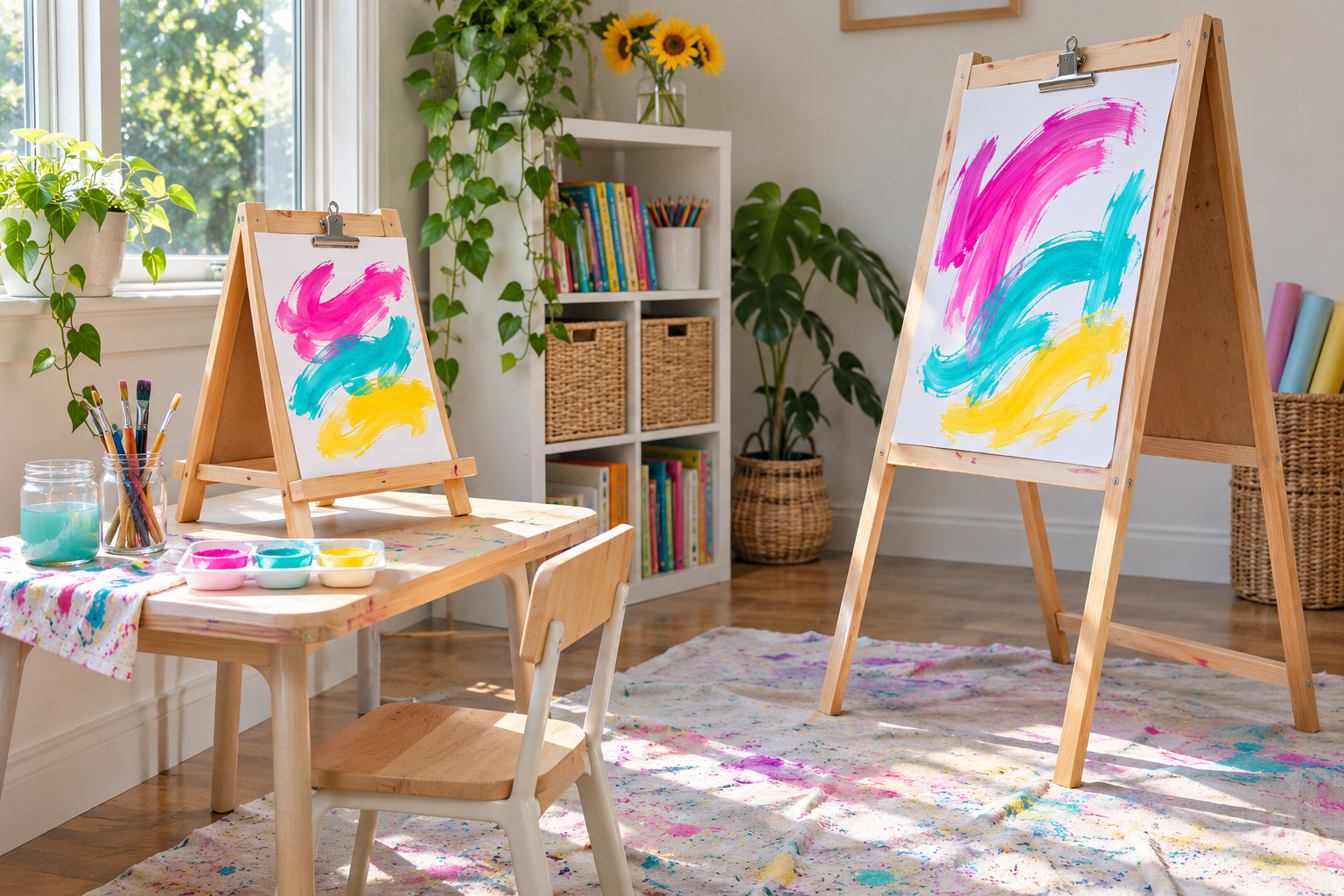
The generic format examples pictured here explain placement and paper fit. For a specific purchase, use the selected model’s dimensions and instructions rather than copying a feature from another easel.
Choose a format in six checks
- Mark the whole open footprint.
Use the product diagram to mark width and depth on the floor, or on the intended tabletop for a tabletop model. Include rear feet and the supply shelf. Then stand where the child will stand and walk past it. If the route only works when everybody turns sideways, move the location or compare a smaller model.
- Check the actual working area.
Look at the bottom and top of the paper position. Can the child comfortably reach a useful middle area without stretching over a shelf or climbing? For tabletop versions, include the table in this check. If you already own the easel, an adult can adjust it according to its instructions before inviting the child to draw.
- Fit a real sheet.
Compare your Letter or A4 sheet against the drawing surface and clip position. Paper needs to sit on the support rather than curl over its sides. On a roll-fed easel, check the paper path past the shelf and retaining bar. A compatible width alone does not confirm the core, diameter, or spindle fit.

Check your actual sheet against the supported paper area. Adults handle pinch-prone clips. - Leave room for the supplies.
Try the brush cup and the cloth in their intended positions while the paper is in place. The shelf must not be overloaded or used as a climbing step. If you need a separate tray, give it stable support beside the painting area. Our craft tray guide helps check whether that tray can hold both the paper scraps and wet tools.
- Rehearse clearing the space.
Work out where wet art dries before you need to fold anything. Remove cups, clean the shelf, and follow the instructions for adult folding or disassembly. Check that the stored frame fits through the cupboard opening. An easel balanced loose behind a door is not a tidy storage solution.
- Compare the complete setup.
Count the table, chair if used, floor cover, paper, and storage as part of the decision. A small tabletop board may fit a room better, but only if the table can be spared. If the table also hosts your playdough starter kit, a standing frame may keep painting available without packing the dough away every time.

Common fit problems
The board is reachable but the shelf is not.
Compare another supported height setting or a different model. Do not remove structural parts or improvise an elevated standing platform to make it fit.
The paper slides down.
Check the intended clips or retaining bar and the paper thickness. Keep the child’s hands away while an adult resets a pinch-prone clip.
The easel keeps blocking the table.
Reserve a genuinely separate drawing surface or choose a format that can be stored after dry cleanup. A tabletop footprint still consumes working space.
The roll is the right width but won’t turn.
Check the holder’s core and diameter requirements. Return to the actual model specification rather than forcing a tight roll onto the spindle.
Three setups worth comparing
A borrowed table corner
Start with dry crayons on clipped paper and a tabletop model only if the full base fits securely. Keep a separate drying place available before adding wet paint.
A painting spot that stays open
Give a standing frame clear access on the intended side. A small batch of homemade liquid watercolor needs only a little mixing space, but it still needs a protected floor and stable cup position.
A table that changes jobs
Keep the easel and supplies in their proper storage places before bringing out a wide cardboard tilt maze. That project needs clear tabletop space around the tray for hands to lift and lower its edges.
Easel questions before checkout
Is a tabletop easel better for a small room?
It can be, if there is a suitable table you can spare. Measure the complete table-and-child setup instead of comparing only the easel frames.
Can two children use a double-sided easel?
Only if the model and the available space make both sides usable. Allow access and supply space on each side rather than wedging the frame against a wall.
Will any easel paper roll fit?
No. Check width, roll diameter, core, spindle, and the path the paper follows through that model before buying a refill.
Do I need an easel for watercolor painting?
No. A protected stable table and suitable paper are enough to begin. An upright surface changes how watery paint runs, so use less liquid when moving an activity onto it.
What should I check if an easel says it folds flat?
Read how the maker says to fold it and who should handle that operation. Measure the folded frame and the storage opening, and remove wet supplies before moving it.





Leave a Reply