
Buy the paint for the project
Washable Paint, Tempera or Watercolor: What to Buy for Kids’ Crafts

Start with a small washable children’s paint set for bold paper and cardboard projects. Choose watercolor for transparent washes. Washable is a cleanup claim, so check the exact formula, age label and contents rather than assuming all tempera or watercolor washes out.
You can buy a paint set with twelve cheerful pots and still end up holding the wrong paint for the project. Thick paint sits beautifully on a cardboard dinosaur. The same paint can smother the delicate salty lines you wanted to color. The bottle has done nothing wrong; it just received a very confusing assignment.
For most paper-and-cardboard crafting, start with a small set of age-appropriate washable children’s paint. Add watercolor when you want transparent color that moves with water. You do not need every format before your child is allowed to make a blue puddle.
The useful distinction is that “washable” describes a cleanup claim, while tempera and watercolor describe paint types or formats. Those labels overlap. A watercolor set may be washable; a tempera bottle may not be. Read the exact product rather than treating the shelf heading as a promise.
As an Amazon Associate I earn from qualifying purchases. Links marked “paid link” are affiliate links.
Materials for this project
- Crayola washable children’s paint set (paid link)
The current set has six classic and six glitter colors, not twelve plain colors. Check its age and care label.
- Colorations liquid watercolor, six colors (paid link)
Six two-ounce bottles for small poured portions. Do not assume the same clothing-washability claim as a different paint.
- Reusable round mixing palettes (paid link)
The linked pack contains four empty palettes. Paint is not included; an existing shallow dish can do the job.

Choose by the job you actually have
A small paint-buying checklist
Before adding anything to your cart, check these five details.
- The manufacturer’s intended age and use
- The exact washability wording and washing directions
- Whether the paint is opaque or transparent
- Whether the package contains liquid paint, dry cakes, or empty mixing wells
- How much paint you will use and where the open containers will live
Simple starting kit: Three usable colors, one washable brush, sturdy paper, a shallow work tray, a little rinse water, and old clothes. Existing household supplies can cover most of that list.
| Format | Useful for | Check before buying |
|---|---|---|
| Washable children’s liquid paint | Bold paper marks, cardboard decoration and printing | Exact age, skin/clothing cleanup claim, included finishes |
| Tempera | Opaque coverage and mixed colors on absorbent craft surfaces | Whether this particular formula is washable |
| Watercolor cakes | Small paper sessions with color activated by a wet brush | Actual paint included; a mixing palette alone contains none |
| Liquid watercolor | Transparent washes, absorbent paper and controlled dabbing | Concentration, cleanup directions and age suitability |
Make the choice in six steps
- Name the surface. Write “cardboard box,” “watercolor paper,” or “paper collage” rather than “art supplies.” A paint chosen for one surface does not automatically adhere to a plastic jar or coat shiny packaging.
- Choose the result. For a covered cardboard surface, look for opaque children’s paint. For paper showing through the color, choose watercolor. Neither finish needs to be better; it needs to suit the picture.
- Read the complete label. Check the age and intended use, then look for the actual cleanup statement. “Water-based” alone does not mean washable, and “non-toxic” does not mean edible or suitable for face painting.
- Count useful colors and finishes. A twelve-pot set containing six classic and six glitter colors is not twelve plain colors. If you want ordinary mixing and printing, decide whether the extra finish earns its storage space.
- Match pack size to your sessions. Start by dispensing about one teaspoon per color for a small paper activity, adding more as needed. That is a portioning suggestion, not a prediction of how long any bottle will last.
- Plan the cleanup before opening. Cover the surface, put a cloth nearby, and choose clothes you are prepared to stain. Keep the original containers so you can follow their specific washing and storage directions.
For a short shopping list across all subjects, the existing homeschool supply list has the broader basics. This guide is for the paint decision inside that list.
What the current linked sets actually contain
The linked Crayola set contains twelve pots split between six classic and six glitter colors, and its listing recommends ages three and up. It is sold as washable children’s paint. I would describe it that way rather than claiming it is a particular tempera formula the listing does not identify.
The linked Colorations liquid-watercolor set contains six colors in two-ounce bottles. It is a different format from ready-to-use opaque paint. Its listing does not establish the same clothing-washability claim as the Crayola set, so protect clothes and check the delivered label.
Crayola’s paint comparison distinguishes its washable formulas from other paints. Treat that as information about those named products, not a blanket guarantee covering every brand’s tempera.
When another format makes sense
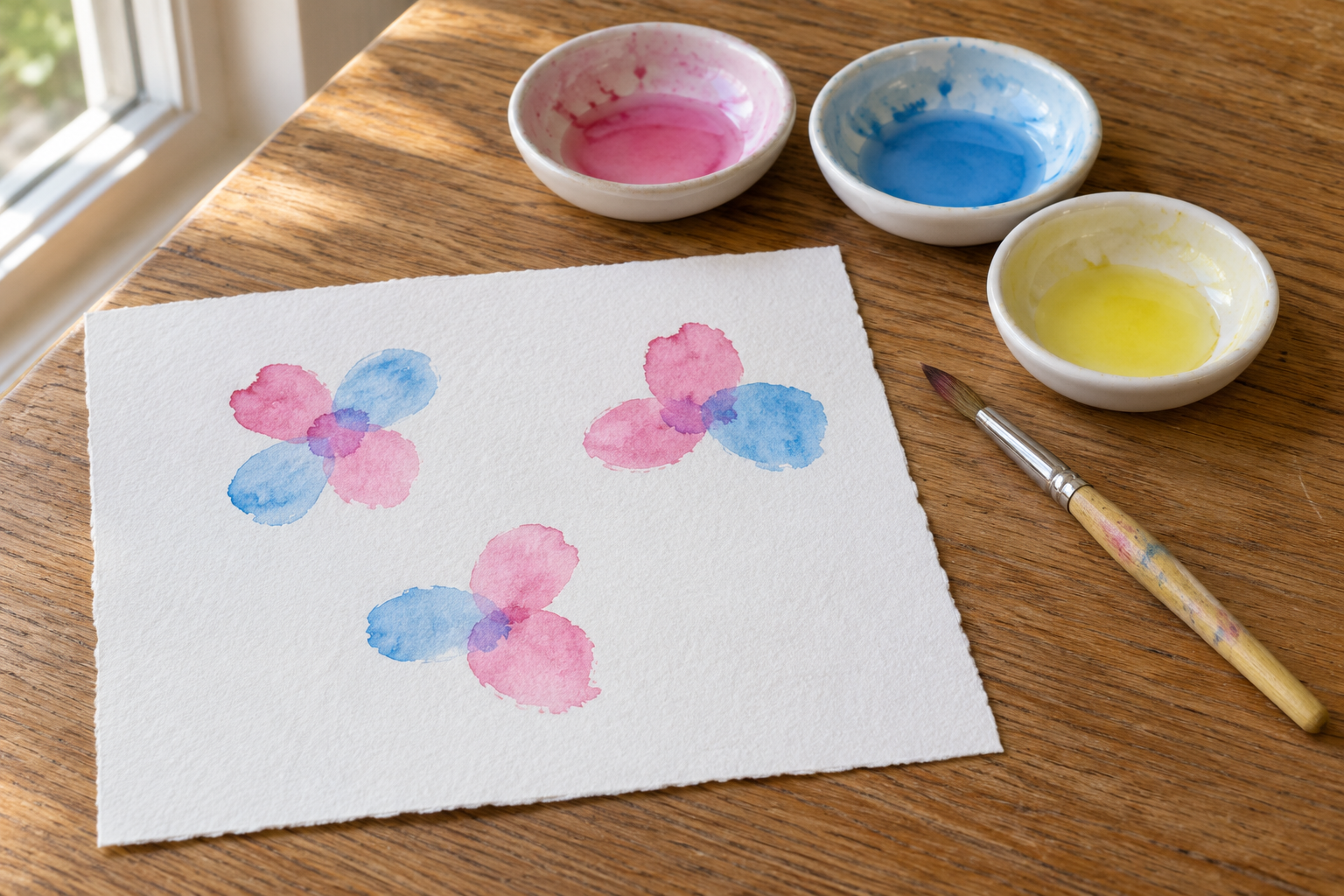
Watercolor cakes are handy when you want a compact set that closes between sessions. A wet brush picks up color; the amount of water changes how pale or strong the mark looks. Choose a children’s set containing actual paint, with clear age and care instructions.
Liquid watercolor is useful when a brush needs a small pool of flowing color. Our companion raised salt painting tutorial uses that controlled dab-and-wait approach. Thick opaque paint is awkward there because you want liquid to move along the salted line.
For direct finger painting, choose a product intended for that use or make the companion small cooked cornstarch finger-paint batch. Homemade paint has different storage and staining limitations; it does not inherit a commercial bottle’s washable claim.

Solve the mismatch before buying more
Paint disappears into cardboard
Check whether you chose transparent watercolor. Switch to a suitable opaque paint when coverage matters, or keep the transparent marks as part of the finish.
The watercolor is barely visible
Use less rinse water and load the brush from the color again. For cakes, allow a wet brush to soften the surface instead of flooding the whole tray.
Every color becomes brown
Offer two colors at a time and change dirty rinse water. Keep one clean portion aside rather than dipping a muddy brush into the original bottle.
The paper buckles
Reduce the water and switch to heavier paper for the next sheet. Let the current work dry flat; buying a larger paint set will not fix thin paper.
Cleanup is harder than expected
Read the exact stain instructions for that product and fabric. Avoid heat-drying stained clothing until you have checked the result and care label.
The palette has no paint
Check the order description for “mixing tray,” “empty wells,” or “palette only.” Those are containers, not watercolor cakes.
Three sensible ways to build the kit
The cardboard-craft household
Start with a small opaque washable children’s set and one broad brush. Keep a mixing dish so you can make a needed shade without buying another bottle.
The occasional paper painter
Choose an age-appropriate watercolor-cake set and sturdy paper. Keep the water cup shallow and refill it rather than starting with a tall container.
The family making one specific project
Read the project before shopping. Buy its required format or use an explicitly suitable substitute; a single useful bottle can beat a cupboard of almost-right supplies.
Keep the kit small enough to use
Store bottles upright with clean rims and lids closed. Let watercolor sets dry as their directions require before putting them away. Keep brushes clean and dry rather than wedging wet bristles beneath a lid.
Once you have chosen the paint, pick an activity from our painting activities collection. You can also use an opaque paint with the homemade foam stamps; the stamp construction already has its own tutorial.

Paint-shopping questions
Is washable paint the same as tempera?
No, washable is a cleanup claim and tempera names a type of paint. Some tempera products are washable and others are not, so check the exact bottle.
Are all children’s watercolors washable?
No, do not assume that from the format or a non-toxic label. Look for a specific washability statement and follow its limits and cleaning directions.
Should I buy liquid watercolor or cakes?
Cakes are a compact choice for ordinary brush painting on paper. Liquid color is convenient for activities needing small ready-poured portions, but the exact product still needs to suit your child and project.
Do I need a huge paint set for preschool crafts?
No, start with a few useful colors and add only what an actual project needs. Check whether a big pack contains duplicate shades, specialty finishes or empty containers.
Can I use acrylic instead of washable children’s paint?
Only when the product and project suit the child and you accept its cleanup limitations. For ordinary preschool paper crafting, there is little reason to choose a permanent finish just because a bottle is already nearby.


Leave a Reply