
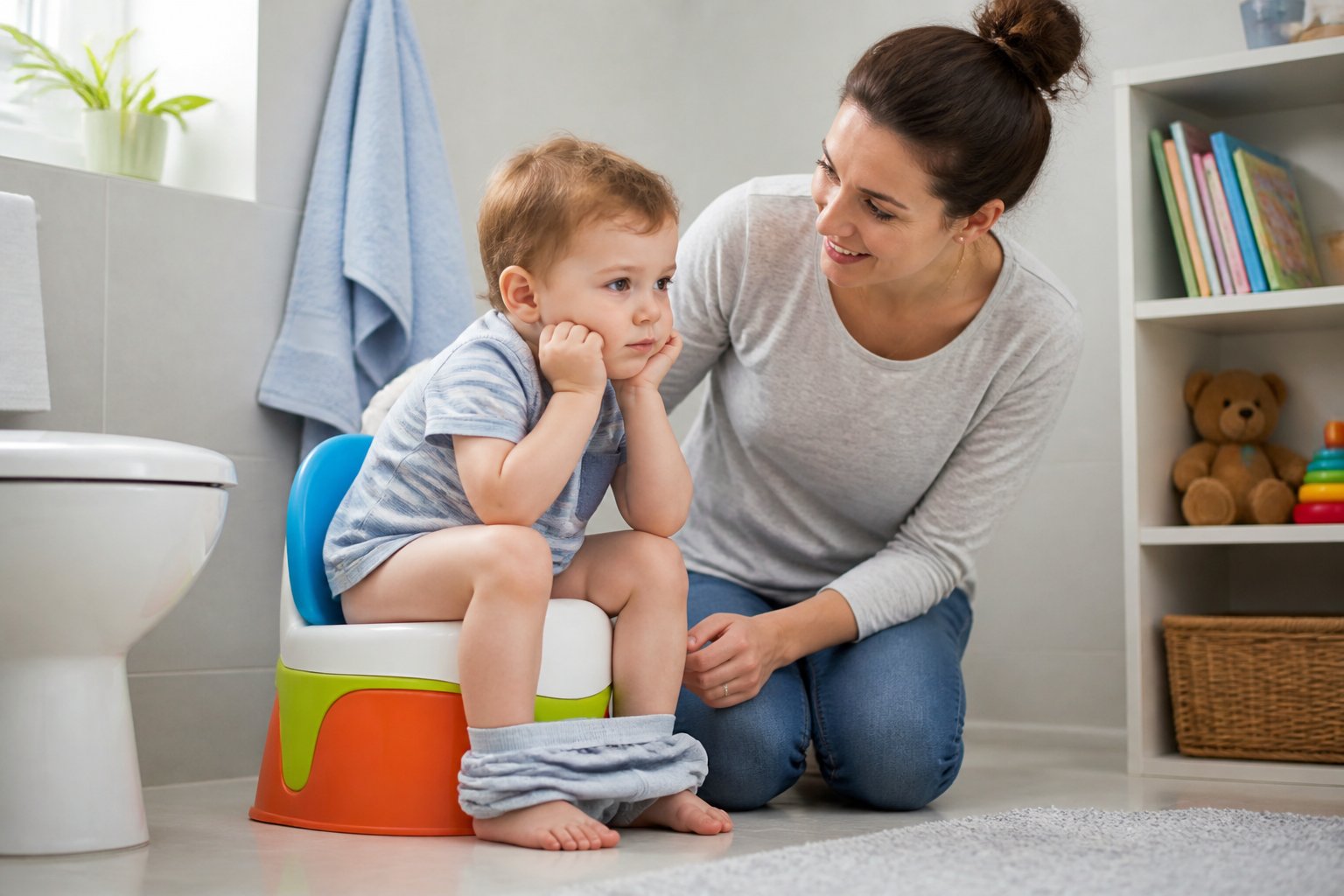
Your toddler happily pees in the potty but refuses to poop there. This can be one of the most frustrating parts of potty training for parents.

Stool withholding happens when a child avoids having bowel movements, and it’s more common than you might think. Many toddlers will pee on the potty without any problems but ask for a diaper when they need to poop.
Others might hide in a corner or hold it in for days. This behavior often starts after one painful bowel movement causes your child to fear the potty.
The good news is that this phase is usually temporary. With the right approach, you can help your child feel comfortable pooping on the potty.
Key Takeaways
- Toddlers often refuse to poop on the potty due to fear, discomfort from past painful bowel movements, or not being emotionally ready
- Creating a comfortable bathroom setup with proper foot support and using positive reinforcement can encourage successful potty use
- You should contact your doctor if the problem continues for more than two or three months or if your child shows concerning symptoms
Why Some Toddlers Struggle With Bowel Movements on the Potty

Many toddlers master peeing in the potty but refuse to poop there. This pattern stems from distinct physical, emotional, and environmental factors.
Understanding whether your child’s resistance comes from developmental timing, sensory sensitivities, or their need for control helps you address the root cause.
Physical Versus Emotional Readiness
Your child might show physical signs of readiness for toilet training but lack the emotional maturity to handle bowel movements on the potty. Physical readiness includes staying dry for two hours, showing awareness of the urge to go, and having the coordination to sit on the toilet.
Emotional readiness involves feeling safe and comfortable with the entire toileting process. Pain from a previous bowel movement is one of the most common physical reasons toddlers avoid pooping on the potty.
A single experience with a hard or painful stool creates a lasting association between the toilet and discomfort. Your child may then hold in their poop to avoid repeating that pain, which ironically makes the next bowel movement even harder and more uncomfortable.
Some children simply need more time before they’re emotionally ready to handle pooping, even if they can pee in the potty without issues. Boys tend to experience this type of potty training resistance more frequently than girls.
Sensory Differences and Toilet Fears
The toilet presents multiple sensory challenges that can trigger fear or discomfort in young children. The sound of flushing, the feel of the seat, the echo in the bathroom, and the sensation of letting go all contribute to anxiety.
Some toddlers find the process of releasing their bowel movements physically unsettling, especially when their feet don’t touch the ground. Fear of the toilet itself ranks among the most common reasons children avoid pooping during potty training.
Your child might worry about falling in, feel scared of the flushing sound, or simply find unfamiliar bathrooms overwhelming. This explains why many children who poop at home refuse to use toilets in public places or at daycare.
The vulnerability of sitting on the potty with nothing underneath them can feel threatening to some toddlers. They may prefer the security of standing or squatting in a diaper where they feel more in control of their body.
Control and Routine Changes
Toddlers naturally seek autonomy during this developmental stage, and withholding poop becomes a way to assert control over their bodies. Unlike eating or sleeping, which adults can influence, your child has complete control over when and where they release their bowel movements.
This makes toilet training a common battleground for power struggles. Reluctance to stop playing represents another major obstacle.
Your toddler may ignore the urge to poop because they don’t want to interrupt their activities. They hold it in until the urge passes, then repeat this pattern until constipation develops.
Changes in routine also disrupt toilet training progress. Starting daycare, welcoming a new sibling, moving to a new home, or other transitions can cause your child to regress or resist using the potty for bowel movements.
Up to 30% of children experience stool withholding at some point during toilet training.
Common Reasons for Refusing to Poop in the Potty
When your toddler refuses to poop on the potty, it usually comes down to physical discomfort, emotional fear, or a need for control. Understanding what’s behind the resistance helps you address the real issue.
Constipation and Painful Experiences
Constipation is one of the most common reasons toddlers avoid pooping on the potty. When your child passes a hard or large stool that causes pain, they quickly learn to connect the potty with discomfort.
This single painful experience can trigger a cycle of avoidance. Your toddler holds in their poop to avoid the pain, which makes the stool harder and more difficult to pass.
The next bowel movement becomes even more painful, reinforcing their fear.
Signs your child may be constipated:
- Straining during bowel movements
- Hard, dry stools
- Belly pain or bloating
- Going three or more days without pooping
The gastrocolic reflex naturally triggers the urge to poop after eating. You can use this timing to encourage potty sits after meals when your child’s body is ready.
If you suspect painful bowel movements are causing the problem, talk to your doctor about dietary changes or stool softeners.
Fear of the Potty or Flushing
Many toddlers find the toilet scary or overwhelming. The size of the toilet, the loud flushing sound, or even the fear of falling in can make your child anxious about using it.
Your toddler might worry about things that seem silly to you but feel very real to them. They may think something will come up from the toilet or that they’ll fall through the hole.
Some children don’t like the sensation of their poop dropping into the water below them. Listen to your child’s specific concerns without dismissing them.
If the flushing sound scares them, let them leave the bathroom before you flush. If they’re afraid of falling, make sure their feet touch a stool and they feel secure on the seat.
These environmental factors can be intimidating for small children who are still learning about their world.
Desire for Privacy or Control
Potty training happens during a stage when toddlers are developing independence and testing boundaries. Refusing to poop can become a way for your child to assert control over their own body.
Some children simply prefer privacy when they poop. They may have been used to hiding behind furniture or going to a quiet corner when wearing diapers.
The open nature of sitting on a potty in the bathroom feels uncomfortable to them.
Your toddler may need control if they:
- Ask for a diaper specifically to poop
- Hide when they need to go
- Seem fine peeing on the potty but refuse to poop
- Started potty training before showing readiness signs
Pushing too hard or starting potty training before your child is ready can make this power struggle worse. Give your child some choices around potty time, like picking their underwear or choosing which bathroom to use.
This gives them a sense of control while still moving toward the goal.
Recognizing the Signs and Patterns of Poop Withholding
Children who withhold poop show specific physical and behavioral signals that parents can learn to identify. Understanding these patterns helps you intervene early before withholding leads to more serious health problems.
Typical Behavior During Withholding
Your child may show clear physical signs when they need to poop but are holding it in. Common behaviors include squatting or tensing when needing to defecate, standing on tiptoes, or stiffening their legs and body.
Many toddlers will hide behind furniture or move to a corner when they feel the urge. They might cross their legs tightly or clench their buttocks.
Some children rock back and forth or fidget in place. You may notice your child becomes quiet or withdrawn during these episodes.
They might refuse to sit on the potty even when you can tell they need to go. During poop training, these signs often appear right after a meal or at their usual bathroom time.
Physical signs to watch for:
- Clenching fists
- Red face from straining
- Sweating or appearing uncomfortable
- Walking stiffly or awkwardly
- Holding their bottom
Impact of Withholding on Health
When your child holds in poop regularly, the stool becomes hard and dry. This makes it painful to pass, which creates a cycle where your child becomes more afraid to poop.
Extended periods without bowel movements can stretch the colon and reduce its ability to signal when it’s time to go. Hard stools can cause small tears in the skin around the anus, which bleed and hurt.
Your child may lose their appetite or complain of stomach pain. Bloating and gas are common.
Some children develop urinary tract infections because the full bowel presses on the bladder. Potty training accidents with pee may increase even if your child was previously dry.
Encopresis and Chronic Constipation
Encopresis happens when liquid stool leaks around hard, impacted poop in the colon. Your child has no control over these leaks, which often look like potty training accidents in their underwear.
The stretched colon stops sending normal signals to poop. Soft or liquid stool seeps past the blockage, staining underwear throughout the day.
Many parents mistake this for diarrhea or behavioral problems. This condition can be distressing for both the child and the caregiver, requiring medical treatment to clear the impaction.
A doctor may recommend stool softeners or laxatives to help restore normal bowel function. Chronic constipation develops when withholding continues for weeks or months.
The longer it lasts, the harder it becomes to break the cycle without professional help.
Effective Strategies for Encouraging Pooping in the Potty
Getting your toddler comfortable with pooping in the potty requires patience and the right approach. The key is making the bathroom a welcoming space, establishing consistent routines, rewarding progress, and gradually transitioning away from diapers.
Creating a Supportive Potty Environment
Your bathroom setup plays a big role in your child’s comfort and success. A potty seat that fits securely on your regular toilet helps your toddler feel safe and stable.
Pair it with a step stool so your child can climb up independently and rest their feet firmly while sitting. The foot position matters more than you might think.
When your toddler’s feet dangle without support, it’s harder for them to relax the muscles needed for pooping. The step stool gives them the leverage they need.
Keep books, toys, or a small basket of activities near the potty. These distractions help your child relax and stay seated long enough for their body to respond.
Make sure the bathroom feels warm and inviting, not cold or rushed. Let your child see family members using the toilet when appropriate.
This helps normalize poop as a regular body function that everyone does.
Using Routine and Scheduled Sits
Timing your potty sits around your child’s natural patterns increases success. Most toddlers need to poop around the same time each day, often after meals when their digestive system is most active.
Schedule potty sits 15-20 minutes after breakfast or lunch. Don’t wait for your child to tell you they need to go, especially if they’re still learning body signals.
Set a timer if needed to keep the routine consistent. Keep sits short and pressure-free.
Five to ten minutes is enough time. If nothing happens, let your child get up without fuss or disappointment.
Never force your child to stay seated if they want to get down. Track patterns in a simple notebook or phone app.
Write down when accidents happen and when successful poops occur. This data helps you identify the best times to offer the potty.
Reward Systems and Positive Reinforcement
Rewards motivate toddlers to repeat successful potty training behaviors. Choose incentives that excite your specific child, whether that’s stickers, extra playtime, or a special treat.
Create a sticker chart visible in the bathroom. Let your child place a sticker on the chart immediately after pooping in the potty.
Small, instant rewards work better than big prizes that are far away. Praise efforts, not just results.
When your child sits on the potty and tries, acknowledge that behavior even if nothing comes out. Say things like “You did a great job sitting on the potty” rather than showing disappointment.
Avoid punishment or showing frustration when accidents happen. Negative reactions can create anxiety around pooping, making the problem worse.
Stay neutral and simply clean up without drama.
Bridging From Diaper to Potty
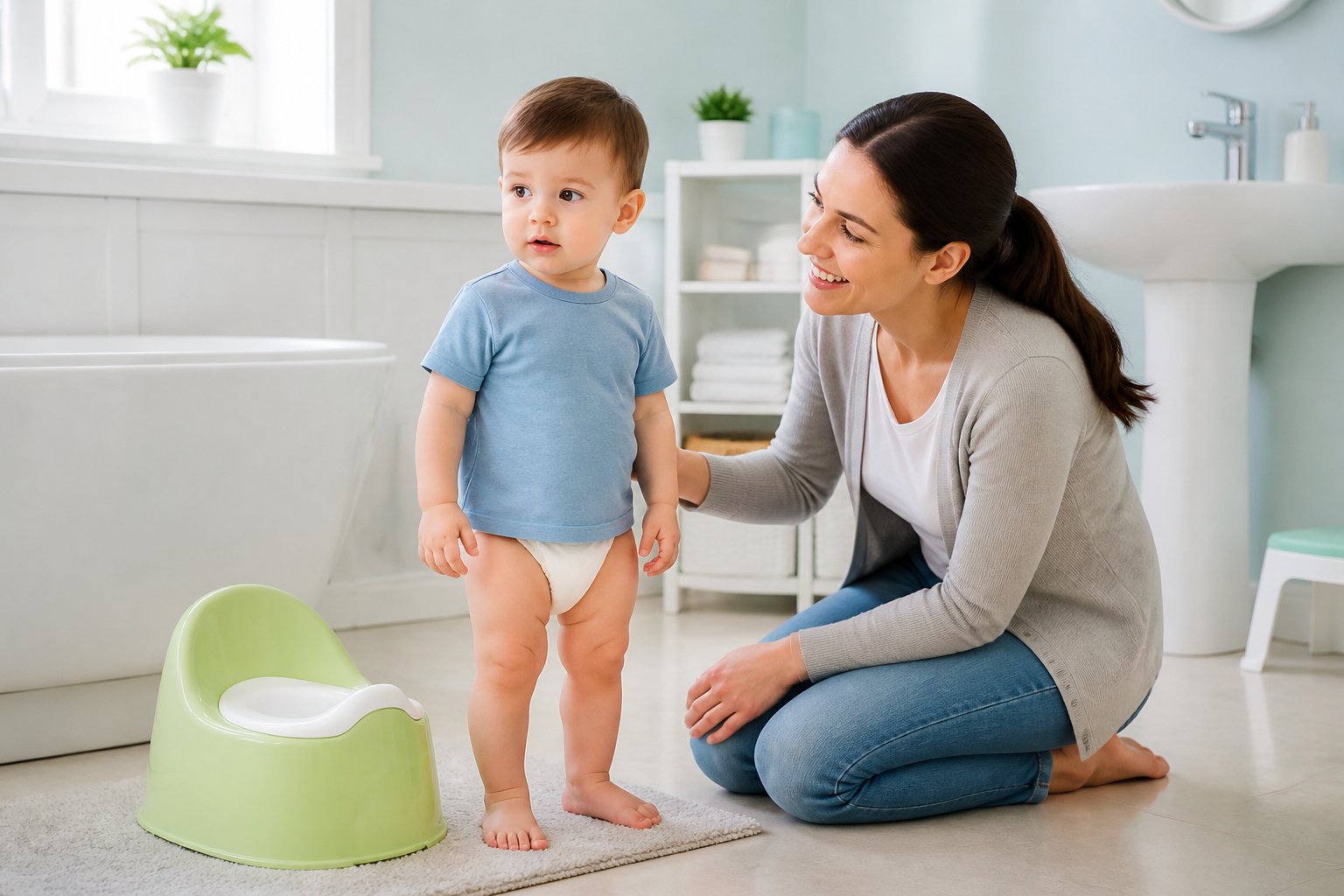
Some toddlers need a gradual shift rather than an immediate change. If your child only poops in a diaper, start by having them poop in the diaper while sitting on the potty.
This creates an association between the potty and the act of pooping. Once they’re comfortable pooping while sitting on the potty in a diaper, cut a hole in the diaper.
The poop falls through into the potty bowl, but your child still feels the familiar diaper sensation. Next, remove the diaper entirely but let them sit on the potty seat right after you notice signs they need to poop.
Signs include squatting, hiding, grunting, or getting quiet and still. Empty poopy diapers into the potty together and let your child flush.
This demonstrates where poop belongs and makes the toilet less scary. These potty training tips help children understand the natural progression from diaper to toilet.
Addressing Medical Concerns and When to Seek Help
Most toddlers eventually learn to poop on the potty, but some situations require professional medical guidance. Knowing when constipation becomes a health concern and understanding available treatments can help you make informed decisions about your child’s care.
When to Consult a Pediatrician
You should contact your pediatrician if your toddler hasn’t pooped in more than three days. Constipation lasting longer than two weeks needs medical attention, especially when home remedies aren’t working.
Watch for emergency symptoms that require immediate care. Call your doctor right away if your child has a fever with constipation, vomiting, rectal bleeding, or blood in their stool.
A swollen belly, constant abdominal pain, or unexplained weight loss also warrant a call. Your pediatrician will ask about your child’s bathroom patterns, diet, and potty training progress.
They may check your child’s belly for swelling or tenderness. In most cases, no tests are needed, but your doctor might order an X-ray or blood work if they suspect an underlying condition.
Role of Stool Softeners and Laxatives
Never give your toddler any medication for constipation without talking to your pediatrician first. Your doctor may recommend several options depending on your child’s specific situation.
Common treatments include:
- Probiotics to support digestive health
- Fiber supplements to add bulk to stool
- Electrolyte solutions to maintain hydration
- Stool softeners to make poop easier to pass
- MiraLAX or other laxatives for more severe cases
- Glycerin suppositories for quick relief
- Enemas in rare situations
Your pediatrician will determine the right dosage and type of medication. Some medications work quickly while others take several days to show results.
Follow your doctor’s instructions exactly and report any side effects or lack of improvement.
Managing Severe Potty Training Resistance
Some children develop intense fear or anxiety about pooping on the potty. This goes beyond typical resistance and may require a different approach.
Pause toilet training temporarily if your child shows extreme distress. Let them wear diapers or pull-ups until their anxiety decreases.
This prevents the cycle where fear leads to holding stool, which causes painful constipation, which increases fear. Work with your pediatrician to create a plan that addresses both the physical and emotional aspects.
Your child may need stool softeners to make pooping less painful while you rebuild their confidence. Once their bowel movements become regular and soft, you can slowly reintroduce the potty.
Consider asking for a referral to a child psychologist if resistance continues despite medical treatment. Some children benefit from professional support to overcome potty-related fears.
Preventing Setbacks and Supporting Long-Term Success
Building lasting bathroom habits requires creating an environment where your toddler feels comfortable discussing bodily functions and where mistakes are treated as normal parts of learning.
Normalizing Poop and Discussing Body Functions
Talking openly about poop helps remove shame and mystery from the process. Use simple, accurate words like “poop” or “bowel movement” instead of baby talk or negative terms.
Explain that everyone poops and that it’s a healthy, normal thing bodies do. Read children’s books about using the toilet together.
Point out when you or other family members need to use the bathroom. This shows your child that bathroom needs are a regular part of everyone’s day.
Discuss what poop is and why bodies make it. Explain that food gives us energy and what’s left over comes out as poop.
Keep explanations simple and age-appropriate. When your child asks questions about their body, answer honestly without embarrassment.
Let your toddler see their poop in the potty before flushing if they want to. Some kids find this reassuring because they can see it’s just waste, not a part of their body leaving them forever.
Handling Accidents Calmly
Potty training accidents happen with about 80 percent of families experiencing setbacks during the process. Your reaction to these moments shapes how your child views mistakes.
Stay neutral when accidents occur. Avoid showing frustration, anger, or disappointment through your words, tone, or body language.
Simply say “You had an accident. Let’s get you cleaned up.” Have your child help with cleanup in an age-appropriate way.
They can fetch clean underwear or help carry soiled clothes to the laundry. This builds responsibility without punishment.
Don’t go back to diapers after accidents unless you’re taking a complete break from training. Use training pants temporarily if needed, but keep moving forward with your approach.
Maintaining Patience and Consistency
Potty training problems require a steady, consistent response from caregivers. Set up daily routines where your child sits on the potty at the same times each day, especially after meals when the body naturally wants to poop.
Keep the same rules and expectations across all caregivers. If grandparents, daycare providers, or other adults care for your child, make sure everyone follows the same approach.
Track progress without pressure. Notice improvements like sitting on the potty longer or showing interest in the bathroom, even if your child isn’t pooping yet.
Celebrate these small steps. Take breaks when needed.
If you and your child are both frustrated after several weeks of trying, it’s okay to pause poop training for a month or two. Return to diapers without shame and try again when everyone feels ready.
Frequently Asked Questions
Many parents wonder why their child acts differently about pooping versus peeing, how to handle fears, and when bathroom struggles require medical attention.
Why will my child pee in the toilet but refuse to poop there?
Peeing and pooping feel different to your child. Peeing happens quickly and often, so your toddler gets used to the sensation on the potty.
Pooping requires sitting longer and involves a stronger physical feeling of letting go. Many toddlers resist pooping on the potty because it feels scary or uncomfortable.
Your child might worry about falling in or not like the feeling of poop leaving their body. Standing up while pooping in a diaper feels more secure and familiar to them.
Some kids also connect pooping with control. They learned to pee in the toilet easily, but pooping feels like giving up something that belongs to them.
What can I do if my toddler is scared to poop on the toilet?
Start by letting your child poop in a diaper while standing in the bathroom. This helps them get comfortable with the bathroom setting without forcing them onto the toilet right away.
Next, have them sit on the toilet with their diaper still on. This gets them used to the sitting position without the scary feeling of pooping directly into the toilet.
You can gradually cut a small hole in the diaper that gets bigger over time. Make sure your child’s feet touch the ground or rest on a sturdy stool.
Dangling feet make it hard to relax the muscles needed for pooping. Read books or sing songs to help them stay calm and distracted while sitting.
Never force your child to sit on the toilet or punish them for not pooping there. Fear-based resistance gets worse with pressure and can lead to withholding stool.
How long is it normal for a toddler to go without pooping during potty training?
Most toddlers poop once or twice a day, though some go every other day. During potty training, your child might hold their poop for one or two days as they adjust to the new routine.
If your child goes three or more days without pooping, they might be withholding. Watch for signs like crossing their legs, hiding to poop, or complaining of stomach pain.
Hard, dry poops or crying during bowel movements also signal a problem. Stool withholding can quickly turn into constipation.
The longer stool stays in the body, the harder and more painful it becomes to pass. This creates a cycle where your child holds it even more because they expect it to hurt.
What strategies help a toddler relax enough to poop on the potty?
Give your child plenty of fiber through fruits, vegetables, and whole grains. Offer lots of water throughout the day.
These keep stools soft and easier to pass. Create a bathroom routine at times when your child usually poops, often after meals.
Have them sit for five to ten minutes without pressure to actually go. Let them bring a book or toy to make the time feel less stressful.
Teach your child to lean forward slightly and take deep breaths while sitting. This position and breathing pattern help relax the right muscles.
You can blow bubbles together or have them blow on a pinwheel to practice the breathing. Praise your child for trying, even if nothing comes out.
Small rewards like stickers for sitting on the potty can motivate them without creating too much pressure.
Why might a toddler who was pooping in the toilet suddenly stop?
Changes in routine often cause setbacks. Moving to a new house, starting daycare, or welcoming a new sibling can make your child feel stressed and want to go back to old habits.
A painful poop experience might scare your child away from the toilet. If they had constipation and it hurt to go, they might connect the toilet with that pain.
They may start asking for a diaper again or holding their stool. Some toddlers stop using the toilet because they want more control during a time when they feel like they have none.
This happens especially when other big changes are happening in their life. Your child might also stop if they feel rushed or pressured about using the potty.
What warning signs during potty training suggest I should call the pediatrician?
Call your doctor if your child goes more than three days without pooping or has very hard, painful bowel movements.
Blood in the stool or on the toilet paper also needs medical attention.
Watch for signs of constipation like stomach pain, loss of appetite, or soiled underwear throughout the day.
These streaks or small amounts of soft stool can mean your child is severely backed up, and liquid stool is leaking around the blockage.
Contact your pediatrician if your child seems afraid of pooping and the fear is getting worse despite your efforts.


Leave a Reply