

Halloween crafts don’t need to be fancy to be fun. A few pieces of construction paper, some glue, and a toddler with sticky fingers can turn into a whole afternoon of real, hands-on learning.
The best Halloween crafts for toddlers are simple, forgiving, and built around the process rather than a picture-perfect result. Toddlers aren’t after a museum-worthy pumpkin painting — they want to squish, rip, dab, and stick things, and that instinct is exactly what makes Halloween crafting so good for building fine motor skills alongside creativity. Dabbing a dot marker and tearing a sheet of paper both strengthen the same small hand muscles behind an emerging pincer grip and scissor readiness, which is why so many of the projects below double as skill-building in disguise.
This guide walks through low-prep art projects, sensory activities, cutting-and-gluing practice, and pretend-play ideas that fit real toddler attention spans — plus tips for keeping the whole thing low-stress for you.
Key Takeaways
- Simple materials and short activities beat elaborate, multi-step projects with toddlers.
- Sensory play, tearing, and gluing all build fine motor skills while keeping Halloween crafting fun instead of frustrating.
- A little setup and flexibility go a long way toward keeping craft time calm for both of you.
Choosing a Toddler-Friendly Project
Picking the right project starts with knowing your toddler’s current skills. Think honestly about how much time and mess you can handle, and reach for supplies already sitting in your kitchen or craft bin. Three factors decide whether a craft feels like fun or like a fight.
Match the activity to your toddler’s skills
A one-year-old and a four-year-old need very different projects. Younger toddlers do best with big movements like painting, stamping, or pressing stickers, while three- and four-year-olds can usually handle simple cutting, threading, or shape sorting. Watching your child’s current play — whether they love stacking, dumping, or scribbling — gives a strong clue about which craft will actually hold their attention.
Consider setup time, mess, and attention span
Toddlers rarely sit through long projects. A craft that takes five minutes to set up beats one that takes thirty. Plan for the attention span you actually see most days, not the one you wish you had — a quick paper-plate project or a single round of stamping often fits better than a multi-step scene.
Use simple materials you already have
Construction paper, paper plates, paint, and glue sticks cover most toddler Halloween crafts without a special shopping trip. Toilet paper rolls, cotton balls, and yarn scraps add texture without extra cost. Keeping a small bin of these basics on hand means a craft is never more than an “I’m bored” away, the same low-effort setup that makes a rotating sensory bin stocked with scoopable, dumpable fillers such a reliable fallback on slower afternoons.

15 Activities to Pick From
Skim the numbers below, pick whichever fits your afternoon, and skip the rest — there’s no order to work through here. They’re grouped loosely by type just to help you scan.
Quick Halloween Art
Minimal supplies, a few minutes to set up, and motions like dabbing and pressing that come naturally to toddlers.

Pumpkin Dot Painting
Draw a simple pumpkin outline, hand your toddler a dot marker or paint dabber, and let them fill it in with orange dots. This builds hand control without any cutting or fine detail work, and works well for toddlers still mouthing objects since dot markers keep small pieces out of reach.

Ghost Handprint Art
Press your toddler’s hand in white paint and stamp it onto dark paper, then add small dot eyes once it dries. Handprint crafts double as a keepsake and a sensory activity in one step.

Spider Web Yarn Collages
Glue strands of white or gray yarn onto black paper in a rough web pattern, then let your toddler add a paper spider on top. The yarn gives a satisfying texture to press and pull, and suits toddlers who enjoy hands-on textures over painting.

Monster Sticker Faces
Draw simple monster body outlines and let your toddler add sticker eyes, paper teeth, or pom-pom noses. Sticker crafts are some of the easiest Halloween projects for toddlers still working on their pincer grip — and the silly, friendly monster theme keeps things light instead of spooky.
Sensory & Process-Based
These focus on the feel and exploration of materials rather than a finished product — good for when your toddler needs a change of pace.

Halloween Playdough Invitations
Set out orange, black, or purple playdough with small Halloween-themed cutters or shapes to press in. Toddlers as young as two can manage this activity independently once shown the basic idea, and it builds hand strength while giving a low-mess sensory option.

Scoop-and-Pour Cauldron Play
Fill a black bowl or plastic cauldron with dried beans, pom-poms, or lightly tinted water. Add cups and spoons for scooping — this taps straight into the natural toddler love of filling and dumping.

Tissue Paper Suncatchers
Let your toddler press small squares of orange, black, and purple tissue paper onto clear contact paper cut into a pumpkin or ghost shape, then hang it on a window so light shines through. The sticky contact paper gives just enough resistance to build hand control without frustration.

Stamping with Everyday Objects
Cut a bell pepper in half for a stamp shape, or use a potato masher, cork, or bubble wrap dipped in paint. Stamping gives toddlers a satisfying press-and-lift motion that’s easier to manage than fine brushwork.
Cutting, Tearing & Gluing
Paper manipulation builds early scissor skills and hand strength — actual cutting stays reserved for toddlers ready for child-safe scissors.

Torn-Paper Pumpkins
Draw a pumpkin outline and let your toddler tear orange paper into pieces to glue inside the lines. Tearing strengthens the same hand muscles used for scissors later on, and it removes the pressure of cutting neatly — torn edges just add to the charm.

Paper Plate Black Cats
Paint a paper plate black, then help your toddler glue on paper ears, whiskers, and eyes once it dries. The round plate shape naturally becomes the cat’s face without any extra drawing, and steps stay simple enough for a two-year-old with light adult help.

Shape-Based Jack-O’-Lanterns
Cut triangles, circles, and squares ahead of time, then let your toddler arrange them onto an orange pumpkin shape to build a face. This suits toddlers not yet ready for scissors but who enjoy placing and gluing pieces, and introduces basic shape recognition along the way.

Easy Bat Collages
Give your toddler a black bat outline and small paper scraps or fabric bits to glue on for texture. Keeping the outline large and simple makes it easier for small hands to fill in without frustration.
Movement & Pretend-Play
Not every Halloween activity needs to end with something to hang up. A plain box becoming a pumpkin one minute and a car the next is the same object-substitution stage of make-believe that shows up everywhere from block play to kitchen “cooking.”

Cardboard Box Costume Props
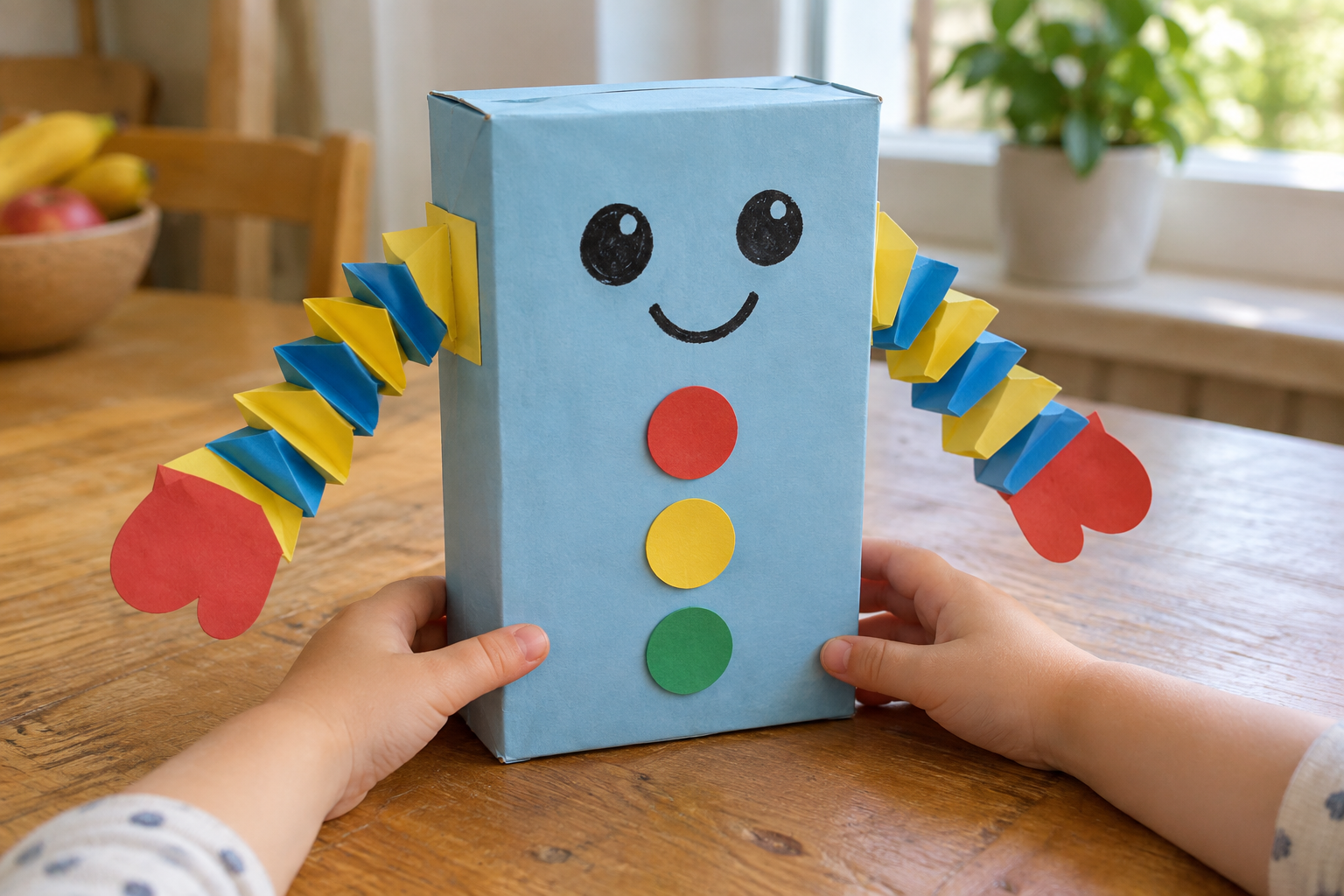
A cardboard box becomes a pumpkin, a robot, or a car with a few cuts and some paint. Toddlers enjoy climbing in and out of boxes as much as decorating them, so this often turns into pretend play that lasts well past the crafting part. Keep the design simple — the box itself is usually more exciting to a toddler than the decoration.

DIY Trick-or-Treat Bags
Let your toddler decorate a plain paper bag with stickers, stamps, or crayon scribbles to make their own trick-or-treat bag. Giving them ownership over something they’ll actually use adds motivation to finish, and it works well as a quick, low-mess craft for a rainy afternoon.

Indoor Halloween Scavenger Hunt Clues
Hide a few Halloween-themed toys or pictures around the house and give simple picture clues for your toddler to follow. This adds movement and problem-solving to an otherwise calm crafting day, and works well as a wind-down activity before nap or bedtime.
Keeping Craft Time Low-Stress
Setting out one material at a time, rather than everything at once, keeps a toddler focused and prevents overwhelm. Letting go of the need for a picture-perfect result, watching small pieces closely, and folding cleanup into the fun all help keep the experience calm for everyone involved.
Set up one step at a time
Put out only the glue and paper first, then add stickers or paint once the first step is done. This keeps a toddler from getting distracted or overstimulated by too many choices at once, and gives you a natural pause to check whether they’re ready for the next part.
Let toddlers lead the finished result
A pumpkin with dots outside the lines is still a success. The value in toddler crafting comes from the exploring, not the final look. Making your own version alongside your toddler can help them understand what the craft is going for without you needing to correct theirs.
Quick Safety Note
Small pieces like pom-poms, buttons, and beads are common choking hazards for toddlers who still mouth objects. Swap these for dot markers, larger stickers, or paint when crafting with a younger toddler, and stay within arm’s reach during the activity.
Make cleanup part of the activity
Handing your toddler a damp cloth to wipe the table or a small brush to sweep paper scraps turns cleanup into another hands-on task instead of a chore you do alone. A designated craft mat or old towel under the workspace makes wipe-down faster, too.
Frequently Asked Questions
What are the easiest Halloween crafts for toddlers to make at home?
Paper plate pumpkins, dot painting, and handprint ghosts are some of the simplest options since they use basic supplies and take only a few minutes to set up. They rely on big, simple motions like dabbing and pressing rather than detailed cutting, and tend to be the most forgiving if the final result looks a little messy.
What Halloween crafts are suitable for 1- and 2-year-olds?
Sensory-based activities like playdough, stamping, and scoop-and-pour cauldron play work best for this age group since they focus on exploring textures rather than following steps. Handprint or footprint art also suits younger toddlers well with adult help — just avoid small loose parts for children still mouthing objects.
What are some simple Halloween paper crafts for toddlers?
Torn-paper pumpkins, paper plate black cats, and shape-based jack-o’-lanterns rely on tearing, gluing, and placing pieces rather than precise cutting, which builds early fine motor skills while staying low-mess. Pre-cutting shapes ahead of time makes them even easier for younger toddlers.
What are fun Halloween activities for toddlers besides trick-or-treating?
Sensory bins, indoor scavenger hunts, and pretend-play costume boxes give toddlers a chance to enjoy the season without leaving the house — useful on nights with bad weather or when trick-or-treating feels overwhelming for a younger child. Rotating between crafting and movement-based play helps keep energy balanced throughout the day.
What supplies do I need for safe, mess-free toddler Halloween crafts?
Paper plates, construction paper, glue sticks, dot markers, and stickers cover most low-mess Halloween crafts without needing paint or small loose parts. A craft mat or old towel under the workspace helps contain any spills, and keeping a small, dedicated craft bin stocked with these basics makes it easy to start a project on short notice.

Leave a Reply