
Practical projects for ordinary days
A Preschool Nature Journal for Drawing What You Notice

Fold three sheets inside a cardstock cover for twelve drawing surfaces. An adult binds the book before the outing; your child chooses one thing to draw and may dictate a short sentence.
A nature journal for a preschooler does not need a species checklist or a page that asks for a paragraph about photosynthesis. It needs somewhere to put the leaf with the funny edge, the bird that flew away before you found a pencil, and the very detailed drawing of a rock that looks like a potato.
This little blank-paper journal has a cardstock cover and twelve drawing pages. An adult makes a simple three-hole binding, then your child chooses one thing to notice on a short outing. One drawing, one dictated sentence if wanted, and you can go back to looking for puddles.
You do not need a purchased printable for this version. Blank paper gives your child room for whatever actually catches their eye, without asking them to find a particular animal or fill every box.

Make a small journal that opens flat
Blank-Paper Preschool Nature Journal
Adult assembly first; drawing and observing together afterward.
Supplies
- 3 sheets of plain US Letter paper
- 1 sheet of US Letter cardstock for the cover
- About 18 inches of thin cotton yarn or sturdy thread
- Adult needle with an eye large enough for the thread
- Adult awl or other suitable paper-piercing tool and a thick scrap pad
- Ruler, pencil, and 2 temporary binder clips
- 3–4 crayons and a small carry pouch
Finished size: About 8½ inches wide by 5½ inches tall, with twelve interior drawing surfaces. The cover adds its own inside and outside surfaces.
Use ordinary copy paper for crayon or pencil. If your child wants wet paint, save that for a separate loose sheet; soaked paper and a pocket-size journal are not especially good friends.
The binding is an adult job with sharp tools. Make the book before your child joins you, put every needle and piercing tool away, then bring out only the finished journal and crayons.
Bind the journal, then take it outside
- Fold each sheet in half. Bring the two short edges together so the finished pages are landscape rectangles. Crease the three paper sheets separately, then fold the cardstock the same way.
- Nest the pages inside the cover. Line up the folds and tap the bottom edges on the table. Hold the stack temporarily with a binder clip near each outer edge.
- Mark three holes along the fold. Mark one at the center and one about an inch from each end of the spine. Keep all three marks on the fold itself.
- Pierce the holes as an adult. Open the stack slightly on a thick scrap pad and use a suitable piercing tool to make aligned holes through the fold. Keep hands clear and remove the clips after checking alignment.
- Sew from the center. Starting inside the journal, pass the thread out through the center hole, leaving a three-inch tail inside. Go in through the top hole, then out through the bottom hole.
- Return through the center. Bring the needle back inside through the center hole. Arrange the two loose ends on opposite sides of the long inside stitch, tie a firm double knot around that stitch, and trim the tails to about half an inch.
- Check the finished book. Open it flat, turn each page, and gently tug the cover. No needle, clip, or loose thread loop should remain. Put all adult tools away.
- Choose one familiar outdoor spot. A patio, safe garden path, or park bench is enough. Settle where your child can look without leaning over water or wandering away.
- Offer one noticing prompt. Try “What shape is that leaf?” or “Which part do you want to draw?” Give your child time to choose instead of providing a list of things to find.
- Add a date and optional words. An adult can write the date and one sentence your child dictates. Leave the rest of the page open if the drawing is small.
If sewing is not a project you want today, fold the same sheets, keep them loose inside the cardstock cover, and use the journal on a table. You can bind it later. The observing does not need to wait for a perfect book.
What can a preschooler draw in a nature journal?
Start with something that stays still: a leaf on a plant, a tree trunk, a large stone, a flower you can observe without touching, or the shape of a cloud. A moving bird is exciting, but it may be gone before the crayon gets its dramatic paper wrapper off.
Give one page to one subject. That leaves space for a large drawing and makes the book easier to revisit. Your child can draw the same tree several times without the journal becoming repetitive; the point is noticing what is there today.
When you are observing a growing seedling, use the companion plant life cycle picture activity afterward to compare its general stage. Keep the journal drawing as your child made it rather than correcting it to match the printed model.
This is different from a nature scavenger hunt. A hunt gives you things to look for; the journal lets you choose one thing and stay with it. You can use either, but you do not need both on every outing.

Troubleshooting the little journal
The holes do not line up
Keep the stack clipped while you pierce through the fold. If a hole tears, shift all three holes slightly inward along the spine and rebind as an adult.
The pages bunch at the spine
Loosen the knot before retying. The thread should hold the fold together without pulling the paper into wrinkles.
The book will not stay open
Press the fold firmly under a heavy book before the outing. A clipboard beneath the open journal can also provide a steadier drawing surface.
Your child wants to scribble
Let the scribble stand and ask whether they want you to add any words. Do not turn a blank journal into a drawing assessment.
Everything gets collected
Offer drawing or an adult-taken photo instead. Keep the journal for observations, not a pocket full of unidentified plants, insects, and damp debris.
The outing lasts two minutes
Make one small mark and stop. You can return to the same page later without pretending every walk needs a finished illustration.
Three ways to use the same blank book
Window journal
Observe a tree, sky, or planted container from indoors. This works when the weather or your available energy makes an outdoor outing unrealistic.
Color-noticing page
Choose one crayon and look for that color in the view. Draw a small patch or shape instead of trying to reproduce the whole scene.
Same place, another day
Return to one plant or tree and give each visit a new page. Add an adult-written date so you can compare the drawings later without needing a complicated tracking chart.
Keep the kit light enough to take
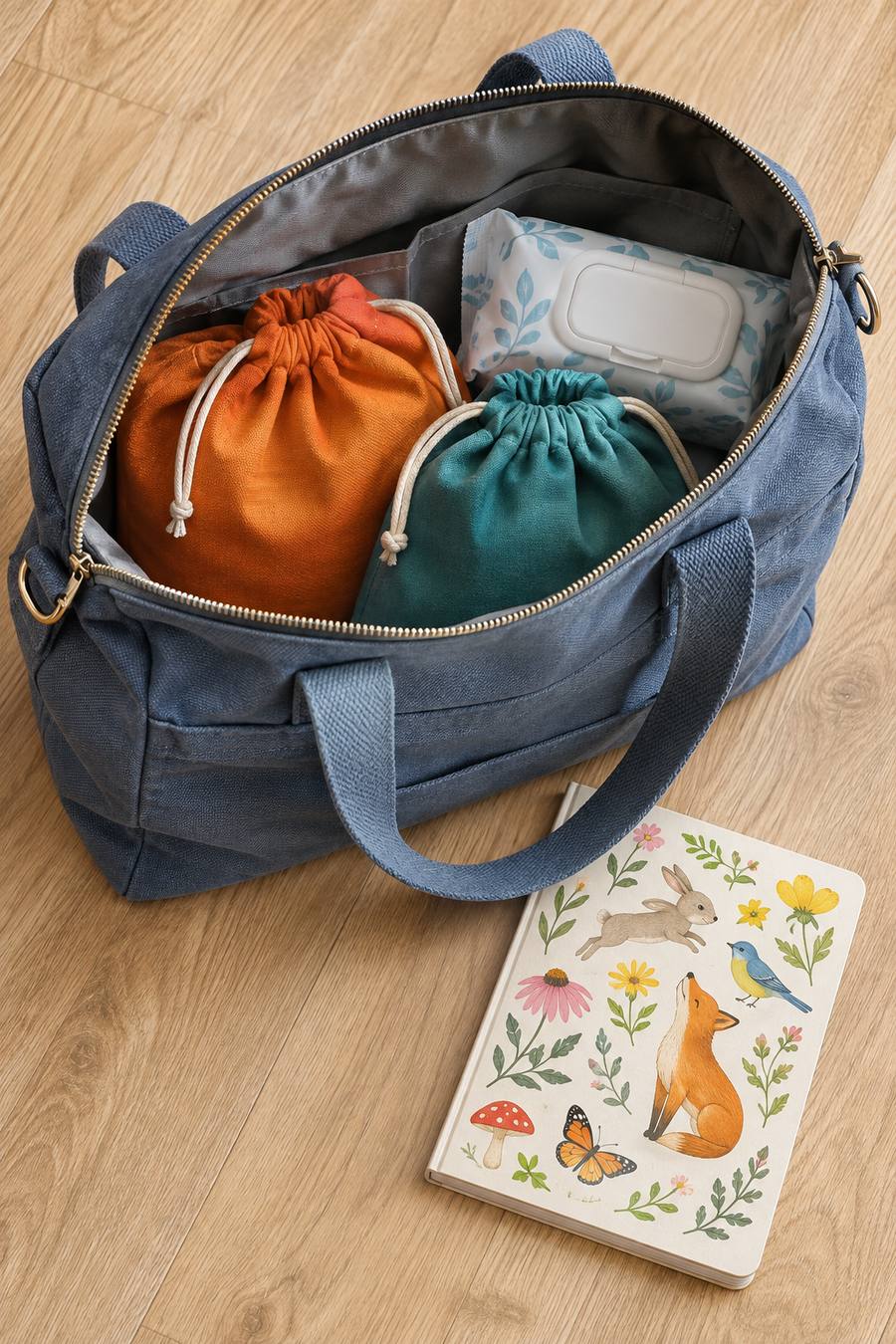
Put the journal and three crayons in one small pouch. Leave the glue, tape, scissors, and nature-display ambitions at home. A lighter kit is easier to use on an ordinary walk.
If you want a separate collected-flower project, the existing pressed-flower bookmark tutorial explains the drying and assembly. Do not close a wet flower inside the journal and hope it becomes a keepsake by itself.
For adults deciding how to keep activity notes, the planner format comparison can help you choose where one reminder belongs. The child’s journal can remain a simple paper book regardless of your own planning format.

Preschool nature journal FAQs
Do I need a nature journal printable?
No. This tutorial makes a blank-paper book and does not depend on a paid template. Your child chooses what belongs on each page.
How many pages should the journal have?
Three folded sheets give twelve interior drawing surfaces. A small book is easier to carry and finish than a thick notebook.
Can we use an ordinary notebook instead?
Yes. Use a small notebook that opens comfortably and accepts your chosen crayons or pencils. The observation steps stay the same.
Should I write my child’s words on the page?
Ask first and write a short sentence if they want one. Keep their wording, even when the description is wonderfully unexpected.
What if my child does not want to draw outside?
Look together and draw from memory at home, or let an adult take a reference photo. The journal can fit your outing rather than dictate it.
Leave a Reply