
Five shapes, one row at a time
Shape Matching Games for Preschoolers: Set Up a Simple Table Activity

Print the M013 shape-matching page, cover all but one row, and compare each printed shape with one large household object before marking the matching picture.
A shape-matching game does not need twelve laminated cards, a binder full of Velcro dots, and an hour of cutting after bedtime. For this version, you print one page, cover most of it, and reveal one row at a time. That small choice turns a busy-looking worksheet into a friendly table game.
The actual M013 Shape Matching page has five rows: circle, square, triangle, rectangle, and oval. Each row gives five familiar pictures and asks your child to circle the object that matches. We will add large household “shape finders” so your child can compare a real object with the printed examples before marking the page.

Feral Toddler Etsy shop
Use the printable shape-matching page
The five-page Preschool Geometry Bundle includes the M013 matching page used here, plus shape assessment, tracing, color sorting, and preschool math pages.
Buy the shape bundle on Etsy
Supplies for a simple shape-matching table
Shape Matching Game Setup
One printed page, five large objects, and a cover strip to reduce visual clutter.
You will need
- 1 printed M013 Shape Matching page
- 2 sheets of plain paper or cardstock
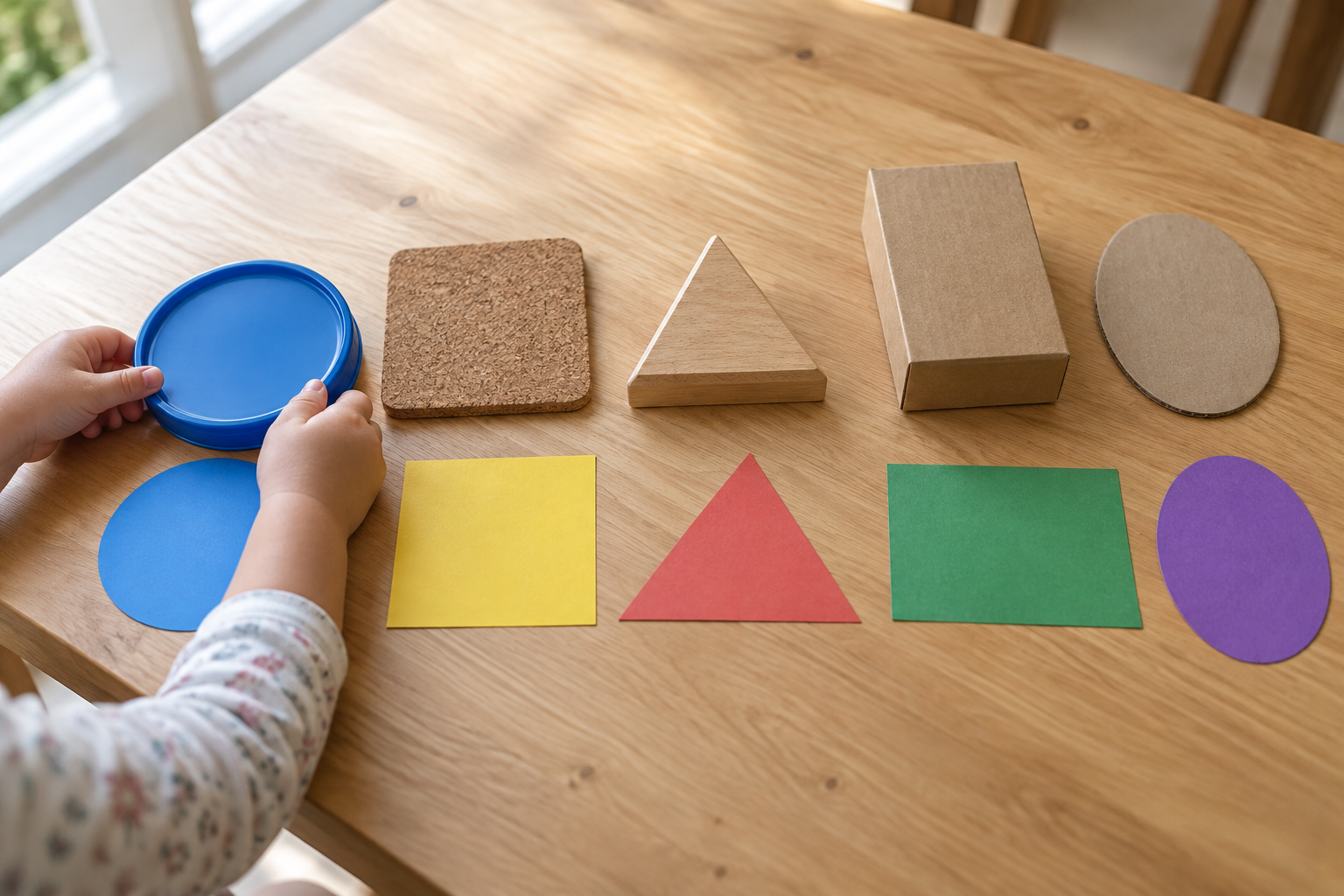
- 5 large shape examples: round lid, square coaster, triangular block, rectangular box, oval mirror or paper oval
- 1 chunky crayon or washable marker
- Low tray or clear table space
- Optional: painter’s tape
If you need to make an oval, cut one from a cereal box panel and cover the edge with tape. Avoid glass objects, sharp metal lids, or tiny shape counters. The five examples should be sturdy enough to pick up and place over the matching symbol on the left side of the page.
The existing preschool workbook guide helps with choosing books and deciding when worksheets are worth using. This activity assumes you already have a page and shows how to make that single page easier to use.
How to play the shape-matching game
- Print the page at actual size. Plain paper works. If the page shrinks slightly to fit printer margins, the activity still works; the printed words and pictures just need to remain clear.
- Make two cover strips. Fold or cut plain paper into strips wide enough to hide two rows each. Leave only the circle row visible.
- Set out the round object. Place a large lid beside the printed red circle. Trace the lid’s edge with one finger and say “round.”
- Scan the five pictures. Point from left to right without naming every answer. Let your child find the picture with the same overall outline.
- Mark the match. Circle the clock on the first row. A dot under the picture is also fine if circling is more work than the matching itself.
- Reveal the square row. Set the square coaster over the blue square, then look for the window. Keep the completed circle row visible so your child can see the routine.
- Continue one row at a time. Compare the triangular block with the warning sign, the rectangular box with the chalkboard, and the oval piece with the mirror.
- Use the real objects for a quick reset. Mix the five examples, name one printed shape, and let your child place the matching object over its symbol.
- Stop before the page becomes a battle. Two rows today and three tomorrow is a complete activity. Fold the page so the finished rows stay tucked away.
If your child is more interested in the object colors than their outlines, warm up with the companion printable color-sorting activity. It uses the same tray-and-cover approach but asks a simpler visual question.
Helpful words to use at the table
Keep your words concrete and brief. “This lid is round” is more useful than a running quiz. When you compare objects, talk about the parts you can actually see.
- Circle: round, no corners
- Square: four sides that look the same length
- Triangle: three sides, three corners
- Rectangle: four sides, with two longer and two shorter
- Oval: round and stretched
Real objects will not always be textbook-perfect. A pizza slice may have a curved crust, and a window may have a frame. That is part of the conversation. Ask, “Which part makes it look like the shape?” and accept pointing as an answer.

Troubleshooting shape matching
The page looks too busy
Cover every row except one. You can also cut a viewing window in cardstock so only the current shape and its five choices show.
Circle and oval get mixed up
Place a round lid and paper oval side by side. Rotate both. The circle stays equally round; the oval still looks stretched.
Square and rectangle get mixed up
Use a square coaster and a long index card. Line up one corner of each so the different side lengths are easier to see.
Your child circles several pictures
Use a small sticky note as a pointer and move it across the choices. Mark only after the comparison is finished.
The real objects distract from the page
Bring out one object per row and put it away after the match. A full basket of shapes can wait for the variation.
The crayon is the whole activity
Let your child place a large button-free token or paper square under the answer. An adult can mark the page afterward if desired.
Three shape-game variations
Shape hunt around one room
Carry one paper shape at a time and find two objects with a similar outline. Stay in one room so the hunt does not dissolve into a tour of every cabinet.
Shape rubbings
Place a flat cardboard circle, square, or triangle under paper and rub across it with the side of an unwrapped crayon. Tape the cardboard down if it slides.
Make a repeating shape line
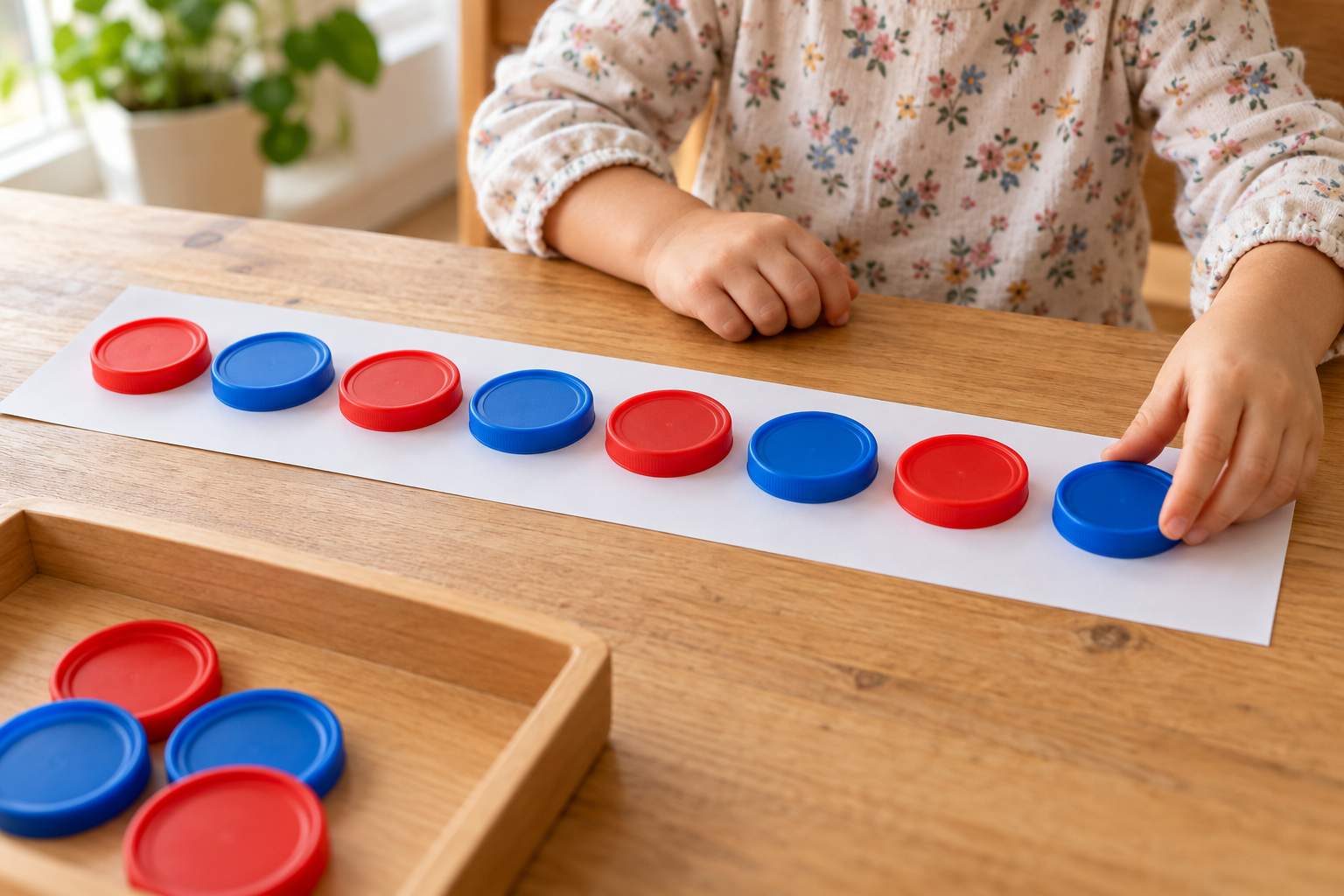
Use paper circles and squares to build circle-square-circle-square. The sibling guide to AB pattern activities explains how to copy and finish that repeating unit.
How to reuse the setup
Keep the five cardboard or household examples in a gallon zipper bag stored out of reach, and slide the printed page into the same folder as your other math pages. If you plan to use a marker repeatedly, a dry-erase pocket is faster than laminating one sheet.
The preschool math activities roundup has broader ideas for shape hunts, building, and counting. Save this little table game for days when you need something contained and sitting down.

Shape matching FAQs
What age is the printable shape game for?
The bundle is intended for ages 3–5, but readiness varies. Start with two shapes and large objects if five rows feel like too much.
Should I teach the shape names first?
You can name each shape as you compare it. Your child does not need to recite all five names before playing.
Does the page need to be laminated?
No. Use a crayon on plain paper, or slip the page into a reusable pocket if you want to repeat it.
What if my child chooses a different object?
Ask what part looks similar. Some pictures contain more than one visible shape, so listening to the reason can be more useful than correcting immediately.
Can I cut the worksheet into cards?
You can, but keep the original intact if you want the row structure. A cardstock viewing window gives the focus of cards without cutting up the page.



Leave a Reply