
Many parents wonder why their toddler seems unaware when they need to use the bathroom. Learning to recognize the urge to pee is a complex skill that depends on your child’s developing nervous system, and most kids develop voluntary bladder control around age 3, though some take several months longer.
This isn’t about your child being stubborn or you doing something wrong.

The challenge goes beyond simple potty training. Your toddler’s brain and body need to work together to notice bladder signals and respond in time.
Some children can recognize when they need to have a bowel movement but can’t always recognize the urge to pee. This is completely normal during the learning process.
You can help your child build this awareness through simple daily strategies.
This guide will show you practical ways to support your toddler as they learn to notice their body’s signals and gain confidence using the potty.
Key Takeaways
- Recognizing the urge to pee is a developmental skill that takes time and depends on nervous system maturity
- Using consistent routines and positive reinforcement helps your toddler connect body signals with bathroom needs
- Accidents are a normal part of learning, and staying calm helps your child build confidence without stress
Understanding Bladder Awareness in Toddlers

Most children develop the ability to control their bladder between ages 2 and 4, though the timeline differs for each child. Recognition of the urge to pee depends on physical development, brain maturation, and a sensory system that helps children understand what their body is telling them.
Developmental Milestones for Bladder Control
Children typically begin to recognize their bodily functions around ages 2 to 3 years. Your toddler’s nervous system needs time to mature before they can reliably sense when their bladder is full.
Most kids develop voluntary bladder control around age 3. However, reliably noticing the urge in time can trail that by months.
By age 4, about 9 in 10 children stay dry during the day. If your 2 or 3-year-old still gets caught off guard, that usually falls within the normal range.
The process involves three key components working together: sensory awareness of the full bladder, muscular coordination to hold urine, and cognitive maturity to understand what the sensation means and respond appropriately. Your child’s brain must learn to interpret signals from their bladder and connect those signals to action.
Why Urge Recognition Varies Among Children
Mastering bladder control and truly recognizing the urge to pee are complex developmental hurdles deeply tied to your child’s evolving nervous system. Some children struggle with a lesser-known sensory system called interoception.
Interoception refers to your ability to perceive and understand internal sensations like hunger, thirst, the need to use the bathroom, feeling hot or cold, and fatigue. Children with reduced interoceptive awareness may not notice bladder pressure until it becomes urgent or until an accident occurs.
This isn’t about motivation or behavior. Toileting challenges are often about how clearly children can sense their body signals.
Every child’s sensory system develops at its own pace, which explains why some toddlers master potty training quickly while others need more time and support.
Common Signs a Toddler Needs to Pee
You can help your toddler by learning to spot physical cues that indicate a full bladder. Watch for the potty dance, where your child shifts weight from foot to foot or bounces up and down.
Other signs a toddler needs to pee include:
- Grabbing or holding the genital area
- Crossing legs or squeezing thighs together
- Squirming or fidgeting while sitting
- Suddenly stopping play and becoming still or quiet
- Hiding behind furniture or in corners
- Making facial expressions that show discomfort
Your child may also become unusually fussy or irritable when their bladder is full. Some toddlers run to a specific spot in the house when they feel the urge.
Point out these behaviors to your child so they can start connecting the physical sensation with the need to use the bathroom.
Core Challenges of Recognizing the Urge to Pee
Your toddler’s brain needs to develop specific connections before they can reliably feel and respond to a full bladder. The ability to sense internal body signals varies widely between children and depends on neurological development that typically happens between ages 2 and 4.
Barriers to Body Signal Awareness
Your child’s nervous system must mature before they can consistently notice when their bladder is full. Most children develop voluntary bladder control around age 3, but reliably noticing the urge in time can take several more months.
Some toddlers stay so focused on playing that they ignore their body’s signals entirely. Others simply don’t register the sensation of a full bladder because their internal awareness systems are still developing.
Young children also lack experience connecting the physical sensation of bladder fullness with the need to use the toilet. Environmental factors can make recognition harder.
If your child is distracted, stressed, or in an unfamiliar setting, they may miss signals they would normally catch. Temperature changes, uncomfortable clothing, or new routines can also interfere with their ability to notice what their body is telling them.
The Role of Interoception in Potty Training
Interoception is your child’s ability to sense what’s happening inside their body. This “eighth sense” uses receptors in internal organs like the bladder to send signals to the brain about fullness, pressure, and the need to urinate.
Interoception supports awareness of multiple body signals during potty training, including wetness, muscle tension, and whether the bathroom feels safe.
Children with weak interoception may not notice when their diaper is wet or feel sensations when their bladder fills up. Learning when to use the toilet becomes difficult when your toddler can’t detect these internal cues.
They might have accidents not because they’re being stubborn, but because they genuinely don’t feel the urge until it’s too late. This developmental skill takes time to strengthen and varies significantly from child to child.
Effective Strategies to Build Body Awareness
Children need specific tools and practice to connect physical sensations with the need to use the toilet. Teaching your toddler to notice their body’s signals involves clear communication, creative reminders, and consistent examples from you.
Communicating About Bodily Feelings
Talk to your child about what their body feels like when they need to pee. Use simple words like “full,” “pressure,” “tight,” or “wiggly” to describe the sensation in their belly or between their legs.
Ask questions throughout the day to help them tune in. Try asking “How does your tummy feel right now?” or “Do you feel any pressure down there?”
These questions teach your child to pause and check in with their body. Name the feeling when you see signs they might need to go.
If your child is doing a potty dance or holding themselves, say “I see you’re wiggling. That means your body is telling you it’s time to pee.” This connects the physical sensation with the behavior they’re showing.
Practice describing sensations at non-toilet times too. When your child says they’re hungry, ask “What does hungry feel like in your body?”
This builds their overall awareness of internal body signals that applies to toileting.
Using Visual and Playful Cues
Visual aids help young children understand abstract body signals. Create a simple chart with pictures showing an empty bladder, a half-full bladder, and a full bladder to help your child visualize what’s happening inside their body.
Use stickers or stamps as fun rewards when your child correctly identifies their urge to pee. Many potty training products include progress charts that make tracking these wins exciting for toddlers.
Play games that build body awareness between bathroom trips. Activities like freeze dance and Simon Says teach children to notice their bodies and practice stopping movements on command.
A potty party can reinforce learning in a low-pressure way. Gather stuffed animals, have your child explain to them when bodies need to pee, and celebrate practice sits together.
This playful approach removes stress while building understanding.
Modeling Potty Behavior as a Parent
Your child learns by watching you. Let them see you respond to your own body’s signals by saying out loud “I feel like I need to pee, so I’m going to the bathroom now.”
Take them with you to the bathroom when appropriate. Explain what you’re doing and why, using the same language you want them to use about their own body.
Show them it’s normal to check in with your body regularly. Say things like “Let me see if my body needs anything before we leave the house” or “I’m stopping what I’m doing because my body is telling me something.”
Your toddler will copy this self-awareness practice over time.
Establishing Routine and Positive Reinforcement
Creating a predictable bathroom schedule and using rewards helps toddlers learn to recognize their body’s signals. Regular potty breaks combined with praise make the learning process easier and more effective.
Setting Up Consistent Potty Times
Take your toddler to the bathroom at the same times each day. The best times are after meals, before naps, and before bedtime.
Space bathroom visits about 30 minutes apart when you first start training. This frequent schedule helps your child learn what an empty bladder feels like.
They’ll start to notice the difference between empty and full more quickly. Watch for patterns in your child’s bathroom needs.
Some toddlers need to go right after drinking liquids. Others need the bathroom about the same time each morning.
Keep the routine going even on busy days or weekends.
Consistency is crucial when potty training because it builds habits that become automatic over time.
Incorporating the Potty Timer
A timer removes the guesswork from potty training. Set it for every 30 minutes to remind both you and your child that it’s time to try.
Use a fun timer that your toddler can see or hear. Kitchen timers, phone alarms, or special potty training apps all work well.
Let your child help reset the timer after each bathroom visit. The timer is especially helpful for active kids who get too busy playing to notice their body’s signals.
When the timer goes off, stop whatever activity you’re doing and head to the bathroom together. You can slowly increase the time between visits as your child gets better at recognizing the urge to pee.
Reward Systems and Celebration Techniques
Praise your child every time they sit on the potty, even if nothing comes out. Keep the praise simple and genuine like “Good job trying!”
Create a potty party atmosphere when your child successfully uses the toilet. Clap, cheer, or do a special potty dance together.
These celebrations make the experience positive and memorable. Consider using a sticker chart where your child adds a sticker after each successful potty visit.
Some parents offer small treats, but keep rewards simple to avoid creating pressure. Positive reinforcement techniques work better than punishment or disappointment.
If your child has an accident, stay calm and remind them to tell you next time. Avoid overdoing rewards or making too big of a deal about failures.
Balance is key to keeping potty training stress-free for everyone.
Choosing and Using Potty Training Tools
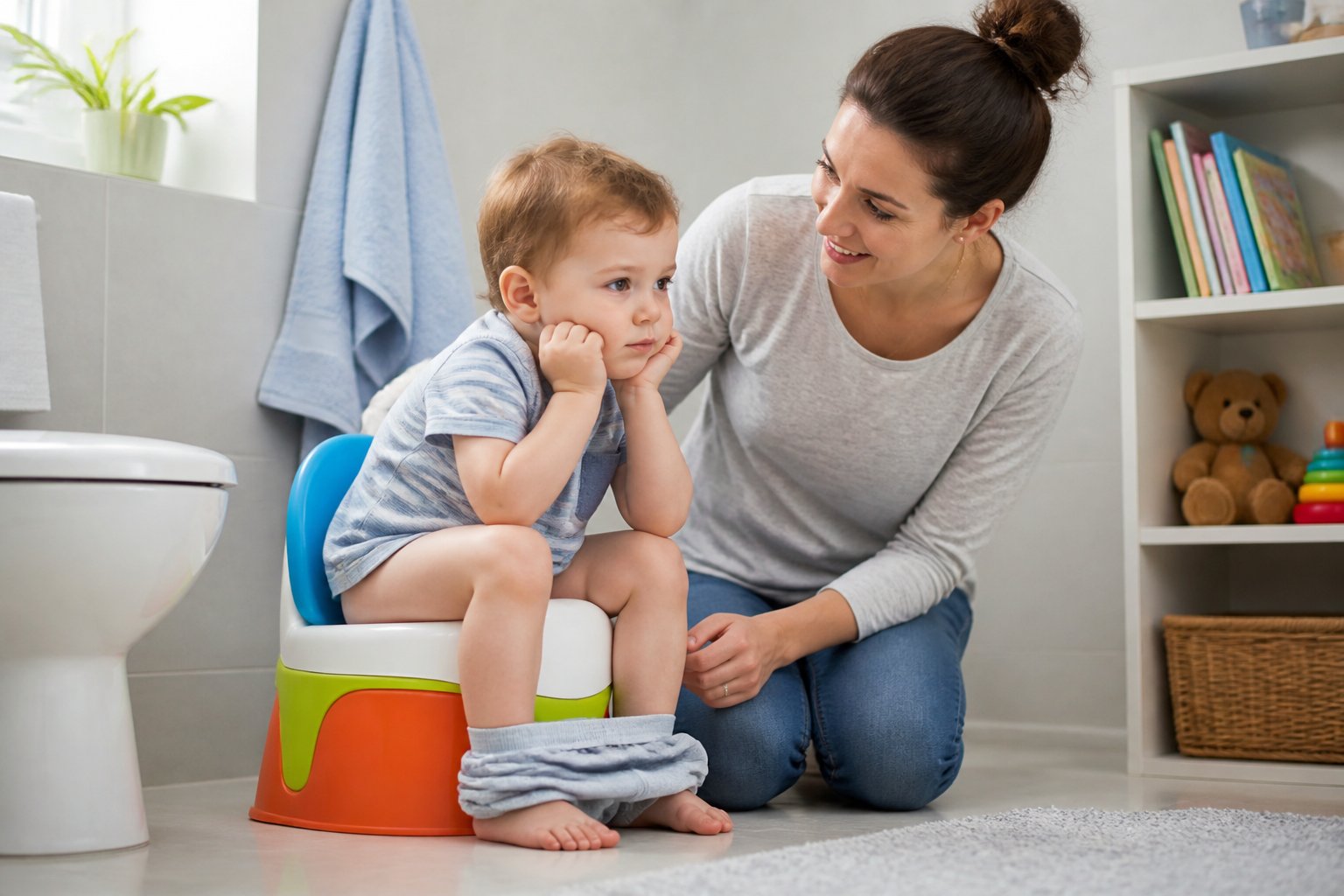
The right potty training tools can make it easier for your toddler to learn bathroom skills when they struggle to recognize the urge to pee. A good potty chair and appropriate training pants create a comfortable learning environment for your child.
Selecting the Right Potty Chair
A potty chair should be stable, comfortable, and the right size for your toddler. Look for a chair with a wide base that won’t tip over when your child sits down or gets up.
The seat should be low enough that your child’s feet touch the floor firmly. Some potty chairs have features like removable bowls for easy cleaning or fun designs that appeal to children.
Choose a simple design without too many bells and whistles that might distract your child from the task. Place the potty chair in an easily accessible location where your child spends most of their time.
You can move it to the bathroom later once your child gets comfortable using it. Let your child decorate the chair or put their name on it to build ownership and interest.
Benefits of Pull-Ups and Training Pants
Pull-Ups and training pants bridge the gap between diapers and regular underwear. They give your child independence to pull them up and down during practice runs to the bathroom.
Training pants protect against accidents while still allowing your child to feel wetness. This sensation helps some toddlers start connecting the feeling of needing to pee with actual urination.
Use training pants during the transition period when your child shows signs of readiness but still has frequent accidents. Switch to regular underwear once your child stays dry for full days.
Keep training pants handy for naps, nighttime, and long car trips.
Features of Potty Training Products
Look for potty training products with these helpful features:
Easy-clean surfaces make cleanup faster after accidents. Removable bowls and smooth plastic surfaces wipe down quickly.
Splash guards on potty chairs prevent messes, especially important for boys. The guard should be gentle and not uncomfortable.
Step stools help your child reach the regular toilet and provide foot support. Choose one with a non-slip surface and rubber feet for stability.
Toilet seat adapters make the big toilet less scary by reducing the opening size. Pick one that fits securely on your toilet without wobbling.
Avoid products with complicated parts or electronics that can break. Simple tools work best and keep your child focused on learning rather than playing.
Handling Accidents and Troubleshooting Setbacks
When your toddler struggles to recognize the urge to pee, accidents become part of the daily routine. Most children need time to develop bladder awareness, and more than 80% of children experience setbacks during toilet training.
Accidents as a Normal Part of Learning
Leaking urine is normal for kids learning to use the potty. Your child may successfully recognize when they need to have a bowel movement but struggle with bladder signals for several months.
This happens because bowel control typically develops before complete bladder control. If your child leaks small amounts but gets most urine into the potty, you can continue potty training.
If the leaks are more like full accidents and happen frequently, consider switching back to diapers temporarily. Training pants or pull-ups can help during this transition period, especially for outings or naptime.
Don’t punish or scold your child when accidents happen. Instead, treat accidents lightly and help your child clean up without making a big deal about it.
Maintaining a Supportive and Calm Approach
Your attitude toward potty training directly affects your child’s experience. If you approach the process with stress or anxiety, your child will likely pick up on those feelings and become more resistant.
When accidents occur, stay calm and matter-of-fact. Simply say something like “You had an accident. Let’s get you cleaned up” without adding shame or frustration.
Keep spare clothes easily accessible at home and when you go out. Praise your child for any progress, even small steps.
If they tell you after they’ve already peed, acknowledge that they’re learning to recognize their body’s signals. Set regular potty reminders every one to two hours rather than waiting for your child to tell you they need to go.
Knowing When to Consult a Pediatrician
You should talk to your child’s doctor if accidents continue without improvement after several months of consistent potty training. Frequent accidents combined with pain during urination, blood in urine, or constant dampness may indicate a medical issue that needs attention.
Consult your pediatrician if your child is older than 4 years and still has daily daytime accidents. Some children have smaller bladders or other physical factors that affect their ability to stay dry.
Your doctor can rule out urinary tract infections, constipation, or developmental delays. If your child shows signs of potty training regression after being previously successful, discuss this with your doctor.
Regression can signal stress from life changes, but it may also indicate underlying health concerns that need evaluation.
Frequently Asked Questions
Most toddlers develop bladder awareness between ages 2 and 4, but the timeline varies widely and some children need extra support to connect internal sensations with the need to use the potty.
Why might a child not notice they need to urinate until it’s too late?
Your child’s brain is still learning to read signals from inside the body. This skill is called interoception, sometimes known as the eighth sense, and it develops gradually over the first few years of life.
The bladder sends signals when it fills up, but your toddler’s brain might not recognize these signals as urgent yet. The connection between feeling the sensation and understanding what it means takes time to build.
Some children also get very focused on play and ignore body signals without meaning to. Their attention is so locked on what they’re doing that the feeling of needing to pee gets pushed to the background.
What are common signs that a toddler needs to pee if they don’t say it?
Watch for sudden stillness or freezing in the middle of play. Your child might stop moving completely for a few seconds.
Leg crossing, squatting, or holding the genital area are physical signs. You might also notice fidgeting, bouncing from foot to foot, or the “potty dance” where they shift their weight back and forth.
Some toddlers get quiet or retreat to a corner or behind furniture. Others become suddenly cranky or clingy without an obvious reason.
How can I help my child learn to recognize the feeling of a full bladder?
Talk out loud about your own body signals when you use the bathroom. Say something like “My belly feels tight and I need to pee now” so your child hears the connection between sensation and action.
Use bare-bottom time for 2 to 3 hours each day at home. When there’s no diaper to catch accidents, your child gets immediate feedback when pee starts coming out, which helps them notice the feeling right before it happens.
Point out what you see in their body language without rushing them to the potty. Say “You’re crossing your legs and hopping. I wonder if your body is telling you something.”
Replace your frequent reminders with a timer set for every 60 to 90 minutes. Ask “What does your body say?” instead of “Do you need to go?” This puts them in charge of checking in with their own sensations.
At what age should children typically be able to tell when they need to pee?
Children typically begin to recognize their bodily functions around ages 2 to 3 years. Voluntary bladder control usually develops around age 3, but recognizing the urge early enough to act on it can take several more months.
By age 4, about 9 in 10 children are dry during the day. If your child is 2 or 3 and still gets surprised by accidents, that falls within the normal range.
Each child develops at their own pace. Some notice the urge clearly before their third birthday, while others need until age 4 to reliably catch it in time.
Could sensory processing differences or autism affect awareness of needing to urinate?
Yes, sensory processing differences can make it harder for some children to notice internal body signals. Children with these differences might not feel the sensation of a full bladder as clearly as other children do.
Kids on the autism spectrum sometimes have weaker interoceptive awareness. They might not connect the physical feeling in their bladder with the need to take action.
These children often benefit from external supports like visual schedules and consistent bathroom routines. They may need more time and practice to build this awareness than neurotypical children.
When should frequent urination or daytime accidents be evaluated by a pediatrician?
Call your pediatrician if your child is past age 3.5 to 4 and shows no daytime awareness after several weeks of consistent practice.
A child who never seems to notice they need to go might need additional evaluation.
A sudden loss of bladder control in a child who was previously reliable needs attention right away.
This can signal a urinary tract infection or other medical issue.
Contact your doctor if your child has pain when peeing, dribbles constantly throughout the day, or strains to urinate.
Chronic constipation can also affect bladder awareness because a full rectum presses on the bladder and mutes the signals.


Leave a Reply